










Shipping included*
Exclusions
Additional shipping fees may apply in rare circumstances for deliveries outside standard service areas. In most cases, this only potentially affects shipments to the Northwest Territories and Yukon, as well as certain heavy or oversized items.
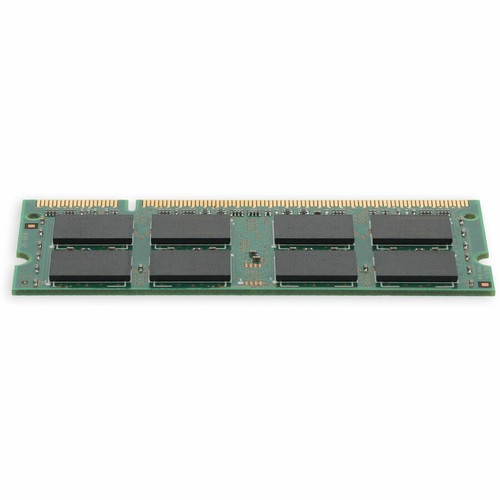
AddOn A2578600-AA 2GB DDR2-800MHz SODIMM - 200-pin Unbuffered Dual Rank CL6 1.8V

Business volume discounts
Technical guidance
Preparation & staging
QC · ON · AB · BC
Product Features
Product Overview
The AddOn A2578600-AA is a 2GB DDR2-800MHz SODIMM memory module engineered as a compatible replacement for select Dell notebook systems. This module delivers reliable performance for older hardware that requires DDR2 memory technology, offering a straightforward upgrade path for systems where maximum supported capacity and speed are constrained by platform limitations.
Built with 200-pin SODIMM architecture, this memory is physically designed for notebook and small-form-factor applications. Its unbuffered, non-ECC design aligns with standard consumer and business notebook requirements, while the dual-rank configuration provides stable operation at the specified 800 MHz speed with CL6 latency. The module operates at 1.8V, matching the power profile of contemporary DDR2 platforms for energy-efficient performance.
Relevant factors for this section include Memory Size, Memory Technology, Memory Voltage, Number of Pins. When those points are considered together, they give buyers a clearer picture of how the product is equipped, how it fits into deployment, and what kind of day-to-day role it is meant to support.
Technical Overview
This memory module implements DDR2 SDRAM technology, which doubles the data transfer rate per clock cycle compared to original DDR. The 800 MHz effective speed corresponds to a 400 MHz clock frequency, delivering a peak transfer rate of 6.4 GB/s on a 64-bit bus. The PC2-6400 designation confirms compliance with the JEDEC standard for this performance tier.
The module's electrical characteristics include a 1.8V operating voltage, which reduces power consumption and heat generation compared to earlier memory technologies. The CL6 (CAS Latency 6) timing indicates the number of clock cycles between a column address strobe and data availability, balancing responsiveness with the module's speed class. The unbuffered design means signals pass directly to the memory controller without intermediate buffering, which is typical for non-server applications.
Relevant factors for this section include Memory Size, Memory Technology, Memory Voltage, Number of Pins. When those points are considered together, they give buyers a clearer picture of how the product is equipped, how it fits into deployment, and what kind of day-to-day role it is meant to support.
Key Product Advantages
This AddOn memory module provides specific advantages for maintaining and upgrading compatible Dell notebook systems. Its design focuses on compatibility, reliability, and meeting the technical requirements of platforms that still utilize DDR2 memory architecture.
Platform-Specific Compatibility
Engineered as a direct replacement for Dell systems including Precision Mobile Workstations (M2400, M4300, M4400, M6300), Latitude (D630, D830, E5400, E6500 series), Inspiron (11z, 14, 17, XPS M1530/M1730), Vostro (1014-1720, 2510, A840/A860), and Studio 15 models. This targeted compatibility ensures proper fit and function in these systems.
- Dell Precision Mobile Workstation compatible
- Latitude and Inspiron notebook support
- Vostro and Studio series validation
Optimized Thermal Performance
The 1.8V operating voltage generates less heat than previous-generation memory, while the SODIMM form factor's compact design allows for efficient heat dissipation in confined notebook chassis. This thermal efficiency supports stable operation during extended use.
- Lower voltage reduces heat output
- Compact form factor aids cooling
- Supports sustained performance
Deployment / Use Cases
This memory module serves specific upgrade and replacement scenarios for business and personal computing environments. Its value lies in extending the usable life of compatible systems that cannot accommodate newer memory technologies due to platform constraints.
Primary deployment scenarios include memory upgrades for Dell notebooks that originally shipped with 2GB or less of DDR2 memory, replacement of failed modules in compatible systems, and configuration of older workstations where maximum platform memory capacity requires multiple identical modules. The module's compatibility with specific Dell Precision Mobile Workstations makes it suitable for maintaining legacy CAD, engineering, and design systems where hardware replacement costs are prohibitive.
Legacy System Maintenance
Ideal for IT departments managing older Dell notebook fleets where complete hardware replacement isn't feasible. This module allows for cost-effective memory upgrades to improve multitasking capability on systems running Windows 7, Windows Vista, or legacy business applications.
- Extends usable life of compatible systems
- Cost-effective alternative to full replacement
- Supports legacy operating environments
Specific Model Upgrades
Targeted for Dell systems including the Latitude D630/D830 series for business environments, Inspiron XPS M1530/M1730 for multimedia applications, and Vostro notebooks for small business use. The module's specifications match the original equipment requirements for these models.
- Business notebook compatibility
- Multimedia system support
- Small business computing
Physical Profile
The module measures 2 inches (50.80 mm) in width, conforming to the standard 200-pin SODIMM form factor dimensions. This compact size allows installation in notebook memory slots with limited clearance. The approximate weight of 8 ounces (226.80 grams) reflects the module's construction with standard memory components and PCB materials.
The physical profile is practical for deployment planning because the dimensions and weight are clearly defined: 2" (50.80 mm), 8 oz (226.80 g). This helps confirm rack, shelf, desk, or cabinet fit before installation.
- Width
- 2" (50.80 mm)
- Weight
- 8 oz (226.80 g)
Highlights
- 2GB DDR2-800MHz memory module for notebook systems
- 200-pin SODIMM form factor for compact installation
- Unbuffered, non-ECC design for standard computing applications
- Dual-rank configuration with CL6 latency timing
- 1.8V operating voltage for reduced power consumption
- Compatible with specific Dell Precision, Latitude, Inspiron, Vostro, and Studio models
- PC2-6400 (DDR2-800) standard compliance
- Lifetime limited warranty for long-term reliability
Specifications
| Specifications | |
|---|---|
| Manufacturer | AddOn |
| Manufacturer Part Number | A2578600-AA |
| Brand Name | AddOn |
| Product Model | A2578600-AA |
| Product Name | 2GB DDR2 800MHZ 200-pin SODIMM F/Dell Notebooks |
| Packaged Quantity | 1 |
| Product Type | RAM Module |
| Technical Information | |
| Memory Size | 2 GB |
| Memory Technology | DDR2 SDRAM |
| Memory Voltage | 1.80 V |
| Number of Modules | 1 x 2GB |
| Memory Speed | 800 MHz |
| Memory Standard | DDR2-800/PC2-6400 |
| Memory Rank | Dual-rank |
| Error Checking | Non-ECC |
| Signal Processing | Unbuffered |
| CAS Latency | CL6 |
| Device Supported | Notebook |
| Physical Characteristics | |
| Number of Pins | 200-pin |
| Form Factor | SODIMM |
| Width | 2" (50.80 mm) |
| Weight (Approximate) | 8 oz (226.80 g) |
| Miscellaneous | |
| Compatibility | Dell Precision Mobile Workstations: M2400 M4300 M4400 M6300 Dell Notebooks: Inspiron 11z Inspiron 11z (1110) Inspiron 14 Inspiron 17 Inspiron 1750 Inspiron 400 Inspiron 400 (Zino HD) Inspiron Mini 10v (1012) Inspiron Mini 9 (910) Inspiron XPS M1530 Inspiron XPS M1730 Inspiron Zino Latitude 2110 Latitude D630, D630c Latitude D830 Latitude E5400 Latitude E5500 Latitude E6400 Latitude E6500 Latitude XFR D630 Studio 15 (1535) Studio 15 (1536) Studio 15 (1537) Studio 15 (1555) Vostro 1014 Vostro 1088 Vostro 1200 Vostro 1220 Vostro 1310 Vostro 1320 Vostro 1320n Vostro 1400 Vostro 1500 Vostro 1510 Vostro 1520 Vostro 1700 Vostro 1710 Vostro 1720 Vostro 2510 Vostro A840 Vostro A860 XPS M1530 |
| Country of Origin | China |
| TAA Compliant | No |
| Warranty | |
| Limited Warranty | Lifetime |
FAQ
What is the capacity and speed of this memory module?
This AddOn memory module provides 2GB of capacity with an 800 MHz speed rating, which corresponds to the DDR2-800/PC2-6400 standard. The 800 MHz represents the effective data rate, with the actual clock frequency being 400 MHz. This speed was common for mid-range to high-end DDR2 systems and provides adequate bandwidth for the compatible notebook platforms.
Is this memory ECC or non-ECC?
This is a non-ECC (Error-Correcting Code) memory module. Non-ECC memory does not include the additional circuitry to detect and correct single-bit memory errors, which is standard for consumer and business notebook systems. The module is also unbuffered, meaning it connects directly to the memory controller without intermediate registers, which is typical for non-server applications.
What does dual-rank mean for this SODIMM?
Dual-rank means the memory module has two sets of memory chips that are accessed separately, with only one rank active at a time. This configuration can improve memory controller efficiency in some systems compared to single-rank modules. For this 2GB DDR2 SODIMM, the dual-rank design helps achieve the specified capacity while maintaining compatibility with the memory controllers in supported Dell notebook systems.
Which Dell notebook models are compatible with this memory?
This module is compatible with specific Dell Precision Mobile Workstations (M2400, M4300, M4400, M6300), Latitude notebooks (D630, D630c, D830, E5400, E5500, E6400, E6500, XFR D630, 2110), Inspiron models (11z, 14, 17, 1750, 400, Zino HD, Mini 10v, Mini 9, XPS M1530, XPS M1730, Zino), Vostro systems (1014, 1088, 1200-1720, 2510, A840, A860), and Studio 15 (1535-1555) notebooks. Always verify your specific model's memory requirements before purchase.
What is the CAS latency and why does it matter?
This module has a CAS latency of CL6, which means it takes 6 clock cycles between when a column address is sent and when the corresponding data is available. Lower CAS latencies generally mean faster response times, though the actual impact depends on the memory controller and workload. CL6 was a common latency for DDR2-800 memory and represents a balance between speed and stability for the technology generation.
Can I mix this module with existing memory in my system?
While possible in some cases, mixing memory modules with different specifications (capacity, speed, timings, or rank) can lead to system instability or cause all modules to run at the speed of the slowest module. For optimal performance and reliability, it's recommended to use identical modules with matching specifications. If upgrading, consider replacing all memory modules with matched sets to ensure compatibility and stable operation.
| Qty | Price | Available |
|---|