











Shipping included*
Exclusions
Additional shipping fees may apply in rare circumstances for deliveries outside standard service areas. In most cases, this only potentially affects shipments to the Northwest Territories and Yukon, as well as certain heavy or oversized items.
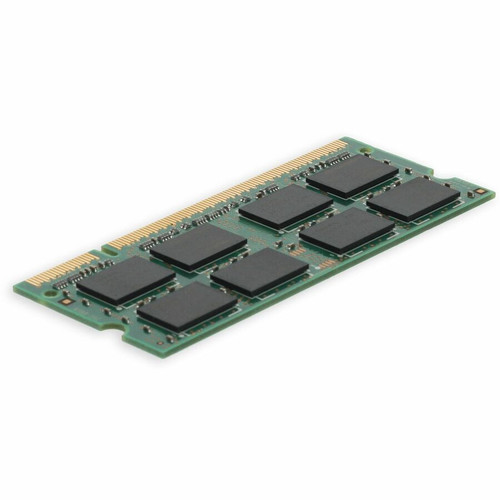
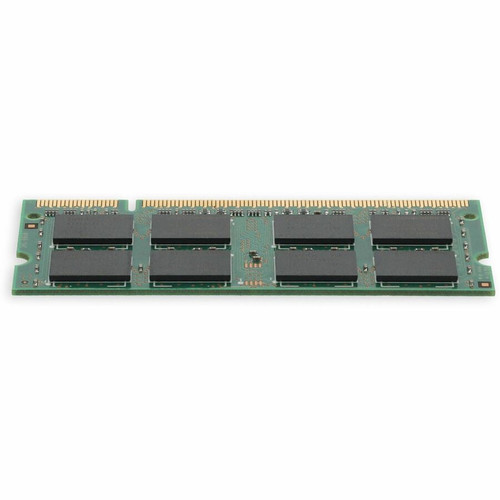
AddOn SNPTX760CK2/4G-AA 4GB (2 x 2GB) DDR2-800MHz SODIMM - Unbuffered Dual Rank 200-pin 1.8V CL5 Notebook Memory

Business volume discounts
Technical guidance
Preparation & staging
QC · ON · AB · BC
Product Features
Product Overview
The AddOn SNPTX760CK2/4G-AA is a 4GB DDR2 SODIMM memory kit engineered for notebook systems requiring reliable performance upgrades. This kit includes two 2GB modules that operate at 800 MHz with a CAS latency of CL5, delivering responsive multitasking for legacy laptops. Built with DDR2 SDRAM technology, it supports the DDR2-800/PC2-6400 standard, ensuring compatibility with older notebook platforms that utilize this memory generation.
Designed specifically for mobile computing environments, this memory features a 200-pin SODIMM form factor that fits standard notebook memory slots. The dual-rank architecture and unbuffered signal processing provide stable data handling without the overhead of error-correcting code, making it a cost-effective solution for general-purpose computing tasks. With a low 1.8V operating voltage, it helps maintain energy efficiency while delivering the performance needed for everyday applications.
Technical Overview
This memory kit delivers 4GB of total capacity through two identical 2GB modules, each operating at 800 MHz with a data bus speed of 400 MHz. The DDR2-800/PC2-6400 standard ensures backward compatibility with systems designed for DDR2 memory, while the CL5 latency timing provides balanced performance for sequential and random access patterns. The dual-rank design allows for efficient memory bank interleaving, which can improve throughput in supported systems.
The electrical specifications include a 1.8V operating voltage, which was standard for DDR2 memory and helps reduce power consumption compared to earlier memory technologies. The unbuffered signal processing means the memory modules communicate directly with the memory controller without intermediate buffering, resulting in lower latency for most operations. This configuration is ideal for notebooks where space and power constraints are primary considerations.
Key Product Advantages
This AddOn memory kit provides a straightforward upgrade path for aging notebook systems that still have usable life but suffer from memory limitations. The 4GB total capacity represents a meaningful improvement over the 1GB or 2GB configurations common in DDR2-era laptops, enabling better performance with modern operating systems and applications that demand more memory.
Legacy System Compatibility
Specifically designed for notebooks using DDR2 memory technology, this kit matches the electrical and physical requirements of systems from the mid-to-late 2000s. The 200-pin SODIMM form factor ensures physical compatibility with standard notebook memory slots from that era.
- Matches DDR2-800/PC2-6400 standard
- 200-pin SODIMM fits most DDR2 notebooks
- 1.8V voltage compatible with DDR2 memory controllers
Balanced Performance Profile
With 800 MHz speed and CL5 latency, this memory delivers responsive performance for everyday computing tasks while maintaining compatibility with older systems that may not support higher-speed memory. The dual-rank architecture can provide performance benefits in systems that support rank interleaving.
- 800 MHz speed suitable for DDR2 systems
- CL5 latency provides responsive access times
- Dual-rank design supports efficient memory access patterns
Deployment / Use Cases
This memory kit is specifically intended for notebook systems that utilize DDR2 memory technology. It serves as an economical upgrade solution for business laptops, educational computers, or personal notebooks from the DDR2 era that need additional memory capacity to run contemporary software more effectively.
Typical deployment scenarios include upgrading older corporate laptops still in limited use, refreshing educational lab computers on constrained budgets, or extending the useful life of personal notebooks for basic computing tasks. The memory works well for general office productivity, web browsing, email, and light multimedia applications where 4GB of RAM provides a noticeable improvement over lower-capacity configurations.
Business Notebook Refresh
Organizations with older notebook fleets can use this memory to extend hardware lifecycles cost-effectively. The upgrade can improve performance for basic business applications without requiring complete system replacement.
- Extends usable life of DDR2-era business laptops
- Improves performance for office productivity suites
- Cost-effective alternative to full system replacement
Educational & Lab Environments
Schools and training facilities with older notebook computers can benefit from this memory upgrade to ensure systems remain functional for educational software and online learning platforms.
- Enables older educational notebooks to run modern learning software
- Supports multiple student users throughout the day
- Budget-friendly upgrade for constrained educational IT budgets
Physical Profile
The memory modules feature a standard SODIMM form factor measuring 2" (50.80 mm) in width with a thickness of 0.50" (12.70 mm), designed to fit the compact memory slots of notebook computers. Each module weighs approximately 8 oz (226.80 g), contributing minimal additional weight to mobile systems. The physical dimensions adhere to industry standards for 200-pin DDR2 SODIMM modules, ensuring compatibility with notebook memory bays designed for this form factor.
- Width
- 2" (50.80 mm)
- Weight
- 8 oz (226.80 g)
Highlights
- 4GB total capacity (2 x 2GB modules) for improved multitasking
- DDR2-800/PC2-6400 memory standard operating at 800 MHz
- 200-pin SODIMM form factor designed for notebook compatibility
- Dual-rank architecture for efficient memory access patterns
- Unbuffered signal processing with non-ECC for cost-effective performance
- 1.8V operating voltage for energy-efficient operation
- CL5 latency timing for responsive memory access
- Specifically designed for legacy notebook systems using DDR2 technology
Specifications
| Specifications | |
|---|---|
| Manufacturer | AddOn |
| Manufacturer Part Number | SNPTX760CK2/4G-AA |
| Brand Name | AddOn |
| Product Name | 4GB DDR2 SDRAM Memory Module |
| Product Type | RAM Module |
| Technical Information | |
| Memory Size | 4 GB |
| Memory Technology | DDR2 SDRAM |
| Memory Voltage | 1.80 V |
| Number of Modules | 2 x 2GB |
| Memory Speed | 800 MHz |
| Memory Standard | DDR2-800/PC2-6400 |
| Memory Rank | Dual-rank |
| Error Checking | Non-ECC |
| Signal Processing | Unbuffered |
| CAS Latency | CL5 |
| Device Supported | Notebook |
| Physical Characteristics | |
| Number of Pins | 200-pin |
| Form Factor | SODIMM |
| Thickness | 0.50" (12.70 mm) |
| Width | 2" (50.80 mm) |
| Weight (Approximate) | 8 oz (226.80 g) |
| Miscellaneous | |
| Country of Origin | China |
| TAA Compliant | No |
| Warranty | |
| Limited Warranty | Lifetime |
FAQ
What is the total memory capacity of this kit?
This memory kit provides 4GB of total capacity, achieved through two identical 2GB modules. This configuration is designed as a matched pair to ensure compatibility and stable operation in systems that benefit from dual-channel memory configurations when supported by the notebook's chipset and memory controller.
What type of systems is this memory compatible with?
This memory is specifically designed for notebook computers that use DDR2 memory technology with 200-pin SODIMM slots. It is compatible with systems that support the DDR2-800/PC2-6400 memory standard and operate at 1.8V. The memory is unbuffered and non-ECC, making it suitable for consumer and business notebooks from the DDR2 era that don't require error-correcting memory.
What does DDR2-800/PC2-6400 mean?
DDR2-800 refers to the memory technology (Double Data Rate 2) operating at 800 MHz, while PC2-6400 indicates the theoretical peak transfer rate of 6400 MB/s. This memory standard was common in notebook systems from the mid-to-late 2000s and represents the performance ceiling for DDR2 technology in most consumer and business applications.
What is the difference between unbuffered and registered memory?
Unbuffered memory, like this AddOn kit, communicates directly with the memory controller without intermediate buffering, resulting in lower latency for most operations. Registered memory includes a register between the memory modules and controller to improve signal integrity in systems with many memory modules, but adds latency and cost. This unbuffered design is standard for notebook memory where space and power constraints prioritize direct communication.
What does dual-rank architecture mean for performance?
Dual-rank architecture means each memory module has two independent sets of memory banks that can be accessed separately. In systems that support rank interleaving, this allows the memory controller to access one rank while another is refreshing, potentially improving memory bandwidth utilization. For DDR2 systems, dual-rank modules were common for higher-capacity memory like these 2GB modules.
Is this memory compatible with desktop computers?
No, this memory uses a 200-pin SODIMM form factor specifically designed for notebook computers. Desktop systems typically use 240-pin DIMM modules with different physical dimensions and pin configurations. Attempting to install SODIMM memory in a desktop system would not be physically possible without an adapter, and even with an adapter, compatibility would be unlikely due to different electrical requirements and form factor constraints.
| Qty | Price | Available |
|---|