








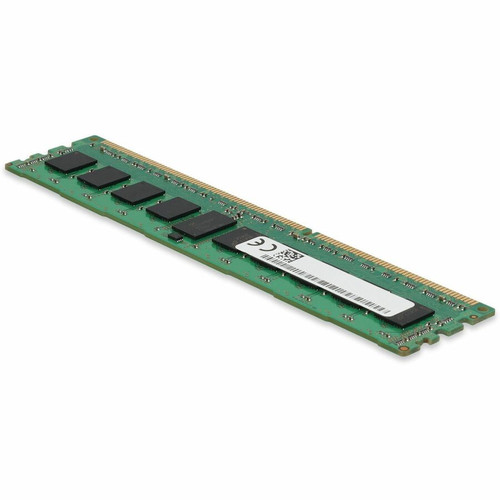

AddOn AM1333D3SRLPR/8GKIT 8GB DDR3-1333MHz Registered ECC RDIMM Kit - 2 x 4GB - Single Rank - CL9 - 1.35V - 240-pin

Business volume discounts
Technical guidance
Preparation & staging
QC · ON · AB · BC
Product Features
Product Overview
The AddOn AM1333D3SRLPR/8GKIT is an 8GB DDR3-1333MHz Registered ECC RDIMM memory kit designed specifically for server environments. This dual-module configuration delivers reliable performance with enterprise-grade error correction and signal processing capabilities.
Built to JEDEC standards, these memory modules offer consistent compatibility and stable operation in server platforms that require registered ECC memory. The 1.35V operating voltage contributes to improved power efficiency while maintaining the robust performance characteristics needed for server workloads.
Relevant factors for this section include Memory Size, Memory Technology, Memory Voltage, Number of Pins. When those points are considered together, they give buyers a clearer picture of how the product is equipped, how it fits into deployment, and what kind of day-to-day role it is meant to support.
Technical Overview
This memory kit utilizes DDR3 SDRAM technology operating at 1333 MHz with a CAS latency of CL9. The dual-module configuration provides 8GB total capacity through two 4GB modules, offering balanced memory distribution across channels for optimal server performance.
The registered design includes buffer chips that help maintain signal integrity across larger memory arrays, making these modules particularly suitable for multi-DIMM server configurations. ECC functionality provides single-bit error correction and double-bit error detection, enhancing data reliability in mission-critical applications.
Relevant factors for this section include Memory Size, Memory Technology, Memory Voltage, Number of Pins. When those points are considered together, they give buyers a clearer picture of how the product is equipped, how it fits into deployment, and what kind of day-to-day role it is meant to support.
A strong technical summary explains how the product's interfaces, hardware profile, and operating characteristics work together in real deployment. Buyers often need this context to confirm compatibility with existing devices, expected performance in daily use, and whether installation will be straightforward for IT staff or end users.
Key Product Advantages
The single-rank architecture provides efficient memory access patterns, while the 240-pin DIMM form factor ensures proper physical compatibility with server motherboards designed for registered memory modules.
These strengths make the product easier to deploy and manage in real environments, especially where reliability, usability, and day-to-day operational continuity matter. Notable benefits include Server-Grade Reliability, Optimized Performance.
Server-Grade Reliability
Registered ECC design ensures data integrity and signal stability in demanding server environments where uptime and reliability are paramount.
- ECC error correction
- Registered signal buffering
- JEDEC standard compliance
Optimized Performance
1333 MHz operating speed with CL9 latency delivers responsive performance for server applications while the 1.35V design contributes to improved thermal characteristics.
- 1333 MHz frequency
- CL9 latency timing
- 1.35V low voltage operation
Deployment / Use Cases
These registered ECC RDIMM modules are engineered for deployment in server environments where data integrity, reliability, and consistent performance are critical requirements. The dual-module configuration makes them ideal for populating memory channels in balanced pairs.
Typical deployment scenarios include database servers, virtualization hosts, file servers, and application servers where ECC protection helps prevent data corruption and system crashes. The registered design supports larger memory configurations commonly found in enterprise server platforms.
Relevant factors for this section include Memory Size, Memory Technology, Memory Voltage, Number of Pins. When those points are considered together, they give buyers a clearer picture of how the product is equipped, how it fits into deployment, and what kind of day-to-day role it is meant to support.
Server Memory Expansion
Add capacity to existing server platforms that require registered ECC memory, maintaining compatibility with enterprise-grade hardware.
Server Builds and Upgrades
Utilize these modules in new server builds or upgrade projects where registered ECC memory specifications must be met for optimal system stability.
Highlights
- 8GB total capacity in dual-module configuration (2x4GB)
- DDR3-1333MHz operating speed with CL9 latency
- Registered ECC design for server reliability
- 240-pin DIMM form factor for server compatibility
- 1.35V operating voltage for improved efficiency
- Single-rank architecture for optimized performance
- JEDEC standard compliant modules
- Manufactured in the United States
- RoHS compliant environmental design
- Lifetime limited warranty coverage
Specifications
| Specifications | |
|---|---|
| Manufacturer | AddOn |
| Manufacturer Part Number | AM1333D3SRLPR/8GKIT |
| Brand Name | AddOn |
| Product Name | 8GB DDR3 SDRAM Memory Module |
| Packaged Quantity | 1 |
| Product Type | RAM Module |
| Technical Information | |
| Memory Size | 8 GB |
| Memory Technology | DDR3 SDRAM |
| Memory Voltage | 1.35 V |
| Number of Modules | 2 x 4GB |
| Memory Speed | 1333 MHz |
| Memory Standard | DDR3-1333/PC3-10600 |
| Memory Rank | Single-rank |
| Error Checking | ECC |
| Signal Processing | Registered |
| CAS Latency | CL9 |
| Device Supported | Server |
| Physical Characteristics | |
| Number of Pins | 240-pin |
| Form Factor | DIMM |
| Miscellaneous | |
| Country of Origin | United States |
| TAA Compliant | No |
| Environmentally Friendly | Yes |
| Environmental Compliance | Restriction of Hazardous Substances (RoHS) |
| Warranty | |
| Limited Warranty | Lifetime |
FAQ
What is the total memory capacity of this kit?
This memory kit provides 8GB total capacity configured as two 4GB modules. The dual-module design allows for balanced memory distribution across server memory channels, which can improve performance in systems that support dual-channel or multi-channel memory architectures.
What type of memory technology does this kit use?
These modules utilize DDR3 SDRAM technology operating at 1333 MHz. DDR3 represents the third generation of double data rate synchronous dynamic random-access memory, offering improved performance and power efficiency compared to earlier DDR2 technology while maintaining compatibility with server platforms designed for DDR3 memory.
What does Registered ECC mean for server memory?
Registered ECC combines two important server memory features. The registered (or buffered) design includes register chips that help maintain signal integrity in systems with multiple memory modules. ECC (Error-Correcting Code) provides single-bit error correction and double-bit error detection, enhancing data reliability in mission-critical server applications where data integrity is essential.
What is the form factor and pin configuration?
These modules feature a 240-pin DIMM (Dual In-line Memory Module) form factor. The 240-pin configuration is standard for DDR3 memory, and the DIMM form factor is designed for installation in server memory slots. The physical design includes proper notch placement to ensure compatibility with server motherboards supporting registered DDR3 memory.
What is the operating voltage of these memory modules?
These modules operate at 1.35 volts, which represents a lower voltage design compared to standard 1.5V DDR3 memory. The reduced voltage contributes to improved power efficiency and can result in better thermal characteristics, which is particularly beneficial in densely populated server environments where heat management is important.
What type of systems are these memory modules designed for?
These registered ECC RDIMM modules are specifically engineered for server platforms. They are compatible with server motherboards that require registered memory with ECC functionality. The design supports the reliability and data integrity requirements of enterprise server environments, including database servers, virtualization hosts, and application servers.
| Qty | Price | Available |
|---|