







Shipping included*
Exclusions
Additional shipping fees may apply in rare circumstances for deliveries outside standard service areas. In most cases, this only potentially affects shipments to the Northwest Territories and Yukon, as well as certain heavy or oversized items.
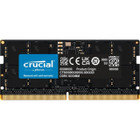
Micron CT16G56C46S5 16GB DDR5 SODIMM Memory Module - 5600MHz CL46 Unbuffered

Business volume discounts
Technical guidance
Preparation & staging
QC · ON · AB · BC
Product Features
Technical Overview
This DDR5 SDRAM module operates at 5600MHz with CAS latency CL46, delivering high-speed data transfer rates that significantly improve system responsiveness. The unbuffered, unregistered signal processing maintains direct communication with the memory controller for reduced latency and straightforward compatibility.
The on-die ECC implementation provides error checking at the chip level, enhancing data reliability without requiring additional system-level ECC support. This makes the module suitable for both consumer and professional environments where data accuracy is important.
Key Product Advantages
This Micron memory module offers several advantages for system upgrades. The DDR5 architecture provides higher bandwidth and improved power efficiency compared to previous generations, while the 5600MHz speed ensures smooth performance for demanding workloads.
High-Speed Performance
With 5600MHz operation and DDR5-5600/PC5-44800 standards, this module delivers fast data transfer rates that reduce application loading times and improve overall system responsiveness.
- 5600MHz memory speed
- DDR5-5600/PC5-44800 standard
- CL46 latency timing
Reliable Data Integrity
On-die ECC provides error checking at the memory chip level, helping to maintain data accuracy during intensive computing tasks without requiring specialized motherboard support.
- On-die error checking
- Enhanced data reliability
- Suitable for professional use
Broad Compatibility
The 262-pin SODIMM form factor and unbuffered design ensure compatibility with a wide range of notebook and small-form-factor desktop systems that support DDR5 memory technology.
- 262-pin SODIMM
- Unbuffered signal processing
- Computer, desktop PC, and notebook support
Deployment / Use Cases
This 16GB DDR5 SODIMM module is ideal for upgrading existing systems to handle modern computing demands. The single-module configuration makes it straightforward to add memory capacity without complex installation requirements.
Common deployment scenarios include upgrading business laptops for improved multitasking capabilities, enhancing gaming notebooks for better performance in memory-intensive titles, and boosting creative workstations for smoother video editing and 3D rendering workflows. The module's compatibility with both notebook and desktop PC platforms provides flexibility for various upgrade scenarios.
Notebook Performance Upgrades
Upgrade compatible laptops to handle multiple applications simultaneously, reducing slowdowns during web browsing, document processing, and media consumption.
Creative Workstation Enhancement
Improve performance for photo editing, video production, and 3D modeling applications that benefit from increased memory bandwidth and capacity.
Highlights
- 16GB DDR5 SODIMM memory module for notebook and desktop PC upgrades
- 5600MHz speed with DDR5-5600/PC5-44800 standards for high-performance computing
- Single-module configuration (1 x 16GB) for straightforward installation
- On-die ECC provides enhanced data integrity and reliability
- Unbuffered, unregistered signal processing for reduced latency
- CAS latency CL46 for optimized memory timing
- 262-pin SODIMM form factor for broad compatibility
- Low 1.10V operating voltage for improved power efficiency
- Manufactured by Micron with lifetime limited warranty
- Supports computer, desktop PC, and notebook systems
Specifications
| Specifications | |
|---|---|
| Manufacturer | Micron Technology, Inc |
| Manufacturer Part Number | CT16G56C46S5 |
| Brand Name | Micron |
| Product Name | 16GB DDR5 SDRAM Memory Module |
| Packaged Quantity | 1 |
| Product Type | RAM Module |
| Technical Information | |
| Memory Size | 16 GB |
| Memory Technology | DDR5 SDRAM |
| Memory Voltage | 1.10 V |
| Number of Modules | 1 x 16GB |
| Memory Speed | 5600 MHz |
| Memory Standard | DDR5-5600/PC5-44800 |
| Error Checking | On-die ECC |
| Signal Processing | Unbuffered,Unregistered |
| CAS Latency | CL46 |
| Device Supported | Computer,Desktop PC,Notebook |
| Physical Characteristics | |
| Number of Pins | 262-pin |
| Form Factor | SODIMM |
| Miscellaneous | |
| Country of Origin | Mexico |
| Warranty | |
| Limited Warranty | Lifetime |
FAQ
What systems are compatible with this Micron DDR5 memory module?
This 262-pin SODIMM module is compatible with notebook and desktop PC systems that support DDR5 memory technology. The unbuffered, unregistered design works with systems that accept standard DDR5 SODIMM modules. Check your system specifications for DDR5 SODIMM support and maximum memory capacity before purchasing.
What is the difference between on-die ECC and traditional ECC memory?
On-die ECC provides error checking at the individual memory chip level, helping to maintain data integrity within the module itself. Traditional ECC memory requires additional system-level support from the motherboard and CPU. This module's on-die ECC enhances reliability without needing specialized motherboard ECC support, making it suitable for both consumer and professional environments.
How does 5600MHz DDR5 memory compare to previous DDR4 modules?
DDR5 memory at 5600MHz offers significantly higher bandwidth and improved power efficiency compared to DDR4 modules. The DDR5 architecture provides faster data transfer rates, lower operating voltage (1.10V vs. DDR4's typically 1.20V), and enhanced features like on-die ECC. This results in better performance for multitasking, gaming, and content creation applications.
Can I mix this module with existing memory in my system?
While possible in some cases, mixing memory modules with different specifications (speed, latency, capacity) can lead to compatibility issues and may cause the system to run all memory at the speed of the slowest module. For optimal performance, it's recommended to use identical modules or consult your system manufacturer's memory compatibility guidelines before mixing different memory types.
| Qty | Price | Available |
|---|