








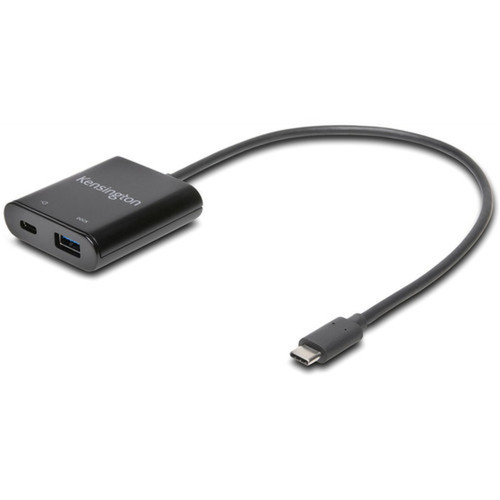


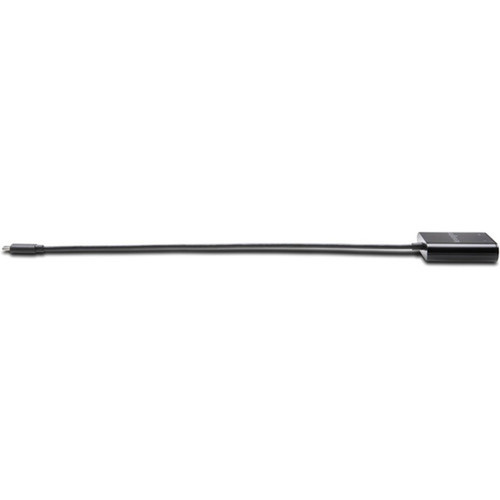
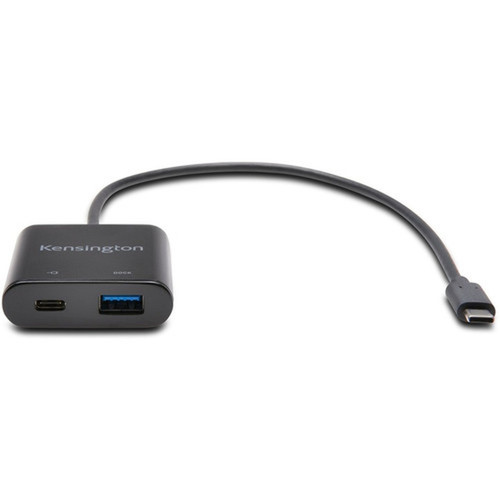



Kensington K39100WW PD1000 USB-C Dongle - 95W Power Delivery - 3-Port Hub for Notebooks - Wired

Business volume discounts
Technical guidance
Preparation & staging
QC · ON · AB · BC
Product Features
Product Overview
The Kensington PD1000 USB-C Dongle (model K39100WW) is a compact docking station designed to expand notebook connectivity while delivering substantial power. This wired accessory connects via a single USB Type-C host interface, providing both data transfer capabilities and up to 95W of power delivery to compatible devices.
With three total USB ports including both Type-A and Type-C configurations, the PD1000 enables simultaneous connection of peripherals, storage devices, and displays. The inclusion of a Kensington security slot adds physical theft protection, making this dongle suitable for shared or public workspace environments where device security is a concern.
Relevant factors for this section include Connectivity Technology, Device Supported, Host Interface, Total Number of USB Ports. When those points are considered together, they give buyers a clearer picture of how the product is equipped, how it fits into deployment, and what kind of day-to-day role it is meant to support.
Technical Overview
Engineered specifically for notebook computers, the PD1000 utilizes wired connectivity technology for reliable, stable data transmission without wireless interference concerns. The 95W maximum power supply supports charging for most modern notebooks while maintaining sufficient overhead for connected peripherals.
The port configuration includes verification of both USB Type-C and USB Type-A compatibility, ensuring backward compatibility with legacy devices while supporting modern USB-C peripherals. This technical specification confirms the dongle's versatility across different device generations and accessory types.
Relevant factors for this section include Connectivity Technology, Device Supported, Host Interface, Total Number of USB Ports. When those points are considered together, they give buyers a clearer picture of how the product is equipped, how it fits into deployment, and what kind of day-to-day role it is meant to support.
A strong technical summary explains how the product's interfaces, hardware profile, and operating characteristics work together in real deployment. Buyers often need this context to confirm compatibility with existing devices, expected performance in daily use, and whether installation will be straightforward for IT staff or end users.
Key Product Advantages
The PD1000 combines essential expansion capabilities with robust power delivery in a single compact solution. Unlike basic adapters, this dongle provides both substantial charging capacity and multiple connectivity options through a streamlined design that minimizes desktop clutter.
High-Power Charging
Delivers up to 95W of power through the USB-C connection, sufficient to charge most modern notebooks while in use, eliminating the need for separate power adapters.
- Single-cable power and data
- Reduces adapter clutter
- Supports power-hungry devices
Expanded Connectivity
Provides three USB ports with both Type-A and Type-C configurations, allowing simultaneous connection of multiple peripherals, external storage, and displays.
- Mixed port types
- Simultaneous device support
- Backward compatible
Enhanced Security
Includes a Kensington security slot for physical theft prevention, making the dongle suitable for shared workspaces, libraries, classrooms, and public access environments.
- Deterrent against theft
- Ideal for shared spaces
- Protects investment
Deployment / Use Cases
The Kensington PD1000 serves as an ideal solution for notebook users requiring expanded connectivity without sacrificing charging capability. Its compact form factor and wired reliability make it particularly valuable in environments where consistent performance is essential.
In educational settings, the dongle enables students to connect multiple peripherals while maintaining notebook charge throughout extended study sessions. For business professionals, the 95W power delivery ensures laptops remain powered during presentations or extended work periods, while the security slot provides peace of mind in shared office environments.
Mobile Workstation Expansion
Transforms minimal-port notebooks into fully functional workstations with simultaneous power, storage, and peripheral connectivity through a single USB-C connection.
Secure Public Access Solutions
The integrated security slot makes this dongle suitable for libraries, computer labs, and public kiosks where device protection is necessary alongside expanded functionality.
Highlights
- 95W maximum power delivery for charging notebooks while in use
- Three total USB ports with both Type-A and Type-C configurations
- Single USB Type-C host interface for simplified connectivity
- Wired connectivity technology ensures stable, interference-free data transmission
- Kensington security slot compatible for physical theft prevention
- Specifically designed for notebook computer compatibility
- 3-year limited warranty for long-term reliability assurance
- Compact dongle form factor minimizes desktop space requirements
Specifications
| Specifications | |
|---|---|
| Manufacturer | Kensington Computer Products Group |
| Manufacturer Part Number | K39100WW |
| Brand Name | Kensington |
| Product Model | PD1000 |
| Product Name | PD1000 USB-C Dongle |
| Product Type | Docking Station |
| Technical Information | |
| Connectivity Technology | Wired |
| Device Supported | Notebook |
| Interfaces/Ports | |
| Host Interface | USB Type C |
| Total Number of USB Ports | 3 |
| USB Type-C | Yes |
| USB Type-A | Yes |
| Power Description | |
| Maximum Power Supply Wattage | 95 W |
| Miscellaneous | |
| Kensington Security Slot | Yes |
| Country of Origin | China |
| Warranty | |
| Limited Warranty | 3 Year |
FAQ
What devices are compatible with the Kensington PD1000 USB-C Dongle?
The PD1000 is specifically designed for notebook computers with USB Type-C ports. It requires a USB-C host interface for both power delivery and data connectivity. The dongle supports notebooks that can accept up to 95W of power through their USB-C port and are compatible with standard USB data protocols for peripheral connections.
How much power does this dongle deliver to connected devices?
The Kensington PD1000 provides up to 95 watts of maximum power supply through its USB Type-C connection. This power delivery capability is sufficient to charge most modern notebooks while they are in use, eliminating the need for a separate power adapter. The 95W rating represents the maximum power available for both charging the notebook and powering connected peripherals.
What types of USB ports are available on this docking station?
This dongle features three total USB ports with confirmed support for both USB Type-A and USB Type-C connections. The specific configuration includes the USB Type-C host interface for connecting to your notebook, plus additional ports that accommodate both legacy USB Type-A devices and modern USB Type-C peripherals, providing flexibility for different accessory generations.
Does the Kensington PD1000 include security features?
Yes, the PD1000 features a Kensington security slot compatible with standard Kensington locking cables. This physical security mechanism allows the dongle to be secured to desks, tables, or other fixed surfaces, preventing theft in shared or public environments like offices, classrooms, libraries, or coworking spaces where devices may be unattended.
What warranty coverage comes with this USB-C dongle?
Kensington provides a 3-year limited warranty for the PD1000 USB-C Dongle. This warranty period covers manufacturing defects and ensures product reliability for extended use. The 3-year coverage reflects confidence in the dongle's construction and performance, offering protection through typical upgrade cycles for notebook accessories.
Is this docking station wireless or wired?
The Kensington PD1000 utilizes wired connectivity technology exclusively. It connects physically via USB Type-C cable to your notebook, providing stable, interference-free data transmission without the potential connectivity issues sometimes associated with wireless solutions. This wired approach ensures consistent performance for both power delivery and data transfer across all connected devices.
| Qty | Price | Available |
|---|