








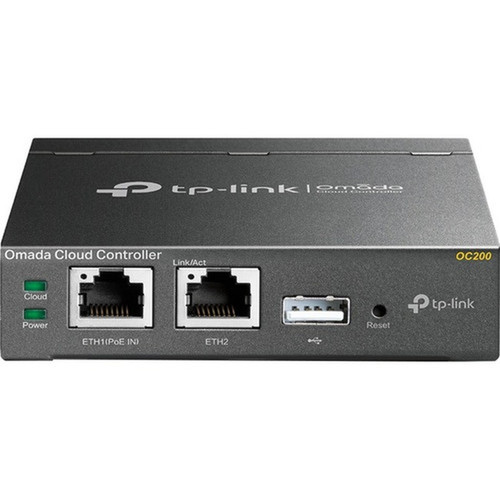

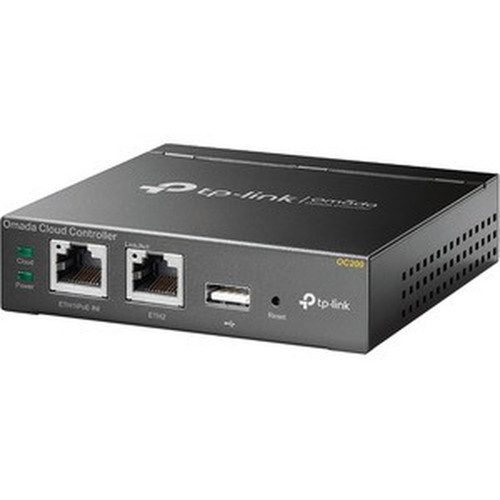


TP-LINK OC200 Omada Hardware Controller - Network Management - 2 Ports - Metal Chassis - Limited Lifetime Warranty

Business volume discounts
Technical guidance
Preparation & staging
QC · ON · AB · BC
Product Features
Technical Overview
The OC200 operates as infrastructure management equipment within the TP-Link Omada ecosystem, designed specifically for network administration and monitoring tasks. It connects via its dual network ports to manage compatible Omada access points, switches, and routers through a unified interface.
Power efficiency is achieved through 5V DC input, making it suitable for continuous operation without significant energy consumption. The controller maintains environmental compliance with RoHS certification, ensuring responsible manufacturing standards.
Relevant factors for this section include Total Number of Network Ports, Input Voltage. When those points are considered together, they give buyers a clearer picture of how the product is equipped, how it fits into deployment, and what kind of day-to-day role it is meant to support.
A strong technical summary explains how the product's interfaces, hardware profile, and operating characteristics work together in real deployment. Buyers often need this context to confirm compatibility with existing devices, expected performance in daily use, and whether installation will be straightforward for IT staff or end users.
Key Product Advantages
The OC200 provides dedicated hardware reliability for network management, ensuring constant availability without the overhead of maintaining separate server infrastructure. Its metal construction offers superior durability compared to plastic alternatives, supporting long-term deployment in business environments.
These strengths make the product easier to deploy and manage in real environments, especially where reliability, usability, and day-to-day operational continuity matter. Notable benefits include Always-On Management, Compact Deployment.
Always-On Management
Dedicated hardware ensures network management services remain available continuously, providing consistent oversight of connected Omada devices.
- Eliminates software dependency
- Reduces maintenance overhead
- Provides reliable service availability
Compact Deployment
The small form factor allows installation in limited spaces while maintaining full management capabilities for Omada networks.
- 3.90" square footprint
- 1" height profile
- Metal chassis durability
Deployment / Use Cases
The OC200 is designed for centralized management of TP-Link Omada Software Defined Networking (SDN) deployments. It serves as the control point for configuring, monitoring, and maintaining networks that include Omada access points, switches, and routers.
Typical deployment scenarios include small business networks, retail environments, office buildings, and educational facilities where unified network management simplifies administration. The hardware controller approach is particularly valuable for locations without dedicated IT staff or where network reliability is critical.
Relevant factors for this section include Total Number of Network Ports, Input Voltage. When those points are considered together, they give buyers a clearer picture of how the product is equipped, how it fits into deployment, and what kind of day-to-day role it is meant to support.
Small Business Networks
Provides centralized control for office networks with multiple access points and switches, simplifying configuration and monitoring tasks.
Retail & Hospitality
Manages guest and operational networks in multi-location deployments, ensuring consistent policies and reliable connectivity.
Physical Profile
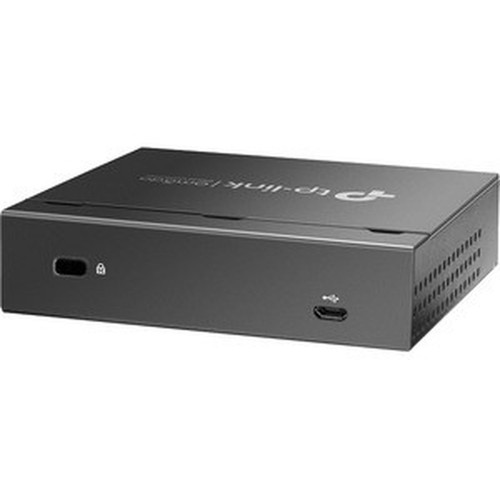
The OC200 features a compact metal chassis measuring 3.90" wide by 3.90" deep by 1" high (99.06 mm × 99.06 mm × 25.40 mm). This square footprint allows flexible placement on shelves, in network racks with appropriate mounting accessories, or on desktop surfaces. The metal construction provides both durability and effective heat dissipation for continuous operation.
The physical profile is practical for deployment planning because the dimensions and weight are clearly defined: 1" (25.40 mm), 3.90" (99.06 mm), 3.90" (99.06 mm). This helps confirm rack, shelf, desk, or cabinet fit before installation.
- Width
- 3.90" (99.06 mm)
- Depth
- 3.90" (99.06 mm)
- Height
- 1" (25.40 mm)
What's in the Box
The package includes all necessary components for immediate deployment of the hardware controller in your network environment.
Highlights
- TP-Link Omada Hardware Controller for centralized network management
- Dedicated hardware with metal chassis construction
- 2 network ports for connectivity and management
- Compact dimensions: 3.90" × 3.90" × 1" (99.06 mm × 99.06 mm × 25.40 mm)
- 5V DC power input for efficient operation
- Includes Ethernet cable and quick installation guide
- RoHS compliant for environmental responsibility
- Limited lifetime warranty coverage
Specifications
| Specifications | |
|---|---|
| Manufacturer | TP-LINK Technologies Co., Ltd |
| Manufacturer Part Number | OC200 |
| Brand Name | TP-Link |
| Product Line | Omada |
| Product Model | OC200 |
| Product Name | OC200 Omada Hardware Controller |
| Product Type | Infrastructure Management Equipment |
| Interfaces/Ports | |
| Total Number of Network Ports | 2 |
| Power Description | |
| Input Voltage | 5 V DC |
| Physical Characteristics | |
| Product Material | Metal |
| Height | 1" (25.40 mm) |
| Width | 3.90" (99.06 mm) |
| Depth | 3.90" (99.06 mm) |
| Miscellaneous | |
| Package Contents | OC200 Omada Hardware Controller Quick Installation Guide Ethernet Cable |
| Application/Usage | Network Management |
| Environmental Compliance | Restriction of Hazardous Substances (RoHS) |
User Manual
FAQ
What is the primary function of the TP-Link OC200 controller?
The TP-Link OC200 serves as a dedicated hardware controller for centralized management of Omada Software Defined Networking (SDN) devices. It provides always-on control for configuring, monitoring, and maintaining networks that include compatible Omada access points, switches, and routers through a unified interface.
How many network ports does the OC200 have and what are they used for?
The OC200 features 2 network ports that provide connectivity to the managed network. These ports allow the controller to communicate with Omada devices for configuration, monitoring, and management tasks while maintaining network segmentation capabilities as needed for different deployment scenarios.
What power requirements does the OC200 hardware controller have?
The OC200 operates on 5V DC input power, making it energy-efficient for continuous operation. This low-voltage requirement allows flexible deployment with standard power adapters and reduces energy consumption compared to server-based management solutions.
What are the physical dimensions of the OC200 controller?
The OC200 measures 3.90" wide by 3.90" deep by 1" high (99.06 mm × 99.06 mm × 25.40 mm). This compact square footprint with metal chassis construction allows installation in space-constrained environments like network closets, server racks with appropriate mounting, or on desktop surfaces.
What is included in the package with the OC200 controller?
The package contains the OC200 Omada Hardware Controller unit, a quick installation guide for setup assistance, and an Ethernet cable for network connectivity. These components provide everything needed for immediate deployment in your network environment.
What type of warranty coverage does the OC200 hardware controller include?
The OC200 comes with limited lifetime warranty coverage from TP-Link. This warranty supports the product's durability and reliability for long-term deployment in business network environments, providing assurance for your infrastructure investment.
| Qty | Price | Available |
|---|