




Shipping included*
Exclusions
Additional shipping fees may apply in rare circumstances for deliveries outside standard service areas. In most cases, this only potentially affects shipments to the Northwest Territories and Yukon, as well as certain heavy or oversized items.
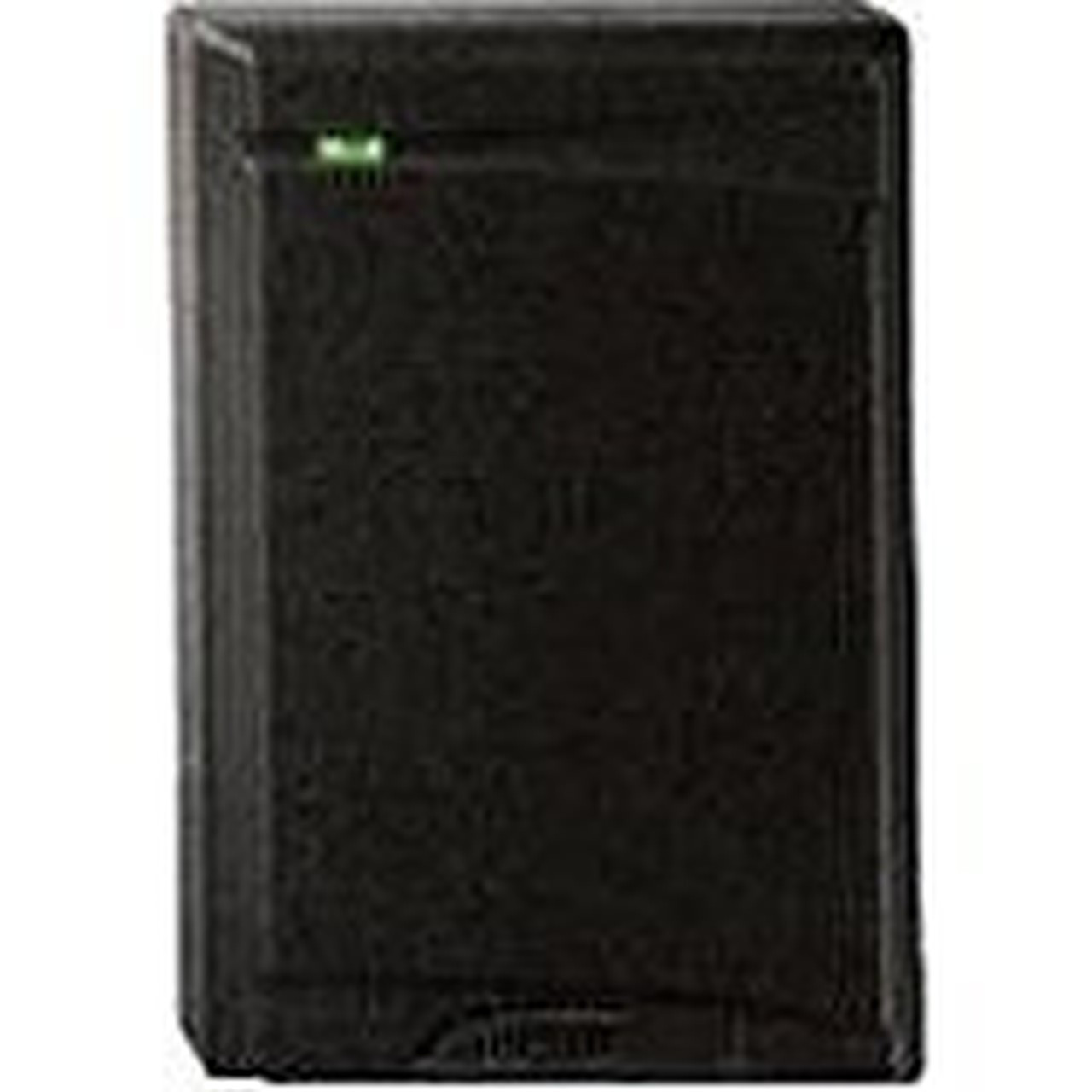
Kantech P325W26 ioProx Card Reader Access Device - Proximity - 8. 07" - 205 mm Range - Indoor/Outdoor - Wiegand - 14 V DC - Black

Business volume discounts
Technical guidance
Preparation & staging
QC · ON · AB · BC
Product Features
Technical Overview
This card reader utilizes proximity technology for contactless identification, enhancing user convenience and reducing wear compared to swipe or insert mechanisms. The 8.07-inch operating range allows for smooth access without requiring direct physical contact with the reader surface.
The device features a Wiegand interface for seamless integration with access control panels and systems. It operates on 14 V DC input voltage, ensuring compatibility with standard security power supplies. The environmentally friendly design meets sustainability requirements for modern security installations.
This section brings together practical product details such as Identification Method, Operating Range, Application/Usage, Wiegand, so buyers can judge configuration, deployment fit, and day-to-day suitability with less guesswork.
A strong technical summary explains how the product's interfaces, hardware profile, and operating characteristics work together in real deployment. Buyers often need this context to confirm compatibility with existing devices, expected performance in daily use, and whether installation will be straightforward for IT staff or end users.
Key Product Advantages
The P325W26 combines robust security functionality with practical installation benefits. Its proximity technology eliminates mechanical wear points associated with traditional card readers, resulting in longer service life and reduced maintenance requirements.
These strengths make the product easier to deploy and manage in real environments, especially where reliability, usability, and day-to-day operational continuity matter. Notable benefits include Dual Environment Capability, Standard Interface Support.
Dual Environment Capability
Rated for both indoor and outdoor use, this reader adapts to diverse installation scenarios from office lobbies to parking garage entrances.
- Weather-resistant construction
- Consistent performance across temperature ranges
Standard Interface Support
The Wiegand interface ensures compatibility with most access control systems, simplifying integration into existing security infrastructure.
- Industry-standard protocol
- Easy configuration with control panels
Deployment / Use Cases
The Kantech ioProx P325W26 serves as a versatile access control solution for various security scenarios. Its proximity technology and durable construction make it suitable for high-traffic areas where reliability and user convenience are priorities.
Common applications include corporate office buildings, educational facilities, healthcare institutions, and industrial sites. The device can control access to secured doors, gates, elevators, and restricted areas while maintaining audit trails through the connected access control system.
This section brings together practical product details such as Identification Method, Operating Range, Application/Usage, Wiegand, so buyers can judge configuration, deployment fit, and day-to-day suitability with less guesswork.
Commercial Building Access
Install at main entrances, employee doors, or parking facilities to manage personnel flow while maintaining security protocols.
Multi-Tenant Facilities
Deploy in apartment buildings, condominiums, or mixed-use developments to provide secure access for residents and authorized visitors.
Physical Profile
The card reader features compact dimensions of 4.60" (116.84 mm) height, 2.80" (71.12 mm) width, and 0.84" (21.34 mm) depth, allowing for discreet installation on door frames, walls, or turnstiles. The lightweight 150-gram design simplifies mounting while the black finish provides a professional appearance that complements various architectural styles.
The physical profile is practical for deployment planning because the dimensions and weight are clearly defined: 4.60" (116.84 mm), 2.80" (71.12 mm), 0.84" (21.34 mm), 150 g. This helps confirm rack, shelf, desk, or cabinet fit before installation.
- Width
- 2.80" (71.12 mm)
- Depth
- 0.84" (21.34 mm)
- Height
- 4.60" (116.84 mm)
- Weight
- 150 g
Highlights
- Proximity technology for contactless card reading at 8.07" (205 mm) range
- Indoor and outdoor application suitability for flexible deployment
- Wiegand interface for compatibility with standard access control systems
- 14 V DC input voltage for reliable power operation
- Black finish for professional appearance and architectural integration
- Environmentally friendly design meeting sustainability requirements
- Compact dimensions of 4.60" × 2.80" × 0.84" for space-efficient installation
- Lightweight 150-gram construction for easy mounting
Specifications
| Specifications | |
|---|---|
| Manufacturer | Johnson Controls |
| Manufacturer Part Number | P325W26 |
| Brand Name | Kantech |
| Product Line | ioProx |
| Product Series | P325 |
| Product Model | P325W26 |
| Product Name | ioProx P325W26 Card Reader Access Device |
| Product Type | Card Reader Access Device |
| Technical Information | |
| Identification Method | Proximity |
| Operating Range | 8.07" (205 mm) |
| Application/Usage | Indoor,Outdoor |
| Interfaces/Ports | |
| Wiegand | Yes |
| Power Description | |
| Input Voltage | 14 V DC |
| Physical Characteristics | |
| Product Color | Black |
| Height | 4.60" (116.84 mm) |
| Width | 2.80" (71.12 mm) |
| Depth | 0.84" (21.34 mm) |
| Weight (Approximate) | 150 g |
| Miscellaneous | |
| Environmentally Friendly | Yes |
FAQ
What type of cards does the Kantech P325W26 reader support?
The P325W26 supports proximity cards and key fobs that utilize proximity technology. This contactless identification method allows authorized users to present their credential near the reader without physical insertion or swiping, enhancing convenience and reducing mechanical wear on both the card and reader components.
What is the maximum reading distance for this card reader?
The Kantech P325W26 has an operating range of 8.07 inches (205 millimeters). This distance allows users to present their proximity card or key fob from a comfortable distance without needing to make direct contact with the reader surface, facilitating smooth access in high-traffic areas.
Can this card reader be installed outdoors?
Yes, the P325W26 is designed for both indoor and outdoor applications. Its construction withstands various weather conditions, making it suitable for installation at building exteriors, parking facilities, gates, and other outdoor access points where environmental exposure occurs.
What interface does this card reader use to connect to access control systems?
This device features a Wiegand interface, which is an industry-standard protocol for connecting card readers to access control panels. The Wiegand interface ensures compatibility with most security systems and simplifies integration into existing or new access control installations.
What power supply is required for the P325W26 card reader?
The card reader operates on 14 V DC input voltage. This standard voltage level is commonly available from access control power supplies, ensuring reliable operation and compatibility with typical security system power infrastructure in commercial and institutional settings.
What are the physical dimensions of this card reader?
The Kantech P325W26 measures 4.60 inches (116.84 mm) in height, 2.80 inches (71.12 mm) in width, and 0.84 inches (21.34 mm) in depth. These compact dimensions allow for discreet installation on door frames, walls, or other mounting surfaces while maintaining a professional appearance.
What connectivity or interface options are available?
Connectivity details help confirm how the product integrates with your network, accessories, and surrounding peripherals before rollout or replacement planning. They are often the difference between a technically compatible device and one that is genuinely easy to deploy.
| Qty | Price | Available |
|---|