





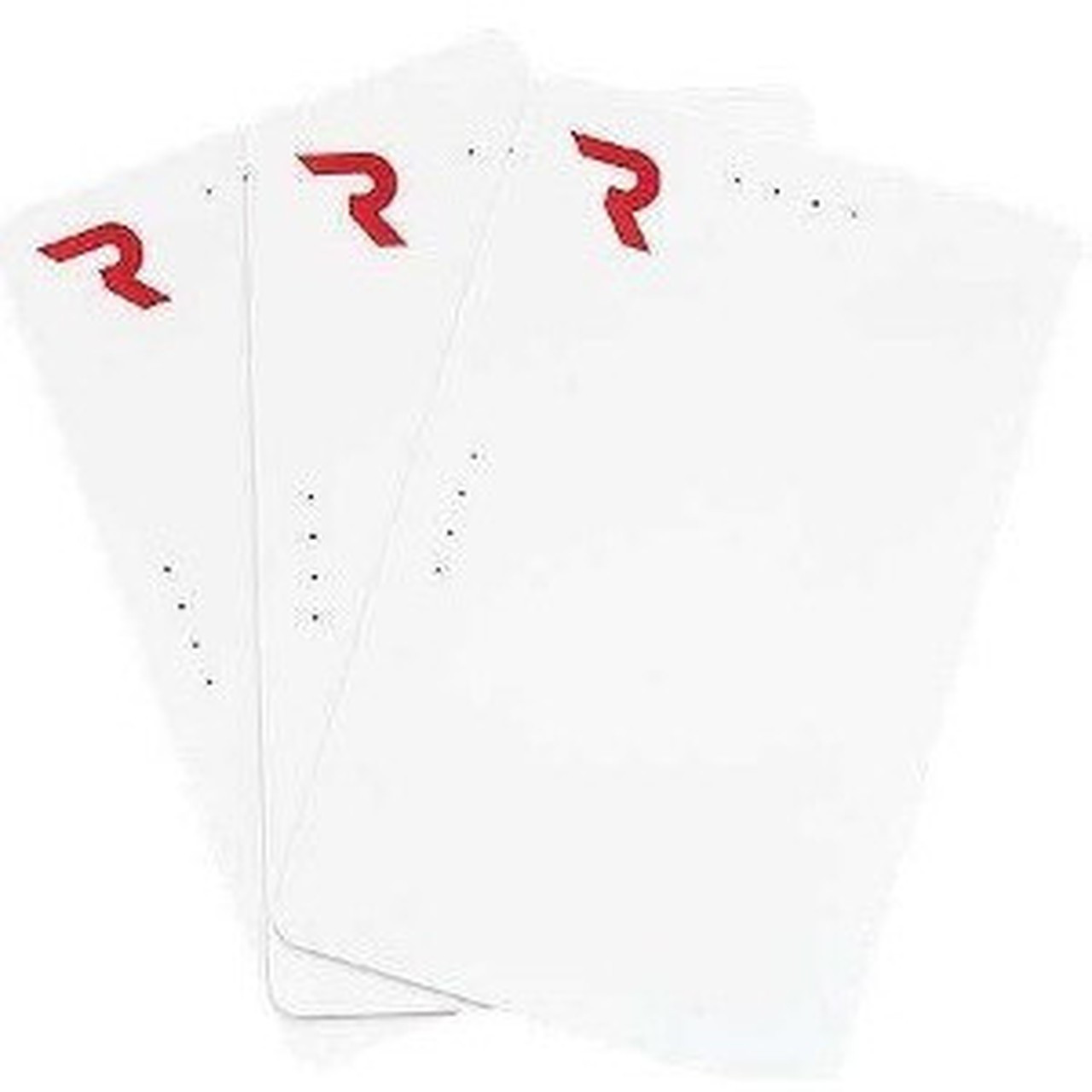


ProdataKey RC Smart Card - Printable - 4 KB Memory - 13. 56 MHz - Red PVC/PET - 25 Pack

Business volume discounts
Technical guidance
Preparation & staging
QC · ON · AB · BC
Product Features
Technical Overview
These smart cards utilize 13.56 MHz RFID technology, compatible with common access control systems and card readers. The 4 KB memory capacity accommodates standard credential formats and additional user data fields. The printable media type allows for custom branding, employee identification, or organizational logos using appropriate card printing equipment.
Constructed from Polyvinyl Chloride (PVC) and Polyethylene Terephthalate (PET), the cards balance durability with flexibility. This material combination ensures reliable card operation through repeated use while maintaining consistent RF performance. The red color provides immediate visual differentiation in multi-tier access systems or departmental identification scenarios.
This section brings together practical product details such as Technology, Media Type, Operating Frequency, Memory Size, so buyers can judge configuration, deployment fit, and day-to-day suitability with less guesswork.
Key Product Advantages
These smart cards combine practical RFID functionality with customization options and durable construction. The 13.56 MHz operating frequency ensures broad compatibility with existing access control infrastructure, while the printable surface allows for organizational branding and visual identification.
Printable Flexibility
The printable surface supports custom graphics, text, or logos using compatible card printers, enabling organizational branding alongside technical functionality.
Memory Capacity
With 4 KB of memory, these cards store sufficient data for complex access credentials, user information, or additional security parameters beyond basic identification.
Material Durability
PVC and PET construction provides physical resilience for daily use while maintaining consistent RF performance and card integrity over time.
Deployment / Use Cases
The ProdataKey RC Smart Cards serve as foundational components in physical access control and security ecosystems. Their 13.56 MHz frequency aligns with common RFID standards, ensuring interoperability with most commercial access control readers and controllers.
In surveillance and alarm environments, these cards complement security infrastructure by providing authenticated access to monitored areas. The printable surface allows for integration with visual identification systems, while the memory capacity supports data storage for audit trails or multi-factor authentication scenarios.
Access Control Systems
Deploy as employee badges for door access, time tracking, or secure area entry in office buildings, manufacturing facilities, or educational institutions.
Security Integration
Integrate with surveillance systems for personnel tracking, restricted area monitoring, or audit trail generation alongside video recording solutions.
Highlights
- 13.56 MHz operating frequency for broad RFID compatibility
- 4 KB memory capacity for credential and user data storage
- Printable surface supports custom branding and identification
- Red PVC/PET construction for durability and visual differentiation
- 25-pack configuration for cost-effective deployment
- Manufactured in the United States
- Compatible with standard access control systems
- Suitable for commercial and institutional security applications
Specifications
| Specifications | |
|---|---|
| Manufacturer | ProdataKey, LLC |
| Manufacturer Part Number | RC |
| Brand Name | ProdataKey |
| Product Name | Smart Card |
| Packaged Quantity | 25 Pack |
| Product Type | Smart Card |
| Product Information | |
| Technology | Smart Card |
| Media Type | Printable |
| Operating Frequency | 13.56 MHz |
| Memory | |
| Memory Size | 4 KB |
| Physical Characteristics | |
| Color Family | Red |
| Product Color | Red |
| Product Material | Polyvinyl Chloride (PVC),Polyethylene Terephthalate (PET) |
| Miscellaneous | |
| Country of Origin | United States |
FAQ
What is the operating frequency of these smart cards?
These ProdataKey smart cards operate at 13.56 MHz, which is a common frequency for RFID access control systems. This frequency ensures compatibility with most commercial card readers and provides reliable communication for credential verification and data exchange in security applications.
How much memory do these smart cards have?
Each card contains 4 KB of memory, providing sufficient storage capacity for access credentials, user identification data, and additional security parameters. This memory size supports standard RFID data formats while allowing for expanded functionality in integrated security systems.
Can these smart cards be printed with custom designs?
Yes, these are printable smart cards designed for customization. The surface accepts printing from compatible card printers using thermal transfer or dye-sublimation methods, allowing organizations to add logos, employee information, department codes, or other identification elements alongside the RFID functionality.
What materials are used in these smart cards?
The cards are constructed from Polyvinyl Chloride (PVC) and Polyethylene Terephthalate (PET). This material combination provides durability for daily use while maintaining consistent RF performance. The materials ensure proper card flexibility and thickness for reliable operation in card readers over extended periods.
How many cards come in each package?
These smart cards are packaged in quantities of 25. This pack size offers practical deployment for small to medium installations while providing cost efficiency through bulk purchasing. The consistent manufacturing ensures uniform performance across all cards in the package.
What are typical applications for these smart cards?
These cards are designed for access control systems, employee identification, time and attendance tracking, and integrated security solutions. Their 13.56 MHz frequency and 4 KB memory make them suitable for commercial buildings, educational institutions, healthcare facilities, and any environment requiring secure physical access management.
| Qty | Price | Available |
|---|