







Shipping included*
Exclusions
Additional shipping fees may apply in rare circumstances for deliveries outside standard service areas. In most cases, this only potentially affects shipments to the Northwest Territories and Yukon, as well as certain heavy or oversized items.
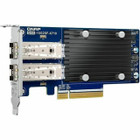
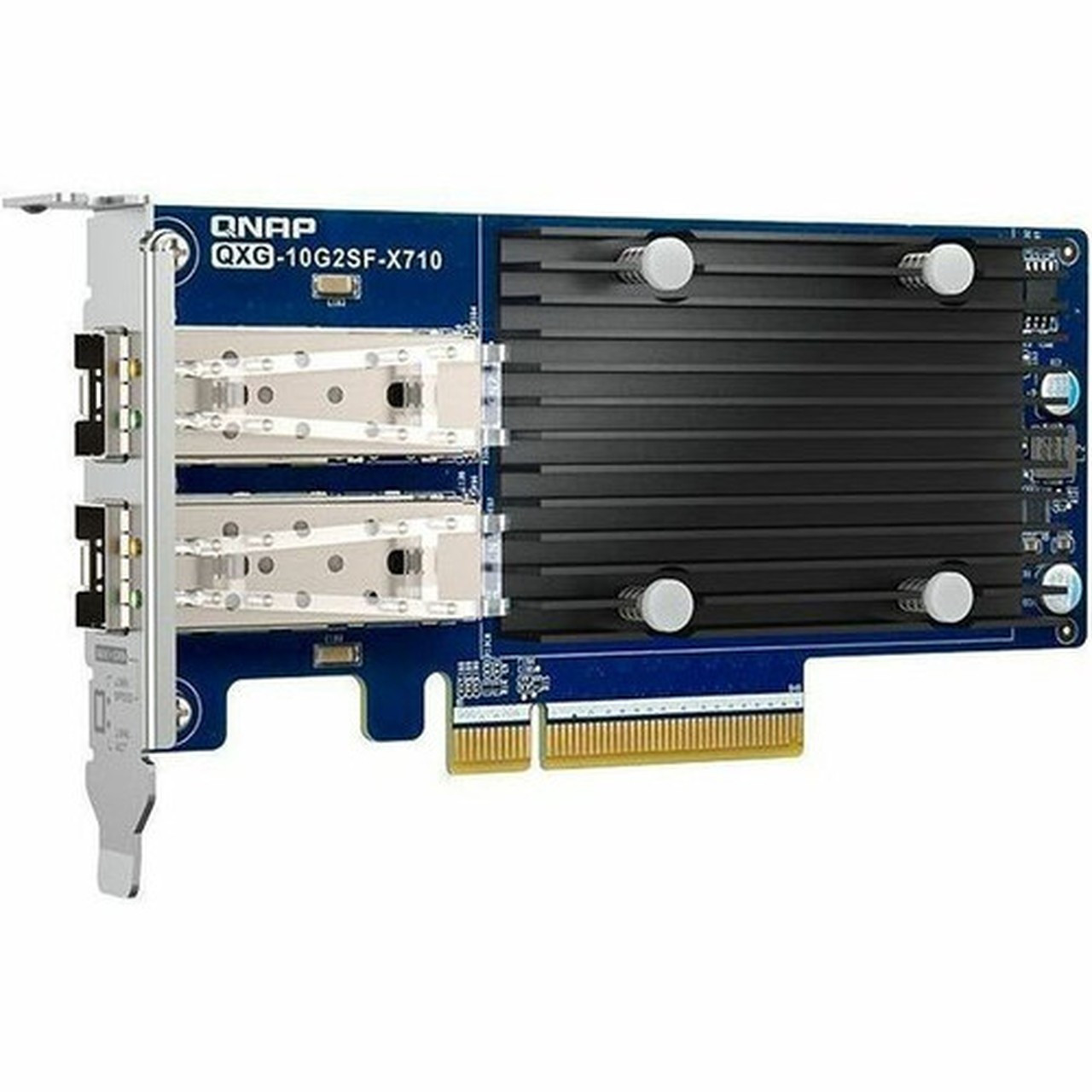
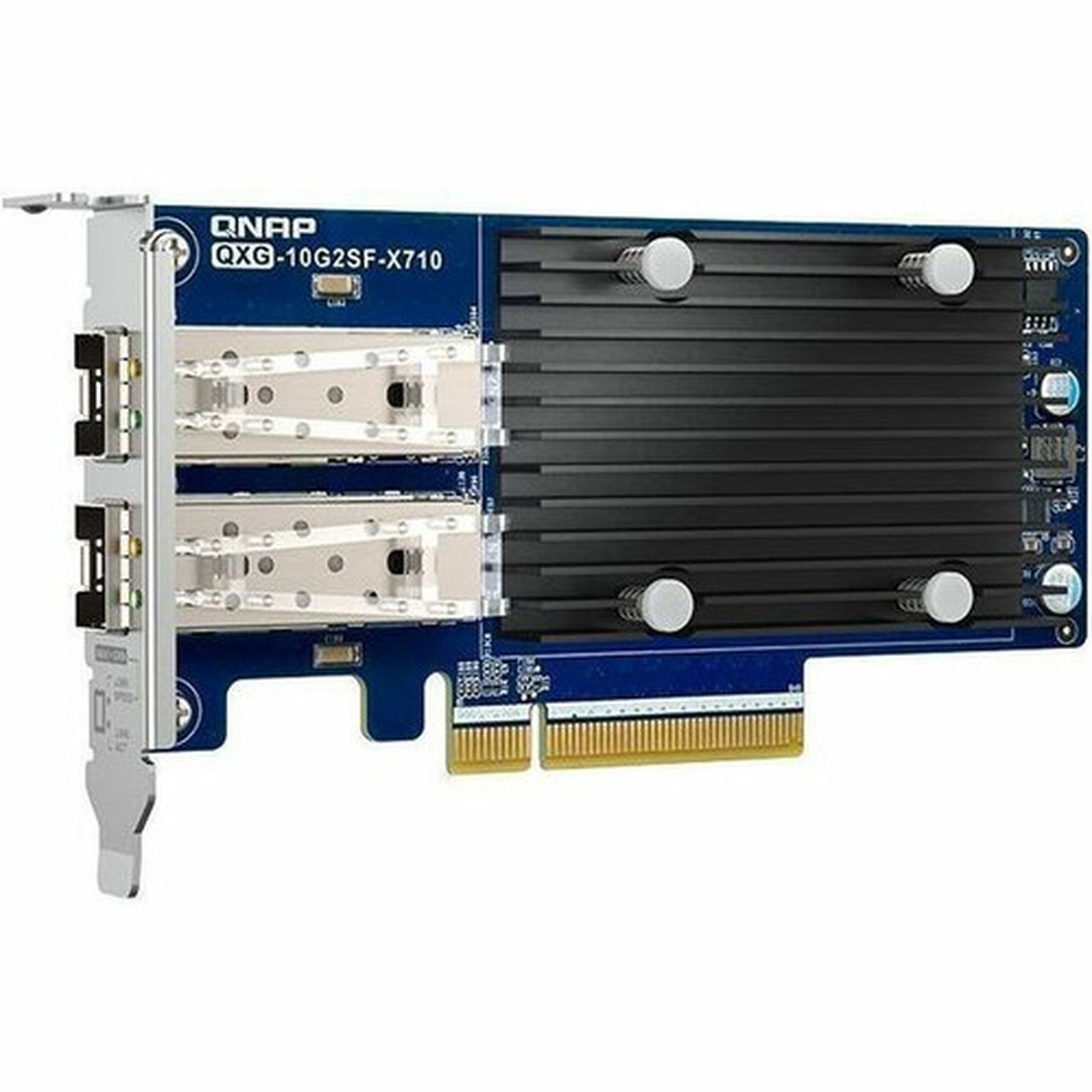
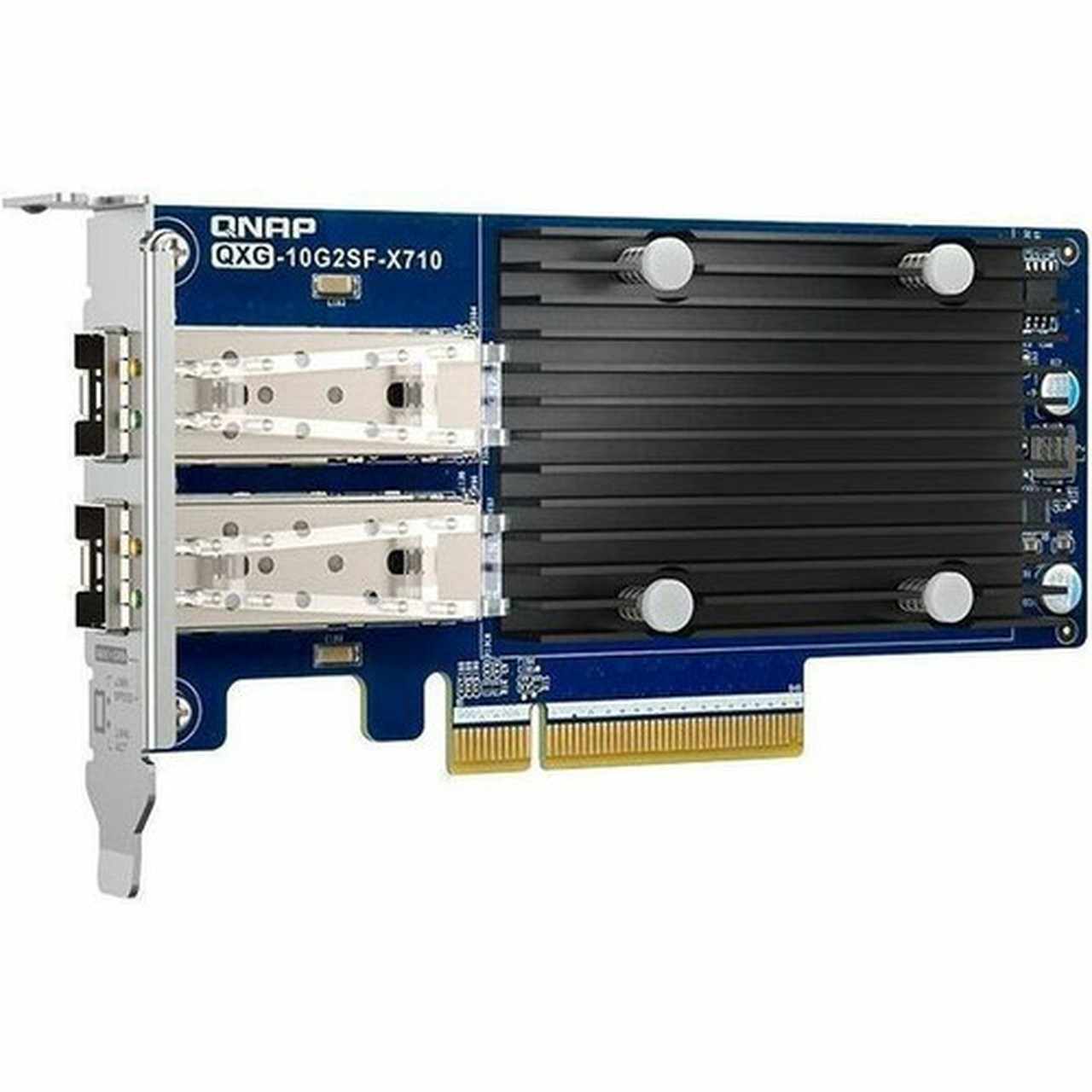
QNAP QXG-10G2SF-X710 Dual-port 10 GbE Network Expansion Card - PCIe 3.0 x 8 - 2 SFP+ Fiber Ports - Low-profile Bracket

Business volume discounts
Technical guidance
Preparation & staging
QC · ON · AB · BC
Product Features
Technical Overview
This expansion card leverages PCI Express 3.0 x8 technology to achieve a maximum data transfer rate of 10 Gbit/s, translating to approximately 8000 MB/s of theoretical bandwidth. The dual SFP+ ports support optical fiber media, which minimizes signal degradation over extended distances compared to copper cabling, while the included low-profile bracket accommodates space-constrained server configurations.
Advanced networking features include support for 40GBase-R2 and 50GBase-R2 network technologies, providing a foundation for future high-speed network architectures. The card also incorporates Single Root I/O Virtualization (SR-IOV), which enhances virtualization performance by allowing direct hardware access to virtual machines, reducing CPU overhead and improving overall system efficiency in virtualized server deployments.
Relevant factors for this section include Features, Host Interface, Total Number of Ports. When those points are considered together, they give buyers a clearer picture of how the product is equipped, how it fits into deployment, and what kind of day-to-day role it is meant to support.
Key Product Advantages
The QXG-10G2SF-X710 delivers significant performance and deployment benefits for server networking upgrades. Its dual-port design doubles available bandwidth compared to single-port alternatives, while the PCIe 3.0 x8 interface ensures minimal bottlenecking for high-throughput applications.
High-Bandwidth Connectivity
With 10 Gbit/s per port and PCIe 3.0 x8 host interface, this card provides the throughput needed for data-intensive server tasks, including virtualization, database operations, and media streaming.
- Dual-port design for aggregated bandwidth
- PCIe 3.0 x8 interface for maximum throughput
- Optical fiber support for long-distance reliability
Server-Optimized Design
Engineered specifically for server environments, the card includes a low-profile bracket for compatibility with various chassis configurations and supports SR-IOV for enhanced virtualization performance.
- Low-profile bracket for space efficiency
- SR-IOV support for virtualized workloads
- Plug-in card form factor for easy installation
Deployment / Use Cases
This network expansion card is ideal for server deployments requiring enhanced network performance and reliability. Its 10GbE capabilities make it suitable for data center environments where high-speed interconnects between servers, storage arrays, and network switches are critical for maintaining application responsiveness and data availability.
Common deployment scenarios include upgrading existing servers to 10GbE networking, building high-performance virtualization hosts with improved network throughput, and creating cost-effective 10GbE backbone connections without requiring complete network infrastructure replacement. The optical fiber support makes it particularly valuable for deployments spanning longer distances within data centers or between server rooms.
Data Center Server Upgrades
Add 10GbE connectivity to existing servers to improve network performance for virtualization, database, and application hosting workloads.
High-Performance Computing
Provide the network bandwidth needed for computational clusters, scientific computing, and media rendering applications that demand high data transfer rates.
What's in the Box
The package includes all necessary components for immediate deployment of the network expansion card.
Highlights
- Dual-port 10 Gigabit Ethernet expansion card for server networking
- PCI Express 3.0 x8 host interface with 10 Gbit/s maximum data transfer rate
- Two SFP+ ports supporting optical fiber connections for long-distance transmission
- Low-profile bracket included for compatibility with space-constrained server chassis
- Single Root I/O Virtualization (SR-IOV) support for enhanced virtualization performance
- Supports 40GBase-R2 and 50GBase-R2 network technologies
- Plug-in card form factor for straightforward server installation
- Optimized for server deployments in data center and enterprise environments
Specifications
| Specifications | |
|---|---|
| Manufacturer | QNAP Systems |
| Manufacturer Part Number | QXG-10G2SF-X710 |
| Brand Name | QNAP |
| Product Model | QXG-10G2SF-X710 |
| Product Name | QXG-10G2SF-X710 Dual-port, 10 GbE Network Expansion Card |
| Packaged Quantity | 1 |
| Product Type | 10Gigabit Ethernet Card |
| Technical Information | |
| Features | Single Root I/O Virtualization (SR-IOV) |
| Interfaces/Ports | |
| Host Interface | PCI Express 3.0 x8 |
| Total Number of Ports | 2 |
| I/O Expansions | |
| Expansion Slot Type | SFP+ |
| Media & Performance | |
| Media Type Supported | Optical Fiber |
| Maximum Data Transfer Rate | 10 Gbit/s |
| Network & Communication | |
| Network Technology | 40GBase-R2,50GBase-R2 |
| Physical Characteristics | |
| Form Factor | Plug-in Card |
| Bracket Height | Low-profile |
| Miscellaneous | |
| Package Contents | QXG-10G2SF-X710 Dual-port, 10 GbE Network Expansion Card 1 x QIG 3 x Brackets |
| Device Supported | Server |
FAQ
What type of network connections does this expansion card support?
The QNAP QXG-10G2SF-X710 supports optical fiber connections through its two SFP+ ports. This media type is ideal for long-distance data transmission with minimal signal degradation, making it suitable for data center deployments where servers may be located significant distances from network switches or other infrastructure components.
What is the maximum data transfer rate of this network card?
This dual-port expansion card delivers a maximum data transfer rate of 10 Gbit/s per port. With its PCI Express 3.0 x8 host interface providing approximately 8000 MB/s of theoretical bandwidth, the card can handle high-throughput networking tasks including server-to-server communication, storage access, and virtualization workloads without creating network bottlenecks.
What server types is this expansion card compatible with?
The QXG-10G2SF-X710 is designed specifically for server deployment and is compatible with systems that have an available PCI Express 3.0 x8 slot. The included low-profile bracket makes it suitable for both standard and space-constrained server chassis, while the plug-in card form factor ensures straightforward installation in rack-mounted and tower server configurations commonly found in data center environments.
What is Single Root I/O Virtualization (SR-IOV) and why is it important?
Single Root I/O Virtualization (SR-IOV) is a hardware virtualization technology that allows a single physical network interface to appear as multiple virtual functions. This enables direct hardware access for virtual machines, reducing CPU overhead and improving network performance in virtualized server environments. For this expansion card, SR-IOV support means better efficiency when running multiple virtual machines that require high-speed network connectivity.
What comes included in the package with this network expansion card?
The package includes the QXG-10G2SF-X710 dual-port 10 GbE network expansion card itself, a Quick Installation Guide (QIG) to assist with setup, and three brackets including a low-profile option. These components provide everything needed for immediate deployment in various server chassis configurations without requiring additional purchases for mounting hardware.
What are the advantages of using optical fiber with this network card?
Optical fiber connections offer several advantages for this 10GbE expansion card, including the ability to span longer distances without signal degradation, immunity to electromagnetic interference, and generally higher reliability compared to copper cabling. These characteristics make fiber ideal for data center environments where servers may be distributed across different racks or rooms, ensuring consistent high-speed connectivity regardless of physical separation.
| Qty | Price | Available |
|---|