






Shipping included*
Exclusions
Additional shipping fees may apply in rare circumstances for deliveries outside standard service areas. In most cases, this only potentially affects shipments to the Northwest Territories and Yukon, as well as certain heavy or oversized items.
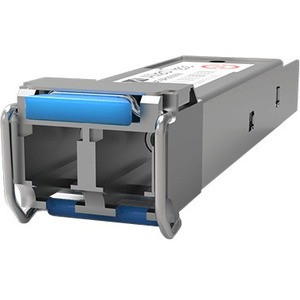
Allied Telesis AT-SPBD20LC/I-14 SFP BiDi LC Transceiver - 1000Base-BiDi Gigabit Ethernet - Single-mode Fiber - Hot-swappable

Business volume discounts
Technical guidance
Preparation & staging
QC · ON · AB · BC
Product Features
Technical Overview
This SFP module operates on Gigabit Ethernet standards, providing a 1 Gbps link speed suitable for bandwidth-intensive network traffic. The 1000Base-BiDi technology enables bidirectional communication over a single fiber strand, optimizing fiber utilization and reducing cabling complexity.
The transceiver features an LC connector interface, which is standard for high-density optical connections. It is designed for hot-swappable operation, allowing installation or replacement without powering down the network device, minimizing downtime during maintenance or upgrades.
Key Product Advantages
The AT-SPBD20LC/I-14 offers several advantages for network deployments requiring robust and efficient optical connectivity.
Bidirectional Efficiency
1000Base-BiDi technology allows data transmission and reception over a single fiber strand, cutting fiber count by half compared to traditional dual-fiber setups and lowering infrastructure costs.
- Reduces cabling requirements
- Optimizes fiber utilization
Hot-Swappable Design
The hot-swappable form factor enables easy installation and replacement without disrupting network operations, supporting seamless maintenance and scalability.
- Minimizes downtime
- Simplifies upgrades
Broad Compatibility
MSA compliance ensures interoperability with a wide range of networking hardware, while TAA compliance meets trade agreement requirements for government and enterprise procurement.
- Interoperable with MSA-compliant devices
- TAA compliant for regulated markets
Deployment / Use Cases
This SFP transceiver is ideal for environments where reliable, high-speed optical connectivity is essential. It supports data networking applications across enterprise, campus, and service provider networks.
Common use cases include connecting switches, routers, and media converters in fiber optic backbones, extending network reach over long distances with single-mode fiber, and upgrading existing infrastructure to Gigabit Ethernet speeds without replacing cabling.
Enterprise Network Backbones
Deploy in core or distribution layers to handle high-volume traffic between buildings or data centers, leveraging single-mode fiber for distances up to several miles.
Service Provider Links
Use in access or aggregation networks to deliver Gigabit Ethernet services to customers, with BiDi technology reducing fiber deployment costs in dense urban areas.
Highlights
- 1000Base-BiDi technology for bidirectional communication over single fiber
- Gigabit Ethernet support delivers 1 Gbps link speeds
- LC connector interface for high-density optical connections
- Single-mode fiber compatibility for long-distance transmission
- Hot-swappable SFP form factor for easy installation and maintenance
- MSA compliant for broad interoperability with networking equipment
- TAA compliant to meet government and enterprise procurement standards
- Environmentally friendly design with reduced environmental impact
- 2-year limited warranty for reliable performance assurance
Specifications
| Specifications | |
|---|---|
| Manufacturer | Allied Telesis, Inc |
| Manufacturer Part Number | AT-SPBD20LC/I-14 |
| Brand Name | Allied Telesis |
| Product Series | SP |
| Product Model | SPBD20LC/I-14 |
| Product Name | SPBD20LC/I-14 SFP (mini-GBIC) Module |
| Product Type | SFP (mini-GBIC) |
| Technical Information | |
| Application/Usage | Optical Network,Data Networking |
| Interfaces/Ports | |
| Total Number of Ports | 1 |
| Connector Type | LC |
| Interfaces/Ports Details | 1 x LC 1000Base-BiDi Network |
| Media & Performance | |
| Media Type Supported | Optical Fiber |
| Fiber Mode Supported | Single-mode |
| Ethernet Technology | Gigabit Ethernet |
| Network Technology | 1000Base-BiDi |
| Physical Characteristics | |
| Form Factor | Hot-swappable |
| Miscellaneous | |
| Compatibility | MSA Compliant |
| TAA Compliant | Yes |
| Environmentally Friendly | Yes |
| Warranty | |
| Limited Warranty | 2 Year |
FAQ
What is 1000Base-BiDi technology and how does it benefit my network?
1000Base-BiDi (Bidirectional) technology allows data to be transmitted and received over a single strand of fiber optic cable using different wavelengths. This reduces the required fiber count by half compared to traditional dual-fiber setups, lowering cabling costs and simplifying infrastructure while maintaining Gigabit Ethernet speeds. It's ideal for networks where fiber resources are limited or expensive to deploy.
Is this SFP transceiver compatible with my existing networking equipment?
Yes, the AT-SPBD20LC/I-14 is MSA (Multi-Source Agreement) compliant, ensuring interoperability with a wide range of networking switches, routers, and media converters from various manufacturers that support SFP modules. Always verify compatibility with your specific device's documentation, but MSA compliance provides broad support for seamless integration into most Gigabit Ethernet networks.
What type of fiber optic cable should I use with this transceiver?
This transceiver supports single-mode fiber optic cable, which is designed for long-distance transmission, typically over distances of several miles. Single-mode fiber uses a single wavelength of light, reducing signal attenuation and enabling high-speed data, audio, and video applications over extended ranges. Ensure you use LC connector-terminated single-mode fiber cables for optimal performance.
Can I install or replace this SFP module without powering down my network device?
Yes, the AT-SPBD20LC/I-14 features a hot-swappable design, allowing you to install or remove the module while the networking equipment is powered on and operational. This minimizes downtime during maintenance, upgrades, or replacements, supporting continuous network availability and efficient management in live environments.
| Qty | Price | Available |
|---|