





Shipping included*
Exclusions
Additional shipping fees may apply in rare circumstances for deliveries outside standard service areas. In most cases, this only potentially affects shipments to the Northwest Territories and Yukon, as well as certain heavy or oversized items.
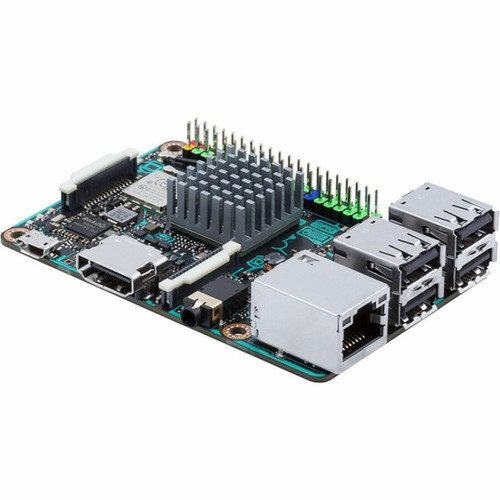
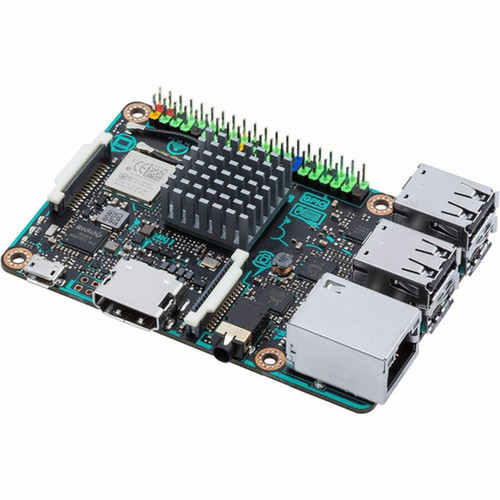
Asus 90ME00M0-M0AAY0 Tinker Board Single Board Computer - DDR3 SDRAM - Wi-Fi 802. 11b/g/n - Bluetooth 4. 0 - 4x USB 2. 0 - Ultra Small Form Factor

Business volume discounts
Technical guidance
Preparation & staging
QC · ON · AB · BC
Product Features
Technical Overview
The Tinker Board features DDR3 SDRAM memory technology, providing stable data handling for embedded computing tasks. Its wireless capabilities include IEEE 802.11b/g/n Wi-Fi and Bluetooth 4.0, enabling flexible network and peripheral connections without wired constraints.
Wired connectivity is handled through four USB 2.0 ports and a standard RJ-45 Ethernet port, offering multiple options for peripheral attachment and network access. The board's ultra-small form factor and minimal weight of 1.94 ounces (55 grams) make it ideal for space-constrained installations.
Relevant factors for this section include Memory Technology, Wireless LAN, Wireless LAN Standard, Bluetooth. When those points are considered together, they give buyers a clearer picture of how the product is equipped, how it fits into deployment, and what kind of day-to-day role it is meant to support.
A strong technical summary explains how the product's interfaces, hardware profile, and operating characteristics work together in real deployment. Buyers often need this context to confirm compatibility with existing devices, expected performance in daily use, and whether installation will be straightforward for IT staff or end users.
Key Product Advantages
The Asus Tinker Board combines compact design with robust connectivity options, making it a practical choice for embedded computing applications. Its integration of both wireless and wired interfaces ensures flexibility across different deployment scenarios.
These strengths make the product easier to deploy and manage in real environments, especially where reliability, usability, and day-to-day operational continuity matter. Notable benefits include Comprehensive Wireless Support, Expanded Peripheral Connectivity.
Comprehensive Wireless Support
Includes IEEE 802.11b/g/n Wi-Fi and Bluetooth 4.0 for wireless networking and peripheral connectivity without additional adapters.
- Dual-band Wi-Fi compatibility
- Bluetooth for wireless accessories
- Reduced cable clutter
Expanded Peripheral Connectivity
Four USB 2.0 ports provide ample connectivity for keyboards, mice, storage devices, and other peripherals in embedded setups.
- Multiple simultaneous connections
- Standard USB 2.0 compatibility
- Flexible peripheral management
Deployment / Use Cases
The Tinker Board is engineered for LCD display integration and other embedded computing applications where space and connectivity are primary considerations. Its ultra-small form factor allows installation in tight spaces while maintaining full computing functionality.
Common deployment scenarios include digital signage systems, kiosk interfaces, industrial control panels, and educational computing projects. The board's wireless capabilities make it suitable for mobile or temporary installations where wired networking is impractical.
Relevant factors for this section include Memory Technology, Wireless LAN, Wireless LAN Standard, Bluetooth. When those points are considered together, they give buyers a clearer picture of how the product is equipped, how it fits into deployment, and what kind of day-to-day role it is meant to support.
Digital Signage Solutions
Ideal for powering LCD displays in retail, corporate, or public information applications with its compact size and display-ready architecture.
Embedded Control Systems
Serves as the computing core for industrial automation, monitoring systems, or IoT gateways with its reliable connectivity and small footprint.
Physical Profile
The Tinker Board features an ultra-small form factor that minimizes installation space requirements while maintaining full computing functionality. Weighing just 1.94 ounces (55 grams), the board is exceptionally lightweight for easy mounting in various orientations and enclosures.
The physical profile is practical for deployment planning because the dimensions and weight are clearly defined: 1.94 oz (55 g). This helps confirm rack, shelf, desk, or cabinet fit before installation.
- Weight
- 1.94 oz (55 g)
Highlights
- DDR3 SDRAM memory technology for stable embedded performance
- IEEE 802.11b/g/n Wi-Fi for wireless network connectivity
- Bluetooth 4.0 for wireless peripheral connections
- Four USB 2.0 ports for expanded peripheral support
- RJ-45 Ethernet port for wired network access
- Ultra-small form factor for space-constrained installations
- Lightweight design at 1.94 oz (55 g) for flexible mounting
- RoHS compliant for environmentally responsible deployment
- Designed for LCD display integration applications
- Comprehensive connectivity in a compact single board computer
Specifications
| Specifications | |
|---|---|
| Manufacturer | ASUS Computer International |
| Manufacturer Part Number | 90ME00M0-M0AAY0 |
| Brand Name | Asus |
| Product Line | Tinker Board |
| Product Name | Tinker Board Single Board Computer |
| Product Type | Single Board Computer |
| Memory | |
| Memory Technology | DDR3 SDRAM |
| Network & Communication | |
| Wireless LAN | Yes |
| Wireless LAN Standard | IEEE 802.11b/g/n |
| Bluetooth | Yes |
| Bluetooth Standard | Bluetooth 4.0 |
| Interfaces/Ports | |
| Total Number of USB Ports | 4 |
| Number of USB 2.0 Ports | 4 |
| Network (RJ-45) | Yes |
| Physical Characteristics | |
| Form Factor | Ultra Small |
| Weight (Approximate) | 1.94 oz (55 g) |
| Miscellaneous | |
| Application/Usage | LCD Display |
| Environmentally Friendly | Yes |
| Environmental Compliance | Restriction of Hazardous Substances (RoHS) |
User Manual
FAQ
What memory technology does the Asus Tinker Board use?
The Asus Tinker Board utilizes DDR3 SDRAM memory technology. This provides reliable data handling capabilities for embedded computing applications, offering stable performance for tasks like LCD display control, data processing, and peripheral management in compact deployment scenarios.
What wireless connectivity options are included?
The Tinker Board includes both Wi-Fi and Bluetooth connectivity. It features IEEE 802.11b/g/n Wi-Fi for wireless network access and Bluetooth 4.0 for connecting wireless peripherals like keyboards, mice, or audio devices without requiring additional adapters or dongles.
How many USB ports does this single board computer have?
This board provides four USB 2.0 ports for connecting peripherals. All four ports support the USB 2.0 standard, allowing simultaneous connection of multiple devices such as storage drives, input devices, or other compatible accessories for expanded functionality.
Does the Tinker Board include wired Ethernet connectivity?
Yes, the Tinker Board includes an RJ-45 Ethernet port for wired network connections. This provides a reliable networking option alongside the wireless capabilities, ensuring connectivity flexibility for different deployment environments and network infrastructure requirements.
What is the form factor and weight of this single board computer?
The Tinker Board features an ultra-small form factor designed for space-constrained installations. It weighs approximately 1.94 ounces (55 grams), making it exceptionally lightweight for easy mounting in various orientations, enclosures, or embedded systems where size and weight are important considerations.
What applications is this single board computer designed for?
The Tinker Board is designed for LCD display integration and other embedded computing applications. Its compact size, comprehensive connectivity options, and display-ready architecture make it suitable for digital signage, kiosk interfaces, industrial control panels, educational projects, and similar embedded deployment scenarios.
| Qty | Price | Available |
|---|