






Shipping included*
Exclusions
Additional shipping fees may apply in rare circumstances for deliveries outside standard service areas. In most cases, this only potentially affects shipments to the Northwest Territories and Yukon, as well as certain heavy or oversized items.
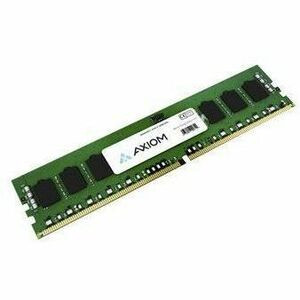
Axiom R9Q19A-AX HP RAM Module - 64 GB DDR5-4800/PC5-38400 - 4800 MHz ECC Registered DIMM 288-pin

Business volume discounts
Technical guidance
Preparation & staging
QC · ON · AB · BC
Product Features
Product Overview
The Axiom R9Q19A-AX HP RAM Module delivers 64 GB of high-performance DDR5 memory engineered for demanding server and workstation environments. Built with DDR5 SDRAM technology, this module operates at 4800 MHz to provide efficient data transfer rates and enhanced system responsiveness.
This memory module incorporates ECC error checking and Registered signal processing to ensure data integrity and stability in mission-critical applications. The 288-pin DIMM form factor makes it compatible with modern server and high-end desktop platforms that support DDR5 architecture.
Relevant factors for this section include Memory Size, Memory Technology, Memory Speed, Number of Pins. When those points are considered together, they give buyers a clearer picture of how the product is equipped, how it fits into deployment, and what kind of day-to-day role it is meant to support.
Technical Overview
The Axiom R9Q19A-AX implements DDR5-4800/PC5-38400 memory standard with a 4800 MHz operating speed, delivering substantial bandwidth improvements over previous DDR4 generations. The Registered design includes a register between the memory controller and DRAM chips to reduce electrical load and improve signal integrity in multi-module configurations.
ECC functionality provides single-bit error correction and double-bit error detection to maintain data accuracy in enterprise and workstation environments where reliability is paramount. The 288-pin DIMM interface is specifically designed for DDR5 platforms, ensuring proper physical and electrical compatibility.
Relevant factors for this section include Memory Size, Memory Technology, Memory Speed, Number of Pins. When those points are considered together, they give buyers a clearer picture of how the product is equipped, how it fits into deployment, and what kind of day-to-day role it is meant to support.
A strong technical summary explains how the product's interfaces, hardware profile, and operating characteristics work together in real deployment. Buyers often need this context to confirm compatibility with existing devices, expected performance in daily use, and whether installation will be straightforward for IT staff or end users.
Key Product Advantages
This Axiom memory module combines high capacity with advanced error correction and signal processing features to deliver reliable performance for data-intensive applications.
Enhanced Data Integrity
ECC error checking continuously monitors and corrects single-bit memory errors while detecting double-bit errors, preventing data corruption in critical computing tasks.
- Single-bit error correction
- Double-bit error detection
- Continuous memory monitoring
Optimized Signal Processing
Registered architecture improves signal stability in memory-intensive configurations by reducing electrical load on the memory controller, enabling reliable operation with multiple modules.
- Reduced electrical load
- Improved signal integrity
- Multi-module compatibility
DDR5 Performance
DDR5 technology delivers higher bandwidth and improved power efficiency compared to DDR4, with 4800 MHz speed providing responsive performance for demanding workloads.
- Higher bandwidth
- Improved power efficiency
- 4800 MHz operation
Deployment / Use Cases
The Axiom R9Q19A-AX 64 GB DDR5 ECC Registered DIMM is designed for environments where memory capacity, data integrity, and system stability are critical requirements.
This module is particularly suitable for server deployments, virtualization hosts, database servers, and high-performance workstations running engineering applications, scientific simulations, or financial analysis software. The ECC and Registered features make it ideal for 24/7 operation in data centers and enterprise environments where uptime and data accuracy are non-negotiable.
Server Memory Expansion
Upgrade server platforms with 64 GB modules to increase memory capacity for virtualization, database applications, and enterprise workloads while maintaining ECC protection.
Workstation Performance
Enhance workstation systems for CAD/CAM, video editing, 3D rendering, and scientific computing with high-capacity DDR5 memory that ensures data integrity during complex calculations.
Highlights
- 64 GB memory capacity for demanding server and workstation applications
- DDR5 SDRAM technology with 4800 MHz operating speed
- DDR5-4800/PC5-38400 memory standard compliance
- ECC error checking for data integrity and reliability
- Registered signal processing for stable multi-module operation
- 288-pin DIMM form factor for DDR5 platform compatibility
- Enhanced bandwidth over previous DDR4 memory generations
- Suitable for virtualization, database, and high-performance computing workloads
Specifications
| Specifications | |
|---|---|
| Manufacturer | Axiom Memory Solutions |
| Manufacturer Part Number | R9Q19A-AX |
| Brand Name | Axiom |
| Product Name | HP RAM Module |
| Product Type | RAM Module |
| Technical Information | |
| Memory Size | 64 GB |
| Memory Technology | DDR5 SDRAM |
| Memory Speed | 4800 MHz |
| Memory Standard | DDR5-4800/PC5-38400 |
| Error Checking | ECC |
| Signal Processing | Registered |
| Physical Characteristics | |
| Number of Pins | 288-pin |
| Form Factor | DIMM |
FAQ
What is the memory capacity of this Axiom RAM module?
This Axiom R9Q19A-AX memory module provides 64 GB of DDR5 memory capacity. This substantial capacity supports memory-intensive applications such as virtualization, large database operations, scientific simulations, and high-resolution media editing where ample RAM is essential for optimal performance.
What DDR generation does this memory module use?
This module utilizes DDR5 SDRAM technology, which represents the fifth generation of Double Data Rate synchronous dynamic random-access memory. DDR5 delivers higher bandwidth, improved power efficiency, and increased density compared to previous DDR4 memory, with this specific module operating at 4800 MHz speed.
What does ECC mean for this memory module?
ECC stands for Error-Correcting Code, a feature that continuously monitors memory for errors. This module can detect and correct single-bit memory errors automatically while detecting double-bit errors. ECC is essential for server and workstation environments where data integrity is critical, preventing silent data corruption that could affect system stability and calculation accuracy.
What is Registered memory and how does it differ from unbuffered?
Registered memory includes a register between the memory controller and DRAM chips that buffers address and command signals. This reduces electrical load on the memory controller, enabling more stable operation with multiple memory modules installed. Registered DIMMs (RDIMMs) are commonly used in servers and workstations where memory capacity and stability are priorities, unlike unbuffered DIMMs (UDIMMs) typically found in consumer systems.
What form factor and pin count does this module have?
This memory module uses the DIMM (Dual In-line Memory Module) form factor with 288 pins. The 288-pin configuration is specific to DDR5 memory technology and ensures proper physical and electrical compatibility with DDR5 memory slots on compatible server and workstation motherboards.
What applications is this memory module best suited for?
This 64 GB DDR5 ECC Registered DIMM is optimized for enterprise and professional environments including server deployments, virtualization hosts, database servers, engineering workstations, scientific computing systems, and financial analysis platforms. The combination of high capacity, ECC protection, and Registered architecture makes it ideal for applications where memory reliability, data integrity, and system stability are essential requirements.
| Qty | Price | Available |
|---|