








Shipping included*
Exclusions
Additional shipping fees may apply in rare circumstances for deliveries outside standard service areas. In most cases, this only potentially affects shipments to the Northwest Territories and Yukon, as well as certain heavy or oversized items.
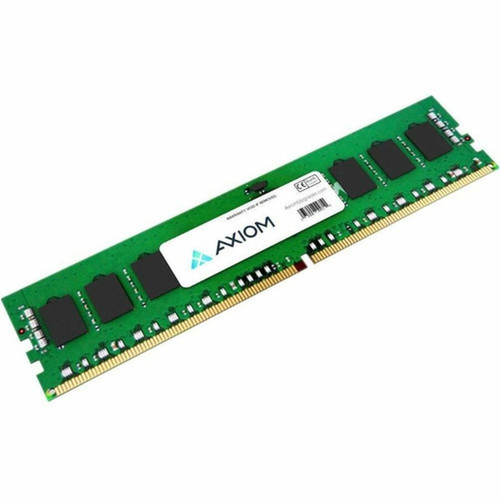
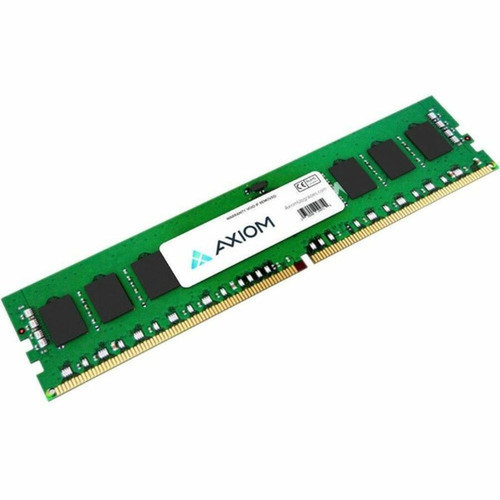
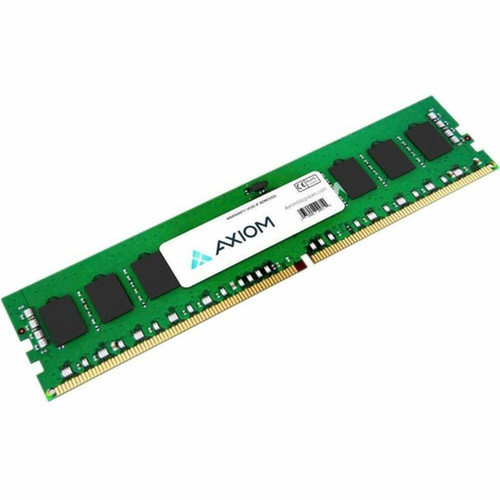
Axiom UCSX-MR128G4RE1-AX 128GB DDR5-4800 RDIMM - PC5-38400 - 4800 MHz - CL40 - ECC Registered - 288-pin - 1.10V

Business volume discounts
Technical guidance
Preparation & staging
QC · ON · AB · BC
Product Features
Product Overview
The Axiom UCSX-MR128G4RE1-AX is a high-performance 128GB DDR5 SDRAM memory module engineered for demanding server and workstation environments. Built with DDR5-4800 technology and a PC5-38400 standard, this module delivers substantial memory capacity and advanced data transfer rates to support intensive computational workloads, virtualization, and large-scale data processing.
Designed as a Registered DIMM (RDIMM) with ECC (Error-Correcting Code) and a 288-pin configuration, this memory ensures reliable operation and data integrity in mission-critical systems. Operating at 4800 MHz with CL40 latency and 1.10V voltage, it balances speed with power efficiency, making it a robust upgrade solution for modern data centers and high-end computing platforms.
Relevant factors for this section include Memory Size, Memory Technology, Memory Voltage, Number of Pins. When those points are considered together, they give buyers a clearer picture of how the product is equipped, how it fits into deployment, and what kind of day-to-day role it is meant to support.
Technical Overview
This DDR5 memory module leverages the latest DDR5 SDRAM architecture to provide enhanced bandwidth and efficiency over previous generations. The 128GB capacity per module allows for significant memory expansion in compatible systems, reducing the need for multiple lower-capacity modules and optimizing slot usage.
With a 4800 MHz operating speed and PC5-38400 data rate, it supports faster data access and processing, which is critical for applications like database management, scientific simulations, and enterprise virtualization. The CL40 CAS latency ensures responsive performance, while the 1.10V operating voltage contributes to lower power consumption and thermal output.
Relevant factors for this section include Memory Size, Memory Technology, Memory Voltage, Number of Pins. When those points are considered together, they give buyers a clearer picture of how the product is equipped, how it fits into deployment, and what kind of day-to-day role it is meant to support.
Key Product Advantages
This memory module combines high capacity with advanced reliability features, making it ideal for environments where uptime and data accuracy are paramount. The ECC functionality detects and corrects single-bit memory errors, preventing data corruption and system crashes, while the Registered design improves signal integrity and stability in multi-module configurations.
High-Density Memory
With 128GB per module, it maximizes memory density in server racks, allowing for more virtual machines, larger in-memory databases, and reduced physical footprint compared to lower-capacity alternatives.
- Supports intensive workloads
- Optimizes slot efficiency
- Reduces module count
Enhanced Data Integrity
ECC and Registered features ensure reliable operation under heavy loads, minimizing the risk of errors that can disrupt critical business operations or scientific computations.
- Error detection and correction
- Improved signal stability
- Mission-critical reliability
Deployment / Use Cases
This DDR5 RDIMM is tailored for deployment in servers, workstations, and high-performance computing clusters that require large memory pools and robust error correction. Its 128GB capacity and ECC Registered design make it suitable for enterprise applications, data analytics platforms, and virtualization hosts where memory-intensive tasks are common.
In data center environments, it can be used to upgrade existing systems or build new servers for cloud infrastructure, big data processing, or machine learning workloads. The RoHS compliance ensures it meets environmental standards, while the lifetime warranty provides long-term support for IT investments.
Server Upgrades
Ideal for upgrading memory in rackmount or tower servers to handle increased virtual machine density, database caching, or application server loads.
- Supports virtualization
- Enhances server performance
- Scalable memory expansion
Workstation Performance
Suitable for high-end workstations used in engineering, scientific research, or content creation, where large datasets and complex simulations demand reliable, high-capacity memory.
- Handles large datasets
- Supports professional applications
- Ensures system stability
Highlights
- 128GB high-density DDR5 SDRAM memory module
- DDR5-4800/PC5-38400 standard with 4800 MHz speed
- ECC (Error-Correcting Code) for data integrity
- Registered signal processing (RDIMM) for stability
- CL40 CAS latency for responsive performance
- 1.10V operating voltage for power efficiency
- 288-pin form factor for server compatibility
- RoHS compliant and environmentally friendly
- Lifetime limited warranty for long-term reliability
Specifications
| Specifications | |
|---|---|
| Manufacturer | Axiom Memory Solutions |
| Manufacturer Part Number | UCSX-MR128G4RE1-AX |
| Brand Name | Axiom |
| Product Name | 128GB DDR5 SDRAM Memory Module |
| Product Type | RAM Module |
| Technical Information | |
| Memory Size | 128 GB |
| Memory Technology | DDR5 SDRAM |
| Memory Voltage | 1.10 V |
| Memory Speed | 4800 MHz |
| Memory Standard | DDR5-4800/PC5-38400 |
| Error Checking | ECC |
| Signal Processing | Registered |
| CAS Latency | CL40 |
| Physical Characteristics | |
| Number of Pins | 288-pin |
| Form Factor | RDIMM |
| Miscellaneous | |
| Environmentally Friendly | Yes |
| Environmental Compliance | Restriction of Hazardous Substances (RoHS) |
| Warranty | |
| Limited Warranty | Lifetime |
FAQ
What is the memory capacity and technology of this module?
This module has a 128GB capacity and uses DDR5 SDRAM technology, specifically the DDR5-4800/PC5-38400 standard. DDR5 provides higher bandwidth and improved power efficiency compared to DDR4, making it suitable for modern server and workstation applications that require large memory pools and fast data transfer rates.
Does this memory support ECC and Registered features?
Yes, this memory module includes ECC (Error-Correcting Code) and Registered signal processing. ECC detects and corrects single-bit memory errors to prevent data corruption, while the Registered design (RDIMM) enhances signal integrity and stability in systems with multiple memory modules, ensuring reliable operation in mission-critical environments.
What is the speed and latency of this DDR5 memory?
The memory operates at 4800 MHz with a CAS latency of CL40. This combination delivers high-speed data access while maintaining responsive performance, which is essential for applications like virtualization, database management, and scientific computing where low latency and fast processing are critical.
What form factor and pin count does this module use?
This module uses a 288-pin RDIMM (Registered DIMM) form factor. The 288-pin configuration is standard for server-grade DDR5 memory, ensuring compatibility with appropriate motherboard slots in servers and workstations, and the RDIMM design supports stable operation in multi-module setups.
Is this memory environmentally compliant and backed by a warranty?
Yes, this memory is RoHS (Restriction of Hazardous Substances) compliant, meaning it meets environmental standards by limiting certain hazardous materials. It also comes with a lifetime limited warranty, providing long-term support and peace of mind for IT investments in server and workstation upgrades.
What are the typical use cases for this 128GB DDR5 RDIMM?
This memory is designed for deployment in servers, workstations, and high-performance computing environments. Typical use cases include enterprise virtualization, data analytics, machine learning, database servers, and scientific simulations, where large memory capacity, ECC reliability, and high-speed performance are necessary to handle intensive workloads and ensure system stability.
| Qty | Price | Available |
|---|