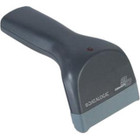



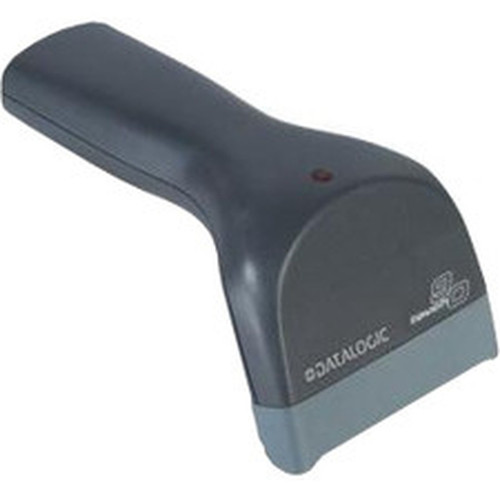

Datalogic TD1120-BK-90 Touch Series 90 Lite Handheld Contact Linear Imager Barcode Reader - 1D Scanning - USB Cable Connectivity - Black

Business volume discounts
Technical guidance
Preparation & staging
QC · ON · AB · BC
Product Features
Technical Overview
This barcode reader utilizes a linear imager sensor to capture 1D barcodes with precision. It autodiscriminates all standard 1D codes, including GS1 DataBar linear codes, and supports stacked codes such as GS1 DataBar Expanded Stacked, GS1 DataBar Stacked, and GS1 DataBar Stacked Omnidirectional. The omni-directional scan pattern allows for flexible scanning angles, reducing the need for precise alignment and increasing operational efficiency.
Connectivity is handled through a USB host interface with cable technology, ensuring stable data transfer and compatibility with a wide range of systems. The scanner's technical design focuses on delivering reliable scanning performance without the complexity of wireless setups, making it an ideal choice for environments where wired reliability is preferred.
This section brings together practical product details such as Connectivity Technology, Scanning Capability, Barcode Symbology Supported, Host Interface, so buyers can judge configuration, deployment fit, and day-to-day suitability with less guesswork.
Key Product Advantages
The Datalogic TD1120-BK-90 combines durable construction with advanced scanning capabilities to meet the demands of daily use in commercial settings. Its contact linear imager technology ensures accurate reads even on damaged or poorly printed barcodes, while the omni-directional pattern speeds up checkout and inventory processes.
Reliable Connectivity
With USB cable connectivity, this scanner offers a dependable wired connection that eliminates interference and battery concerns, providing consistent performance in busy environments.
- Stable data transfer
- Easy plug-and-play setup
- Compatible with standard USB ports
Ergonomic Design
The handheld form factor and lightweight build reduce operator fatigue during extended shifts, while the compact size allows for easy storage and portability between workstations.
- Comfortable grip
- Lightweight at 5.40 oz
- Professional black finish
Deployment / Use Cases
This barcode reader is well-suited for a variety of deployment scenarios where 1D scanning is required. Its general-purpose design makes it adaptable to different industries and applications, from retail checkout counters to warehouse inventory management.
In retail environments, it can be used at point-of-sale terminals to scan product barcodes quickly, improving customer service and transaction speed. For inventory control, it facilitates accurate tracking of stock levels and asset management, helping businesses maintain efficient operations. The USB connectivity ensures seamless integration with existing POS systems, computers, or tablets, making it a versatile tool for both fixed and mobile scanning needs.
Physical Profile
The scanner features a compact physical profile with dimensions of 6.70" in height, 2.70" in width, and 4.10" in depth, making it easy to handle and store. Its approximate weight of 5.40 oz contributes to a lightweight feel that minimizes strain during prolonged use. The black color provides a sleek, professional look that fits well in most commercial settings, while the handheld design ensures intuitive operation without the need for additional mounting hardware.
- Width
- 2.70" (68.58 mm)
- Depth
- 4.10" (104.14 mm)
- Height
- 6.70" (170.18 mm)
- Weight
- 5.40 oz (153.09 g)
Highlights
- 1D barcode scanning capability with linear imager sensor
- Autodiscriminates all standard 1D codes including GS1 DataBar linear codes
- Supports stacked codes: GS1 DataBar Expanded Stacked, GS1 DataBar Stacked, GS1 DataBar Stacked Omnidirectional
- Omni-directional scan pattern for flexible scanning angles
- USB host interface with cable connectivity for reliable data transfer
- Handheld form factor with compact and lightweight design
- Black color finish for a professional appearance
- Manufactured in Vietnam with Datalogic quality standards
Specifications
| Specifications | |
|---|---|
| Manufacturer | Datalogic S.p.A |
| Manufacturer Part Number | TD1120-BK-90 |
| Brand Name | Datalogic |
| Product Line | Touch |
| Product Series | TD1100 |
| Product Model | 90 Lite |
| Product Name | General Purpose Corded Handheld Contact Linear Imager Bar Code Reader |
| Product Type | Barcode Scanner |
| Technical Information | |
| Connectivity Technology | Cable |
| Scanning Capability | 1D |
| Barcode Symbology Supported | 1D / Linear Codes: Autodiscriminates all standard 1D codes including GS1 DataBar linear codes Stacked Codes: GS1 DataBar Expanded Stacked GS1 DataBar Stacked GS1 DataBar Stacked Omnidirectional |
| Image Sensor Type | Imager,Linear |
| Scan Pattern | Omni-directional |
| Interfaces/Ports | |
| Host Interface | USB |
| Physical Characteristics | |
| Form Factor | Handheld |
| Product Color | Black |
| Height | 6.70" (170.18 mm) |
| Width | 2.70" (68.58 mm) |
| Depth | 4.10" (104.14 mm) |
| Weight (Approximate) | 5.40 oz (153.09 g) |
| Miscellaneous | |
| Country of Origin | Vietnam |
User Manual
FAQ
What types of barcodes can the Datalogic TD1120-BK-90 scan?
This scanner is designed for 1D barcode scanning. It autodiscriminates all standard 1D codes, including GS1 DataBar linear codes, and supports stacked codes such as GS1 DataBar Expanded Stacked, GS1 DataBar Stacked, and GS1 DataBar Stacked Omnidirectional. It uses a linear imager sensor to capture these codes accurately, making it suitable for retail and inventory applications where 1D barcodes are prevalent.
How does the omni-directional scan pattern benefit scanning operations?
The omni-directional scan pattern allows the scanner to read barcodes from various angles without requiring precise alignment. This flexibility speeds up scanning processes, reduces operator effort, and improves efficiency in high-volume environments like checkout counters or warehouse shelves. It helps minimize missed scans and enhances overall productivity.
What connectivity options does this barcode reader support?
The Datalogic TD1120-BK-90 features a USB host interface with cable connectivity. This wired connection ensures stable and reliable data transfer to compatible devices such as POS systems, computers, or tablets. It eliminates issues related to wireless interference or battery life, providing a dependable setup for continuous use in commercial settings.
Is the scanner suitable for handheld use during extended periods?
Yes, the scanner is designed with a handheld form factor and weighs approximately 5.40 oz (153.09 g), making it lightweight and comfortable to hold for long durations. Its compact dimensions of 6.70" x 2.70" x 4.10" contribute to an ergonomic design that reduces operator fatigue, ideal for shifts involving frequent scanning tasks.
Can this barcode reader be integrated into existing point-of-sale systems?
Absolutely. With its USB cable connectivity, the Datalogic TD1120-BK-90 can be easily integrated into most point-of-sale systems, computers, or other devices with standard USB ports. It functions as a plug-and-play peripheral, requiring minimal setup, which makes it a practical choice for upgrading or expanding scanning capabilities in retail or inventory management setups.
What is the product model and series for this Datalogic scanner?
This scanner is part of the Datalogic Touch series, specifically the TD1100 product series, and is identified as the 90 Lite model. The manufacturer part number is TD1120-BK-90, which corresponds to the SKU. It is a general-purpose corded handheld contact linear imager barcode reader, emphasizing its role in everyday scanning applications.
What duplex or duty-cycle detail is listed?
the specifications are intended to help buyers confirm fit, compatibility, and expected day-to-day operation. In practical terms, the best reading of this product comes from how its hardware, connectivity, and deployment details work together.
What connectivity options are listed?
Connectivity details help confirm how the product integrates with your network, accessories, and surrounding peripherals before rollout or replacement planning. They are often the difference between a technically compatible device and one that is genuinely easy to deploy.
| Qty | Price | Available |
|---|