





Shipping included*
Exclusions
Additional shipping fees may apply in rare circumstances for deliveries outside standard service areas. In most cases, this only potentially affects shipments to the Northwest Territories and Yukon, as well as certain heavy or oversized items.
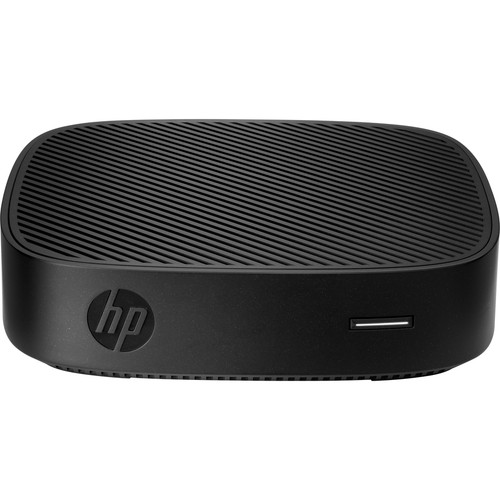
HP 210R5AA#ABA t430 Thin Client - Intel Celeron N4020 Dual-Core 1. 10 GHz - 2 GB DDR4 RAM - 16 GB Flash - Gigabit Ethernet - Smart Zero OS - German

Business volume discounts
Technical guidance
Preparation & staging
QC · ON · AB · BC
Product Features
Technical Overview
At its core, the HP t430 features Intel's Gemini Lake generation Celeron N4020, a dual-core processor operating at 1.10 GHz base frequency with Intel UHD Graphics 600. This integrated graphics solution shares system memory to drive up to three simultaneous displays via HDMI, DisplayPort, and the USB-C port's DisplayPort alternate mode.
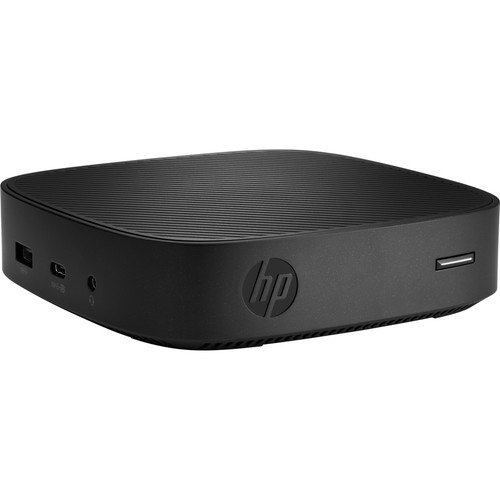
Connectivity is comprehensive for a thin client, including Gigabit Ethernet for network reliability and four USB ports—three USB 3.1 Gen 1 Type-A ports and one USB-C port that supports both DisplayPort video output and USB Power Delivery. The 45-watt power adapter accepts worldwide voltages from 120 to 230 V AC.
Relevant factors for this section include Processor Type, Processor Model, Processor Core, Standard Memory. When those points are considered together, they give buyers a clearer picture of how the product is equipped, how it fits into deployment, and what kind of day-to-day role it is meant to support.
Key Product Advantages
The HP t430 excels in environments where centralized management, energy efficiency, and physical compactness are priorities. Its hardware-software integration through HP Smart Zero OS creates a purpose-built endpoint that minimizes local troubleshooting while maximizing uptime.
Management Efficiency
HP Smart Zero OS provides a stateless operating environment that can be easily imaged, updated, and managed centrally through tools like HP Device Manager or Microsoft Configuration Manager.
- Reduced endpoint configuration time
- Consistent user experience across devices
- Enhanced security through application whitelisting
Display Flexibility
Support for multiple display outputs allows flexible monitor configurations, from single-screen setups to multi-monitor workstations using HDMI, DisplayPort, and USB-C DisplayPort connections.
- Simultaneous multi-display support
- 4K capable via DisplayPort
- USB-C with video and power delivery
Deployment / Use Cases
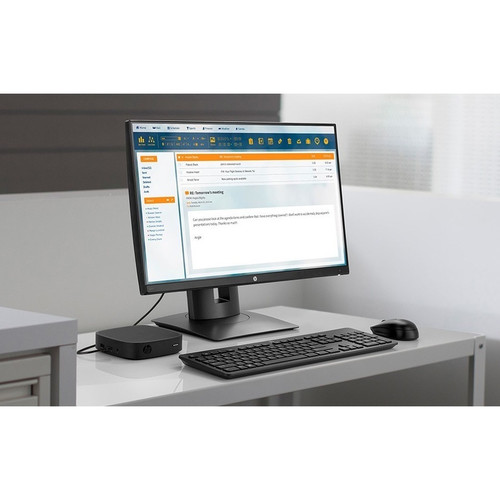
The HP t430 is engineered for scenarios where traditional desktop PCs introduce unnecessary complexity, security risks, or management overhead. Its compact form factor and low power consumption make it suitable for space-constrained environments like retail point-of-sale stations, healthcare workstations, classroom computing labs, and call center desks.
In virtual desktop infrastructure deployments, the t430 serves as an ideal access device for Citrix Virtual Apps and Desktops, VMware Horizon, Microsoft Remote Desktop Services, and Amazon WorkSpaces. The German-language HP Smart Zero OS makes it particularly suitable for German-speaking regions requiring localized thin client solutions.
VDI Endpoint
Connects seamlessly to virtual desktop sessions hosted on central servers, providing users with familiar Windows or Linux environments without local OS management.
Task-Based Workstation
Ideal for repetitive, browser-based, or terminal applications in retail, manufacturing, education, and government settings where application diversity is limited.
Localization and Operating System
This HP t430 ships with HP Smart Zero OS in German language localization, providing a complete German-language interface for end users and administrators. HP Smart Zero is a lightweight, Linux-based operating system specifically optimized for thin client workloads, offering fast boot times, minimal storage requirements, and enhanced security through its read-only root filesystem.
The German localization extends throughout the user interface, system messages, and configuration tools, making deployment and support straightforward in German-speaking workplaces. Administrators can manage these devices using German-language management consoles or integrate them with existing German IT infrastructure.
Physical Profile
Measuring just 5.31 inches square and 1.26 inches tall (135 x 135 x 32 mm), the HP t430 occupies minimal desk space and can be easily mounted behind monitors using VESA mounting options. The 14.67-ounce (416 g) weight makes it highly portable for temporary deployments or mobile workstation setups.
The compact chassis features a clean, professional appearance suitable for front-office environments, with ventilation designed for silent operation in quiet spaces. The small footprint allows flexible placement in crowded workspaces, retail counters, or wall-mounted installations.
- Width
- 5.31" (135 mm)
- Depth
- 5.31" (135 mm)
- Height
- 1.26" (32 mm)
- Weight
- 14.67 oz (416 g)
What's in the Box
The HP t430 Thin Client ships complete with all necessary components for immediate deployment.
Highlights
- Intel Celeron N4020 dual-core 1.10 GHz processor for responsive thin client performance
- 2 GB DDR4 SDRAM and 16 GB flash storage for session virtualization support
- HP Smart Zero OS in German language for simplified endpoint management
- Gigabit Ethernet ensures reliable network connectivity for virtual sessions
- Multiple display outputs: HDMI, DisplayPort, and USB-C with DisplayPort support
- Compact 5.31" square design with minimal desktop footprint
- Four USB ports including USB-C with power delivery capability
- 45-watt power adapter with 120/230 V AC worldwide voltage compatibility
- TCO Certified and meets multiple environmental compliance standards
- Energy-efficient design with China Energy Conservation Program certification
Specifications
| Specifications | |
|---|---|
| Manufacturer | HP Inc. |
| Manufacturer Part Number | 210R5AA#ABA |
| Brand Name | HP |
| Product Series | t430 |
| Product Name | t430 Thin Client |
| Product Type | Thin Client |
| Processor | |
| Processor Type | Celeron |
| Processor Model | N4020 |
| Processor Core | Dual-core (2 Core) |
| Processor Speed | 1.10 GHz |
| Memory | |
| Standard Memory | 2 GB |
| Memory Technology | DDR4 SDRAM |
| Flash Memory | 16 GB |
| Display & Graphics | |
| Graphics Controller Model | UHD Graphics 600 |
| Graphics Memory Accessibility | Shared |
| Network & Communication | |
| Ethernet Technology | Gigabit Ethernet |
| Interfaces/Ports | |
| Total Number of USB Ports | 4 |
| Number of USB 3.1 Gen 1 Ports | 3 |
| USB Type-C | Yes |
| USB Type-C Detail | 1 x USB-C™ featuring DisplayPort™ over USB-C™ and USB Power Delivery |
| Network (RJ-45) | Yes |
| DisplayPort | Yes |
| HDMI | Yes |
| Operating System | |
| Operating System | HP Smart Zero |
| Operating System Language | German |
| Power Description | |
| Input Voltage | 120 V AC,230 V AC |
| Maximum Power Supply Wattage | 45 W |
| Physical Characteristics | |
| Height | 1.26" (32 mm) |
| Width | 5.31" (135 mm) |
| Depth | 5.31" (135 mm) |
| Weight (Approximate) | 14.67 oz (416 g) |
| Miscellaneous | |
| Package Contents | t430 Thin Client Power Adapter |
| Environmentally Friendly | Yes |
| Energy Efficiency Certification | China Energy Conservation Program (CECP) |
| Energy Efficiency Compliance | Energy-related Products Directive (ErP),Minimum Energy Performance Standards (MEPS) |
| Environmental Compliance | Restriction of Hazardous Substances (RoHS),Waste Electrical and Electronic Equipment Directive (WEEE) |
| TCO Certified | Yes |
User Manual
FAQ
What is HP Smart Zero OS and how does it differ from Windows?
HP Smart Zero OS is a Linux-based operating system specifically designed for thin client devices. Unlike Windows, it's a lightweight, stateless OS that boots quickly, uses minimal storage, and provides enhanced security through a read-only filesystem. It's optimized for connecting to virtual desktop sessions rather than running local applications, reducing management overhead and improving reliability in centralized computing environments.
Can the HP t430 support multiple monitors simultaneously?
Yes, the HP t430 can drive multiple displays simultaneously through its HDMI, DisplayPort, and USB-C ports. The USB-C port includes DisplayPort alternate mode, allowing it to output video alongside data and power delivery. With Intel UHD Graphics 600, the thin client supports extended desktop configurations across compatible monitors, making it suitable for multi-screen workstations in financial, design, or control room applications.
What virtualization platforms is this thin client compatible with?
The HP t430 is certified and optimized for major virtualization platforms including Citrix Virtual Apps and Desktops (formerly XenDesktop/XenApp), VMware Horizon, Microsoft Remote Desktop Services, and Amazon WorkSpaces. It includes necessary client software and protocols like HDX, Blast Extreme, PCoIP, and RDP to ensure seamless connectivity to virtual desktop sessions hosted on these platforms.
Does the USB-C port support charging or power delivery?
Yes, the USB-C port on the HP t430 supports USB Power Delivery, allowing it to receive power from compatible USB-C power adapters. This feature provides flexibility in power sourcing, though the thin client ships with a dedicated 45-watt power adapter for primary operation. The USB-C port also carries DisplayPort video signals and USB data, making it a versatile single-cable solution for displays with USB-C input.
How much power does the HP t430 consume during operation?
The HP t430 has a maximum power supply wattage of 45 watts, though typical consumption during normal operation is significantly lower due to its energy-efficient Intel Celeron processor and optimized components. The thin client meets multiple energy efficiency standards including China Energy Conservation Program (CECP), Energy-related Products Directive (ErP), and Minimum Energy Performance Standards (MEPS), making it suitable for organizations with sustainability goals.
What management tools can administer the HP t430 Thin Client?
The HP t430 can be managed through HP's own Device Manager software, which provides centralized configuration, monitoring, and firmware updates. It's also compatible with Microsoft Configuration Manager (SCCM) for organizations with existing Microsoft management infrastructure. The thin client supports standard protocols like HTTP/HTTPS, SSH, and SNMP for integration with third-party management systems, allowing administrators to deploy, configure, and maintain large fleets efficiently.
| Qty | Price | Available |
|---|