






Shipping included*
Exclusions
Additional shipping fees may apply in rare circumstances for deliveries outside standard service areas. In most cases, this only potentially affects shipments to the Northwest Territories and Yukon, as well as certain heavy or oversized items.
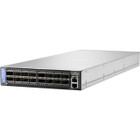
HPE Q2F24A SN2100M 100GbE 8-Port QSFP28 Switch - Layer 2 Managed - 1U Rack-mountable

Business volume discounts
Technical guidance
Preparation & staging
QC · ON · AB · BC
Product Features
Technical Overview
The SN2100M switch operates on 100GBase-X network technology, delivering consistent 100 Gigabit Ethernet performance across all eight QSFP28 expansion slots. Each port supports optical fiber connections, allowing for high data transmission rates and extended reach between servers, storage, and network components.
This switch is fully manageable, offering Layer 2 switching features such as IGMP snooping, port mirroring, and spanning tree protocol for robust network operation and troubleshooting. The modular design ensures flexibility in deployment, while the absence of dedicated uplink or stack ports positions it as a core aggregation or spine switch in high-speed network architectures.
Relevant factors for this section include Uplink Port, Modular, Stack Port, Media Type Supported. When those points are considered together, they give buyers a clearer picture of how the product is equipped, how it fits into deployment, and what kind of day-to-day role it is meant to support.
Key Product Advantages
The HPE SN2100M switch combines high-density 100GbE connectivity with enterprise-grade management and reliability features, making it an ideal choice for demanding network environments.
High-Speed Backbone Ready
With eight 100GbE QSFP28 ports, this switch provides the bandwidth necessary for data center spine layers, high-performance computing clusters, and storage area networks, reducing bottlenecks and improving overall network throughput.
- 100GBase-X technology
- Optical fiber support for long reach
- Low-latency data transmission
Enterprise Management Capabilities
As a Layer 2 managed switch, it offers comprehensive control over network configuration, security, and monitoring, enabling features like VLANs, QoS, and traffic analysis for optimized performance and security.
- IGMP snooping for multicast efficiency
- Port mirroring for diagnostics
- Spanning tree for loop prevention
Reliable Deployment Design
The 1U rack-mountable form factor saves space in standard server racks, while the built-in power supply with redundant power support ensures continuous operation and minimizes downtime in critical applications.
- Compact 1U profile
- Redundant power capable
- Professional cable management
Deployment / Use Cases
The HPE SN2100M switch is engineered for scenarios requiring high-bandwidth, low-latency connectivity and centralized network management. Its 100GbE fiber ports and Layer 2 features make it suitable for aggregation and core switching roles in modern IT infrastructures.
In data center environments, this switch can serve as a spine switch in leaf-spine architectures, connecting top-of-rack switches or servers with 100GbE uplinks. For enterprise backbones, it aggregates traffic from multiple 10GbE or 25GbE switches, providing a scalable foundation for growing network demands. It also fits well in high-performance computing and storage networks where fast data transfer between nodes is critical.
Data Center Spine Switching
Use the SN2100M as a high-speed spine switch to interconnect leaf switches, ensuring low-latency, high-bandwidth communication across the data center fabric.
Enterprise Network Aggregation
Deploy this switch to aggregate traffic from multiple distribution switches, consolidating 10GbE or 25GbE links into a 100GbE backbone for improved efficiency and scalability.
Physical Profile
The SN2100M switch features a compact and durable design optimized for rack deployment. With dimensions of 1.72" (43.69 mm) in height, 20" (508 mm) in width, and 7.87" (199.90 mm) in depth, it fits standard 1U rack spaces, making it easy to integrate into existing server cabinets or network racks.
Weighing approximately 9.99 lb (4530 g), this switch is lightweight yet robust, with a rack-mountable form factor that includes mounting hardware for secure installation. The design supports efficient airflow and cable management, contributing to reliable operation in dense network environments.
- Width
- 20" (508 mm)
- Depth
- 7.87" (199.90 mm)
- Height
- 1.72" (43.69 mm)
- Weight
- 9.99 lb (4530 g)
Highlights
- 8 x 100 Gigabit Ethernet QSFP28 ports for high-density connectivity
- Supports optical fiber media for long-distance, high-speed data transmission
- Layer 2 managed switch with advanced features like IGMP snooping and port mirroring
- 1U rack-mountable form factor for space-efficient deployment in standard server racks
- Built-in power supply with support for redundant power to enhance reliability
- 100GBase-X network technology ensures consistent 100GbE performance
- Modular design without dedicated uplink ports, ideal for core switching roles
- Part of the HPE StoreFabric M series, backed by HPE's networking expertise
Specifications
| Specifications | |
|---|---|
| Manufacturer | Hewlett Packard Enterprise |
| Manufacturer Part Number | Q2F24A |
| Brand Name | HPE |
| Product Line | StoreFabric |
| Product Series | M |
| Product Model | SN2100M |
| Product Name | SN2100M 100GbE 8QSFP28 Switch |
| Product Type | Ethernet Switch |
| Interfaces/Ports | |
| Uplink Port | No |
| Modular | Yes |
| Stack Port | No |
| Port/Expansion Slot Details | 8 x 100 Gigabit Ethernet Expansion Slot |
| Media & Performance | |
| Media Type Supported | Optical Fiber |
| Ethernet Technology | 100 Gigabit Ethernet |
| Network Technology | 100GBase-X |
| I/O Expansions | |
| Total Number of Expansion Slots | 8.0 |
| Expansion Slot Type | QSFP28 |
| Shared SFP Slot | No |
| Network & Communication | |
| Layer Supported | 2 |
| Management & Protocols | |
| Manageable | Yes |
| Power Description | |
| Power Source | Power Supply |
| Redundant Power Supply Supported | Yes |
| Physical Characteristics | |
| Compatible Rack Unit | 1U |
| Form Factor | Rack-mountable |
| Height | 1.72" (43.69 mm) |
| Width | 20" (508 mm) |
| Depth | 7.87" (199.90 mm) |
| Weight (Approximate) | 9.99 lb (4530 g) |
FAQ
How many ports does the HPE SN2100M switch have, and what type are they?
The HPE SN2100M switch has eight 100 Gigabit Ethernet ports, all using QSFP28 form factor. These ports support optical fiber connections, enabling high-bandwidth data transmission over longer distances, making it suitable for data center and enterprise backbone applications.
Is this switch manageable, and what Layer does it support?
Yes, the HPE SN2100M is a fully manageable switch that supports Layer 2. This means it offers advanced network management features such as VLAN configuration, Quality of Service (QoS), IGMP snooping for multicast traffic, port mirroring for monitoring, and spanning tree protocol for network loop prevention.
What is the rack unit size and form factor of this switch?
This switch has a 1U rack unit size, making it compact enough to fit into standard server racks. It is designed as rack-mountable, with dimensions of 1.72" in height, 20" in width, and 7.87" in depth, and includes mounting hardware for secure installation in professional network environments.
Does the HPE SN2100M support redundant power supplies?
Yes, the HPE SN2100M switch supports redundant power supplies. It comes with a built-in power supply and is designed to accommodate redundant power configurations, which helps minimize downtime and ensure continuous operation in critical network deployments.
What type of network technology and media does this switch use?
The HPE SN2100M switch uses 100GBase-X network technology, delivering 100 Gigabit Ethernet performance. It supports optical fiber media, allowing for high data transmission rates and extended reach, which is ideal for connecting servers, storage systems, and other network components over longer distances.
Can this switch be used for uplink or stacking purposes?
No, the HPE SN2100M does not have dedicated uplink ports or stack ports. It is designed with eight QSFP28 ports that are typically used for high-speed connections in core or aggregation roles, such as linking to other switches or servers in a data center spine-leaf architecture, rather than for traditional uplinking or stacking.
| Qty | Price | Available |
|---|