








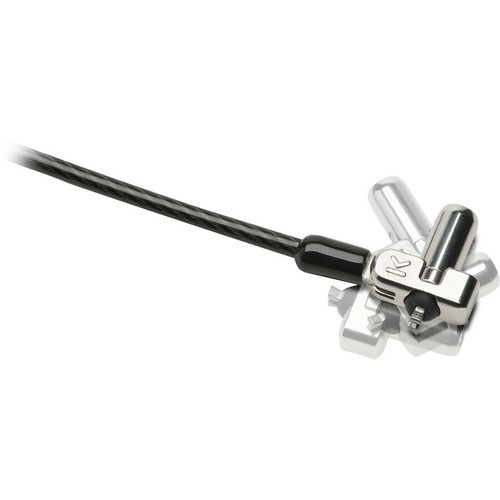

Kensington K67995WW N17 Keyed Dual Head Laptop Lock for Dell Devices - 6 ft (1.83 m) Cable - Carbon Steel - Black

Business volume discounts
Technical guidance
Preparation & staging
QC · ON · AB · BC
Product Features
Technical Overview
This Kensington laptop lock employs a keyed lock configuration, requiring a physical key for operation. The 6 ft (1.83 m) cable length provides ample reach for securing devices to fixed furniture or fixtures without restricting user mobility.
Constructed from carbon steel, the cable offers high tensile strength and resistance to cutting or tampering. The lock mechanism is engineered for repeated use, maintaining reliability over time with proper key management.
Relevant factors for this section include Lock Configuration Type, Cable Length, Color Family, Product Color. When those points are considered together, they give buyers a clearer picture of how the product is equipped, how it fits into deployment, and what kind of day-to-day role it is meant to support.
A strong technical summary explains how the product's interfaces, hardware profile, and operating characteristics work together in real deployment. Buyers often need this context to confirm compatibility with existing devices, expected performance in daily use, and whether installation will be straightforward for IT staff or end users.
Key Product Advantages
The Kensington N17 lock combines durable construction with practical security features for Dell devices. Its keyed mechanism provides controlled access, while the carbon steel cable ensures physical resilience against theft attempts.
These strengths make the product easier to deploy and manage in real environments, especially where reliability, usability, and day-to-day operational continuity matter. Notable benefits include Keyed Security, Carbon Steel Cable, Dell Compatibility, 6 ft Reach.
For buyers comparing similar models, the strongest advantage is usually the balance between dependable day-to-day operation and a simpler rollout experience. That means less time spent troubleshooting fit, compatibility, or user adoption after installation, which is especially important for shared business environments and repeat purchasing decisions.
Deployment / Use Cases
Deploy this laptop lock in environments where device security is a priority but mobility is still required. It is ideal for securing Dell notebooks and tablets in open-plan offices, retail kiosks, hospital workstations, or educational settings where devices are shared or left unattended.
Use the lock to tether devices to desks, tables, or other fixed structures, reducing the risk of opportunistic theft. Its 6 ft cable allows users to work comfortably while keeping the device securely anchored, making it suitable for temporary workstations, conference rooms, and customer service counters.
Office Security
Secure Dell laptops on shared desks or in open office layouts to prevent unauthorized removal.
- Deters internal theft
- Allows flexible seating
- Easy to install and remove
Educational and Public Settings
Protect devices in libraries, classrooms, or computer labs where multiple users access equipment.
- Suitable for tablets and notebooks
- Simple key management
- Durable for high-use environments
Highlights
- Keyed lock mechanism for controlled security access
- 6 ft (1.83 m) carbon steel cable for durability and reach
- Compatible with Dell notebooks and tablets
- Black finish for discreet integration with devices
- Designed for repeated use in high-traffic environments
- Provides physical theft deterrence in shared spaces
- Easy to install and remove with provided key
- Suitable for offices, educational institutions, and public settings
Specifications
| Specifications | |
|---|---|
| Manufacturer | Kensington Computer Products Group |
| Manufacturer Part Number | K67995WW |
| Brand Name | Kensington |
| Product Name | N17 Keyed Dual Head Laptop Lock for Dell Devices |
| Packaged Quantity | 1 |
| Product Type | Cable Lock |
| Lock | |
| Lock Configuration Type | Keyed Lock |
| Cable Length | 6 ft (1.83 m) |
| Physical Characteristics | |
| Color Family | Black |
| Product Color | Black |
| Product Material | Carbon Steel |
| Miscellaneous | |
| Device Supported | Notebook,Tablet |
| Country of Origin | Taiwan |
FAQ
What devices is this Kensington laptop lock compatible with?
This Kensington K67995WW N17 lock is specifically designed for Dell notebooks and tablets that feature a compatible security slot. It uses a dual head design to engage with Dell's security interface, providing a secure tether point. It is not intended for other brands or devices without the appropriate slot.
How does the keyed lock mechanism work?
The lock employs a traditional keyed mechanism, where a physical key is required to lock and unlock the cable. This provides controlled access, as only authorized personnel with the key can secure or release the device. It is a reliable mechanical system suited for environments where key management is feasible.
What is the cable made of and how durable is it?
The cable is constructed from carbon steel, a strong and resilient material that resists cutting and tampering. This ensures the lock can withstand physical theft attempts, making it a robust security solution for high-risk or public settings where devices may be left unattended.
What is the length of the security cable?
The cable measures 6 ft (1.83 m) in length. This provides ample reach to secure a device to fixed furniture or fixtures, such as desk legs or wall anchors, while allowing enough slack for comfortable use of the notebook or tablet without straining the connection.
Where is this laptop lock typically used?
This lock is ideal for deployment in offices, libraries, classrooms, retail environments, healthcare settings, and co-working spaces. It secures Dell devices in shared or public areas where theft prevention is necessary, offering a simple yet effective physical security measure.
Does the lock come with keys and how many are included?
The lock includes keys as part of its keyed configuration. Typically, Kensington keyed locks come with two keys to allow for backup access. Users should store keys securely to maintain controlled access to the locked devices.
| Qty | Price | Available |
|---|