







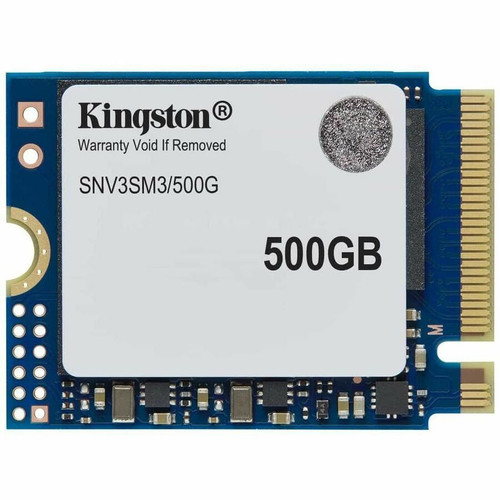


Kingston SNV3SM3/500G NV3500GB SSD - M. 2 2230 PCIe NVMe 4.0 x 4 Internal Drive - 4.88GB/s Read - 2.93GB/s Write

Business volume discounts
Technical guidance
Preparation & staging
QC · ON · AB · BC
Product Features
Technical Overview
This SSD features a PCI Express NVMe 4.0 x4 interface, which enables maximum sequential read speeds of 4.88GB/s and write speeds of 2.93GB/s. These performance metrics ensure rapid file transfers, reduced application load times, and smoother overall system operation compared to traditional storage solutions.
The drive is built with endurance in mind, rated for 160TB total bytes written (TBW) and backed by a mean time between failures (MTBF) of 228.2 years. This reliability makes it suitable for both everyday computing tasks and more demanding workloads where consistent performance is critical.
Relevant factors for this section include Storage Capacity, Endurance (TBW), Maximum Sequential Read, Maximum Sequential Write. When those points are considered together, they give buyers a clearer picture of how the product is equipped, how it fits into deployment, and what kind of day-to-day role it is meant to support.
Key Product Advantages
The Kingston NV3 SSD combines high-speed performance with compact design, offering significant advantages for users seeking to enhance their storage capabilities without sacrificing device portability or internal space.
High-Speed Data Transfer
PCIe NVMe 4.0 x4 interface delivers near-instantaneous data access with read speeds up to 4.88GB/s, dramatically reducing wait times for file operations and system responsiveness.
- 4.88GB/s maximum sequential read
- 2.93GB/s maximum sequential write
- PCI Express NVMe 4.0 x4 interface
Compact Form Factor
The M.2 2230 design measures just 22mm wide by 30mm deep, making it compatible with ultra-thin notebooks and compact gaming consoles where space is at a premium.
- 22mm width
- 30mm depth
- 2.30mm height
- 2.60g weight
Enhanced Reliability
With 160TB endurance rating and 228.2-year MTBF, this SSD provides dependable storage for continuous use in both consumer and light commercial applications.
- 160TB total bytes written
- 228.2-year MTBF
- Internal drive type
Deployment / Use Cases
This Kingston NV3 SSD is specifically engineered for devices that benefit from high-speed storage in compact form factors. Its performance characteristics and physical dimensions make it particularly well-suited for modern computing scenarios where both speed and space efficiency are priorities.
For gaming consoles, the drive enables faster game loading, reduced texture pop-in, and smoother gameplay experiences. In notebook computers, it provides quick boot times, rapid application launches, and efficient multitasking capabilities while maintaining the slim profile of portable devices.
Notebook Performance Upgrade
Replace slower mechanical or older SSD drives in laptops to achieve significantly faster system responsiveness, quicker file transfers, and extended battery life through reduced power consumption.
Gaming Console Storage Expansion
Add high-speed storage to gaming consoles to decrease load times, improve in-game performance, and provide additional space for game libraries and downloadable content.
Physical Profile
The Kingston NV3 SSD features an M.2 2230 form factor with dimensions of 22mm width, 30mm depth, and 2.30mm height. This ultra-compact design allows installation in devices with limited internal space while maintaining full PCIe NVMe 4.0 performance. The drive weighs approximately 2.60 grams, adding minimal weight to host systems.
The physical profile is practical for deployment planning because the dimensions and weight are clearly defined: 90.55 mil (2.30 mm), 0.87" (22 mm), 1.18" (30 mm), 0.09 oz (2.60 g). This helps confirm rack, shelf, desk, or cabinet fit before installation.
- Width
- 0.87" (22 mm)
- Depth
- 1.18" (30 mm)
- Height
- 90.55 mil (2.30 mm)
- Weight
- 0.09 oz (2.60 g)
Highlights
- 500GB storage capacity for ample file and application space
- PCI Express NVMe 4.0 x4 interface for maximum data transfer speeds
- 4.88GB/s maximum sequential read performance
- 2.93GB/s maximum sequential write performance
- M.2 2230 form factor for compact device compatibility
- 160TB endurance rating for reliable long-term use
- 228.2-year mean time between failures (MTBF)
- Compatible with notebooks and gaming consoles
- Internal drive design for integrated installation
- Ultra-compact dimensions: 22mm × 30mm × 2.30mm
Specifications
| Specifications | |
|---|---|
| Manufacturer | Kingston Technology Company |
| Manufacturer Part Number | SNV3SM3/500G |
| Brand Name | Kingston |
| Product Series | NV3 |
| Product Name | NV3 PCIe 4.0 NVMe SSD |
| Packaged Quantity | 1 |
| Package Type | Retail |
| Product Type | Solid State Drive |
| Technical Information | |
| Storage Capacity | 500 GB |
| Drive Performance | |
| Endurance (TBW) | 160 TB |
| Maximum Sequential Read | 4.88 GB/s |
| Maximum Sequential Write | 2.93 GB/s |
| Mean Time Between Failures (MTBF) | 228.2 Year |
| Interfaces/Ports | |
| Drive Interface | PCI Express NVMe |
| Drive Interface Standard | PCI Express NVMe 4.0 x4 |
| Physical Characteristics | |
| Drive Type | Internal |
| Form Factor | M.2 2230 |
| Height | 90.55 mil (2.30 mm) |
| Width | 0.87" (22 mm) |
| Depth | 1.18" (30 mm) |
| Weight (Approximate) | 0.09 oz (2.60 g) |
| Miscellaneous | |
| Device Supported | Notebook,Gaming Console |
User Manual
FAQ
What devices are compatible with this Kingston NV3 SSD?
This SSD is compatible with notebooks and gaming consoles that support M.2 2230 form factor PCIe NVMe 4.0 x4 storage. It's designed for internal installation in devices with appropriate M.2 slots, making it ideal for upgrading ultra-thin laptops and compact gaming systems that require high-speed storage in a small physical footprint.
What are the read and write speeds of this 500GB SSD?
The Kingston NV3 500GB SSD delivers maximum sequential read speeds of 4.88GB/s and maximum sequential write speeds of 2.93GB/s. These performance levels are achieved through its PCI Express NVMe 4.0 x4 interface, which provides significantly faster data transfer compared to SATA SSDs or traditional hard drives, resulting in quicker system boot times, faster application loading, and reduced file transfer durations.
What does the 160TB endurance rating mean for this SSD?
The 160TB endurance rating indicates the total amount of data that can be written to the drive over its lifespan while maintaining reliable operation. This translates to approximately 87GB of writes per day for five years, making the drive suitable for typical consumer and light commercial workloads. Combined with a 228.2-year mean time between failures rating, this endurance specification ensures dependable performance for everyday computing tasks and moderate storage demands.
How does the M.2 2230 form factor differ from other SSD sizes?
The M.2 2230 form factor measures 22mm wide by 30mm long, making it one of the smallest M.2 SSD sizes available. This compact design allows installation in devices with extremely limited internal space, such as ultra-thin notebooks, mini PCs, and certain gaming consoles. Unlike larger M.2 2280 drives (22mm × 80mm), the 2230 variant maintains full PCIe NVMe 4.0 performance while occupying significantly less physical space within the host device.
Does this SSD require any special drivers or software for installation?
The Kingston NV3 SSD typically works with standard NVMe drivers included in modern operating systems. For optimal performance, ensure your device's BIOS/UEFI firmware supports PCIe NVMe 4.0 and that you're using a current operating system version. The drive is plug-and-play compatible in most systems with appropriate M.2 2230 slots, though checking your specific device's storage compatibility specifications before purchase is recommended to ensure proper fit and function.
What advantages does PCIe NVMe 4.0 offer over previous storage interfaces?
PCIe NVMe 4.0 provides double the bandwidth of PCIe 3.0, enabling significantly higher data transfer speeds. The x4 lane configuration in this Kingston NV3 SSD allows for maximum sequential read speeds up to 4.88GB/s, which is approximately 8-9 times faster than SATA III SSDs. This performance improvement translates to noticeably faster system responsiveness, reduced application load times, quicker file transfers, and enhanced overall computing experience, particularly for storage-intensive tasks like gaming, video editing, and large file operations.
| Qty | Price | Available |
|---|