






Shipping included*
Exclusions
Additional shipping fees may apply in rare circumstances for deliveries outside standard service areas. In most cases, this only potentially affects shipments to the Northwest Territories and Yukon, as well as certain heavy or oversized items.
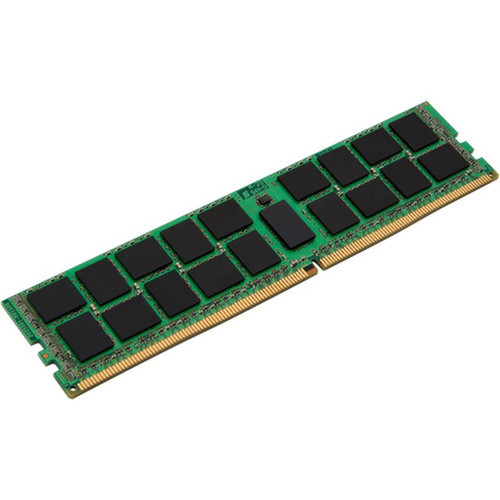
Kingston KTD-PE426D8/16G 16GB DDR4 2666MHz ECC Registered DIMM - 1 x 16GB - CL19288-pin - PC4-21300

Business volume discounts
Technical guidance
Preparation & staging
QC · ON · AB · BC
Product Features
Product Overview
The Kingston KTD-PE426D8/16G is a 16GB DDR4 memory module engineered for server and workstation environments requiring reliable, high-performance memory expansion. This ECC Registered DIMM delivers 2666MHz speed with CL19 latency, providing the stability and error correction essential for critical business applications and data-intensive workloads.
Built on DDR4 SDRAM technology with a 288-pin DIMM form factor, this module operates at a low 1.20V for efficient power consumption while maintaining robust thermal performance. The PC4-21300 standard ensures compatibility with modern server platforms, making it an ideal upgrade or replacement for aging memory in enterprise hardware.
Relevant product facts for this section include Memory Size: 16 GB, Memory Technology: DDR4 SDRAM, Memory Voltage: 1.20 V, Number of Pins: 288-pin. When those details are considered together, they give buyers a clearer picture of how the product is equipped, how it connects, and what kind of day-to-day role it is meant to support.
Technical Overview
This Kingston module utilizes DDR4 SDRAM technology with a 2666MHz clock speed, corresponding to the DDR4-2666/PC4-21300 memory standard. The ECC (Error-Correcting Code) feature automatically detects and corrects single-bit memory errors, while Registered signal processing improves signal integrity and stability in multi-module configurations.
The 288-pin DIMM form factor is standard for server and workstation memory, ensuring proper physical fit in compatible systems. With a CAS latency of CL19, this module balances speed with reliable data access timing, optimized for server applications where data integrity is paramount.
Relevant product facts for this section include Memory Size: 16 GB, Memory Technology: DDR4 SDRAM, Memory Voltage: 1.20 V, Number of Pins: 288-pin. When those details are considered together, they give buyers a clearer picture of how the product is equipped, how it connects, and what kind of day-to-day role it is meant to support.
Key Product Advantages
Kingston's server memory modules are designed for 24/7 operation in demanding environments. The combination of ECC error correction, Registered signal processing, and rigorous testing ensures this module meets the reliability standards expected in enterprise deployments.
Server-Grade Reliability
ECC and Registered features provide enterprise-level data integrity and stability, reducing system crashes and data corruption in critical server environments.
- Automatic single-bit error correction
- Improved signal integrity in multi-module setups
- Reduced risk of system failures
Optimized Performance
The 2666MHz speed with CL19 latency delivers responsive performance for virtualization, database operations, and other memory-intensive server workloads.
- Fast data transfer rates
- Efficient memory access timing
- Low 1.20V power consumption
Deployment / Use Cases
This Kingston 16GB DDR4 module is specifically validated for compatibility with Dell server and workstation platforms. System administrators can use it for memory upgrades in existing hardware, replacement of failed modules, or building new systems that require ECC Registered memory.
The module supports virtualization environments, database servers, file servers, and other enterprise applications where data integrity and system stability are critical. Its server-optimized design makes it unsuitable for standard desktop computers that require unbuffered memory.
Server Memory Upgrades
Ideal for expanding memory capacity in Dell PowerEdge servers including R440, R540, R640, R740, R740xd, R940, and T440 models to support increased virtual machine density or application performance.
Workstation Performance
Suitable for Dell Precision workstations like the 7820 Tower and 5820 models where ECC memory is required for CAD, engineering, scientific computing, or content creation applications.
Highlights
- 16GB DDR4 memory module with 2666MHz speed
- ECC (Error-Correcting Code) for data integrity
- Registered signal processing for server stability
- CL19 latency for optimized performance
- 288-pin DIMM form factor for server/workstation compatibility
- Validated for Dell PowerEdge servers and Precision workstations
- Low 1.20V operating voltage for power efficiency
- PC4-21300 (DDR4-2666) memory standard
- Lifetime warranty from Kingston
- RoHS 2, REACH, WEEE, and Taiwan RoHS compliant
Specifications
| Specifications | |
|---|---|
| Manufacturer | Kingston Technology Company |
| Manufacturer Part Number | KTDPE426D816G |
| Brand Name | Kingston |
| Product Name | 16GB Module - DDR4 2666MHz |
| Product Type | RAM Module |
| Technical Information | |
| Memory Size | 16 GB |
| Memory Technology | DDR4 SDRAM |
| Memory Voltage | 1.20 V |
| Number of Modules | 1 x 16GB |
| Memory Speed | 2666 MHz |
| Memory Standard | DDR4-2666/PC4-21300 |
| Error Checking | ECC |
| Signal Processing | Registered |
| CAS Latency | CL19 |
| Device Supported | Server,Workstation |
| Physical Characteristics | |
| Number of Pins | 288-pin |
| Form Factor | DIMM |
| Miscellaneous | |
| Compatibility | Dell Servers: PowerEdge R440 PowerEdge R540 PowerEdge C6420 PowerEdge R640 PowerEdge R740 PowerEdge R740xd PowerEdge R940 PowerEdge T440 Dell Workstations: Precision 7820 Tower Precision Workstation 5820 |
| Environmentally Friendly | Yes |
| Environmental Certification | Hazard Assessment of Perfluorooctane Sulfonate (PFOS) |
| Environmental Compliance | Restriction of Hazardous Substances (RoHS) 2,Registration, Evaluation, Authorization and Restriction of Chemicals (REACH),Waste Electrical and Electronic Equipment Directive (WEEE),Taiwan Restriction of Hazardous Substances (Taiwan RoHS) |
| Warranty | |
| Limited Warranty | Lifetime |
FAQ
What is the difference between ECC and non-ECC memory?
ECC (Error-Correcting Code) memory includes additional circuitry that detects and corrects single-bit memory errors automatically. This is essential for server and workstation environments where data integrity is critical, as it prevents system crashes and data corruption that can occur with standard non-ECC memory. Non-ECC memory lacks this error correction capability and is typically used in consumer desktop computers.
What does 'Registered' mean in memory modules?
Registered memory (also called buffered memory) includes a register between the memory controller and the DRAM modules that helps stabilize electrical signals. This allows systems to support more memory modules while maintaining signal integrity, which is particularly important in servers with large memory capacities. Registered memory is slower than unbuffered memory but provides greater stability for enterprise applications.
Is this memory compatible with my Dell PowerEdge server?
This Kingston module is validated for compatibility with specific Dell PowerEdge servers including the R440, R540, C6420, R640, R740, R740xd, R940, and T440 models. It is also compatible with Dell Precision 7820 Tower and 5820 workstations. Always verify your specific system's memory requirements before purchasing, as server memory compatibility depends on the memory controller, BIOS version, and existing memory configuration.
Can I mix this module with other memory in my server?
For optimal performance and stability, it is recommended to use identical memory modules with matching specifications (capacity, speed, latency, and features) in server configurations. Mixing different memory types, speeds, or capacities can lead to system instability or the memory running at the speed of the slowest module. Consult your server documentation for specific memory configuration guidelines.
What is the advantage of DDR4 over DDR3 memory?
DDR4 memory offers several advantages over DDR3 including higher data transfer rates (this module operates at 2666MHz compared to typical DDR3 speeds of 1333-1866MHz), lower operating voltage (1.20V vs. 1.35V or 1.50V for DDR3), improved signal integrity, and higher density modules. DDR4 also introduces new features like bank groups that improve efficiency, making it better suited for modern server and workstation platforms.
What does CL19 latency mean for performance?
CL19 refers to the CAS (Column Address Strobe) latency, which is the number of clock cycles between when a memory controller requests data and when that data is available. A CL19 rating at 2666MHz represents the timing characteristics optimized for server applications where stability and error correction are prioritized over ultra-low latency. While lower CAS numbers generally indicate faster response times, server memory often uses slightly higher latencies to ensure reliability in multi-module configurations.
| Qty | Price | Available |
|---|