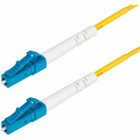





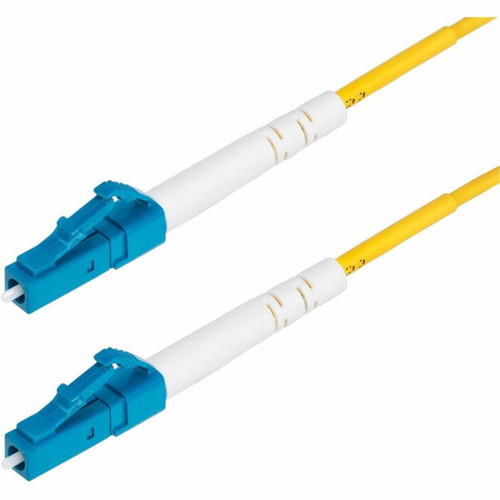
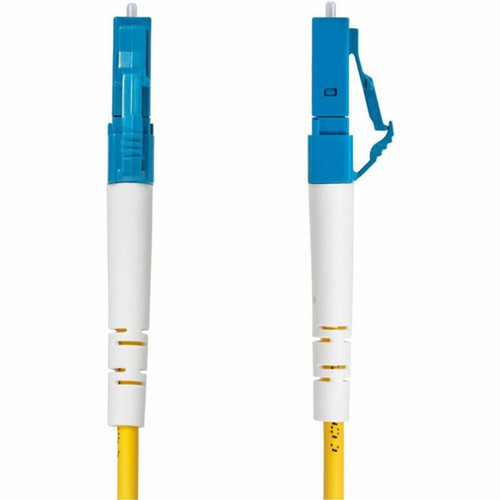

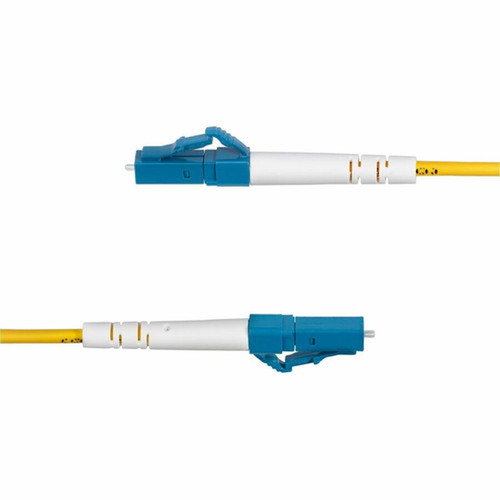
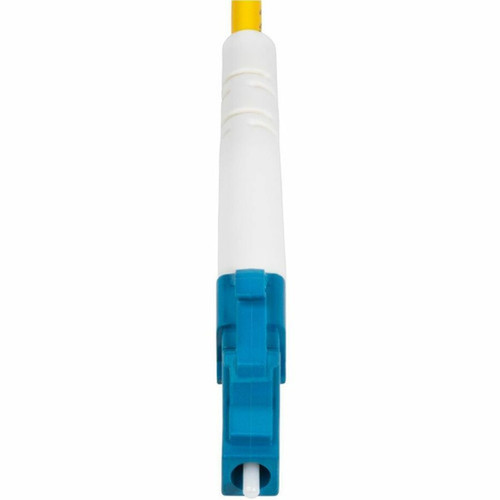
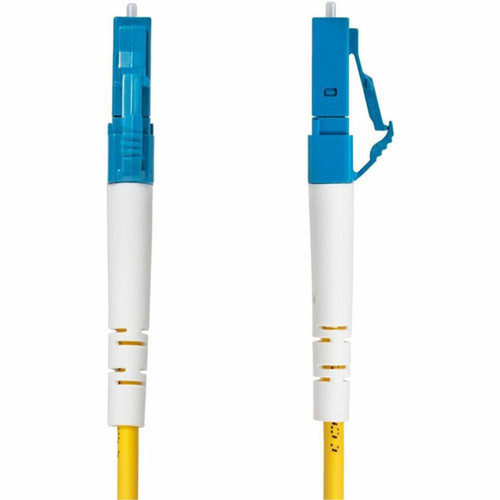
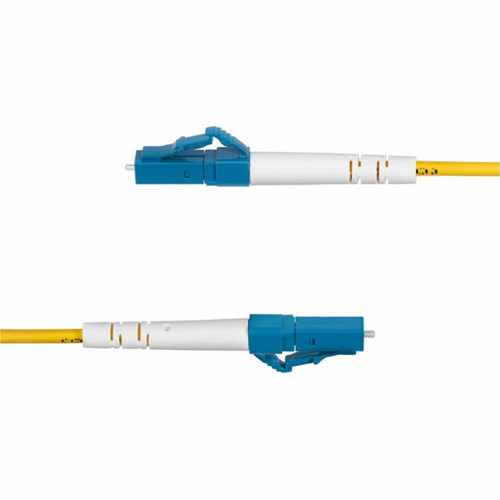
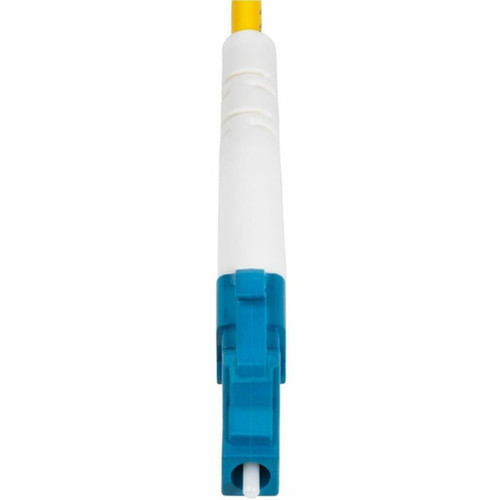
StarTech. com SPSMLCLC-OS2-1M LC to LC - UPC OS2 Single Mode Simplex Fiber Optic Cable - 1m - 3. 3ft - 9/125100Gbps - LSZH - Yellow

Business volume discounts
Technical guidance
Preparation & staging
QC · ON · AB · BC
Product Features
Technical Overview
This fiber optic cable utilizes OS2 single mode fiber with 9/125µm core/cladding dimensions, optimized for laser wavelengths between 1260-1625nm. The cable delivers exceptional optical performance with insertion loss ≤0.3dB and return loss ≥55dB, exceeding typical industry standards for reliable signal transmission.
The bend insensitive fiber core technology enables a loaded bend radius of just 10mm (0.39 inches) without compromising signal integrity, allowing for tight routing in complex cable management scenarios. The 2mm outer diameter cable profile provides flexibility while maintaining durability through aramid reinforcement within the jacket.
This section brings together practical product details such as Cable Type, Cable Characteristic, Fiber Optic Mode, Color Family, so buyers can judge configuration, deployment fit, and day-to-day suitability with less guesswork.
Key Product Advantages
This fiber optic patch cable combines performance, safety, and reliability features that make it suitable for critical network infrastructure applications. The individually tested construction guarantees consistent performance with included test documentation for verification and compliance purposes.
Enhanced Safety Features
The Low Smoke Zero Halogen (LSZH) jacket material minimizes toxic fume emission in the event of combustion, making this cable suitable for enclosed spaces and poorly ventilated areas where fire safety is a concern.
- Reduced toxic fume emission
- Flame retardant properties
- Safe for enclosed installations
Superior Optical Performance
UPC polished connectors provide improved optical characteristics compared to standard PC polish, delivering better return loss performance for stable high-speed data transmission.
- Ultra Physical Contact polish
- Optimized for 40G/100G networks
- Backward compatible with OS1
Deployment / Use Cases
This LC to LC simplex fiber optic cable is designed for point-to-point connections in various networking environments. Its single-fiber simplex configuration supports bi-directional (BiDi) transmission, effectively doubling the capacity of each fiber strand while reducing overall fiber count requirements.
Ideal applications include connections between network devices, servers, switches, and storage equipment in data centers, telecommunications facilities, and enterprise network closets. The cable works seamlessly with single-fiber network interface cards (NICs) and small form-factor pluggable (SFP) transceivers, providing flexible deployment options for both existing and new network installations.
Data Center Applications
Perfect for high-density server racks and network switch interconnections where space optimization and reliable high-speed connectivity are critical requirements.
Enterprise Networking
Suitable for backbone connections between network equipment, providing the bandwidth needed for modern business applications and data transfer requirements.
Highlights
- 1-meter (3.3-foot) LC to LC (UPC) OS2 single mode simplex fiber optic patch cable
- Supports 40G/100Gbps network speeds with backward compatibility to OS1 standards
- Ultra Physical Contact (UPC) polished connectors for superior optical performance
- Bend insensitive fiber technology with 10mm loaded bend radius for tight installations
- Low Smoke Zero Halogen (LSZH) jacket for enhanced fire safety in enclosed spaces
- 9/125µm single mode fiber optimized for 1260-1625nm laser wavelengths
- Individually tested with performance documentation included
- Yellow jacket for easy single mode fiber identification
- Compatible with network devices, servers, switches, and storage equipment
- Lifetime limited warranty for long-term reliability assurance
Specifications
| Specifications | |
|---|---|
| Manufacturer | StarTech.com |
| Manufacturer Part Number | SPSMLCLC-OS2-1M |
| Brand Name | StarTech.com |
| Product Name | Fiber Optic Simplex Patch Network Cable |
| Packaged Quantity | 1 |
| Product Type | Network Cable |
| Technical Information | |
| Cable Type | Fiber Optic |
| Cable Characteristic | Patch Cable |
| Fiber Optic Mode | Single-mode |
| Fiber Type | Simplex |
| Fiber Category | OS2 |
| Cable Length | 3.3 ft (1 m) |
| Connector Type on First End | LC Network - Male |
| Connector Gender on First End | Male |
| Connector on First End Details | 1 x LC Network - Male |
| Connector Type on Second End | LC Network - Male |
| Connector Gender on Second End | Male |
| Connector on Second End Details | 1 x LC Network - Male |
| Jacket Type | LSZH |
| Device Supported | Network Device,Server,Switch,Storage Device |
| Data Transfer Rate | 100 Gbit/s |
| Features | Ultra Physical Contact (UPC),Bend Insensitive,Flame Retardant,Bend Resistant,Passive |
| Physical Characteristics | |
| Color Family | Yellow |
| Product Color | Yellow |
| Product Material | Polypropylene |
| Jacket Material | Low Smoke Zero Halogen |
| Miscellaneous | |
| Environmentally Friendly | Yes |
| Environmental Certification | EU RoHS |
| Environmental Compliance | Restriction of Hazardous Substances (RoHS) 2,Registration, Evaluation, Authorization and Restriction of Chemicals (REACH),Waste Electrical and Electronic Equipment Directive (WEEE) |
| Warranty | |
| Limited Warranty | Lifetime |
User Manual
FAQ
What is the difference between simplex and duplex fiber optic cables?
Simplex fiber optic cables contain a single fiber strand and support bi-directional transmission over that single fiber using different wavelengths. This StarTech.com cable uses simplex configuration, which is ideal for space-constrained installations where minimizing fiber count is important. Duplex cables contain two fibers (one for transmit, one for receive) and are more common in traditional networking applications.
What does OS2 single mode fiber mean for my network installation?
OS2 is the performance category for single mode fiber optimized for higher bandwidth and longer distance transmission compared to OS1. This cable uses OS2 single mode fiber with 9/125µm core/cladding dimensions, which supports data rates up to 100Gbps and is backward compatible with OS1 equipment. OS2 fiber provides lower attenuation and better performance for modern high-speed networks.
Why are UPC connectors better than standard PC connectors?
Ultra Physical Contact (UPC) connectors feature a more precise polish that creates better surface contact between fiber ends, resulting in lower insertion loss and higher return loss compared to standard Physical Contact (PC) connectors. The UPC polish on this cable's LC connectors ensures ≤0.3dB insertion loss and ≥55dB return loss, providing superior optical performance for stable high-speed data transmission.
What are the safety benefits of the LSZH jacket material?
The Low Smoke Zero Halogen (LSZH) jacket emits minimal toxic smoke and halogens if exposed to fire, making this cable safer for enclosed spaces, poorly ventilated areas, and environments with high people density. Unlike PVC jackets that can produce dense toxic smoke, LSZH material reduces health risks during fire situations while maintaining flame retardant properties for enhanced installation safety.
Can this cable support 40G/100G Ethernet connections?
Yes, this OS2 single mode fiber optic cable is specifically optimized for 40G/100Gbps network applications. The 9/125µm fiber, UPC polished connectors, and low insertion loss characteristics make it suitable for high-speed Ethernet standards including 40GbE and 100GbE. The cable supports the wavelength requirements and performance specifications needed for these high-bandwidth applications.
What is bend insensitive fiber technology and why is it important?
Bend insensitive fiber technology allows the fiber core to maintain signal integrity even when bent at tight radii. This cable features a bend insensitive design that supports a loaded bend radius of just 10mm (0.39 inches) without significant signal loss. This is particularly valuable in dense installations where cables must navigate tight spaces, corners, and cable management systems without compromising network performance.
| Qty | Price | Available |
|---|