






TP-LINK MC220L Gigabit Ethernet Media Converter - 1 x RJ-45 to SFP Slot - 1000Base-T Fiber to Copper

Business volume discounts
Technical guidance
Preparation & staging
QC · ON · AB · BC
Product Features
Technical Overview
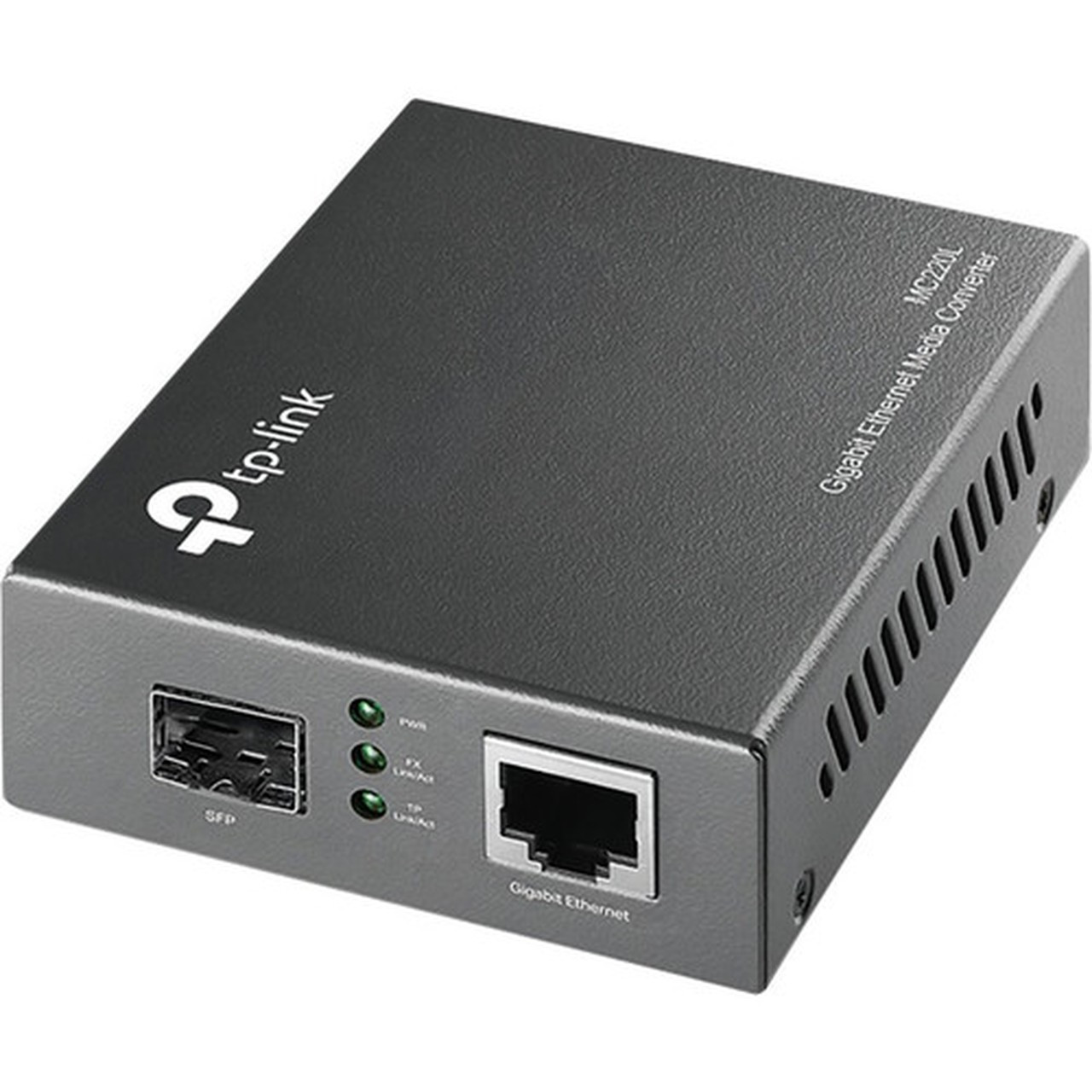
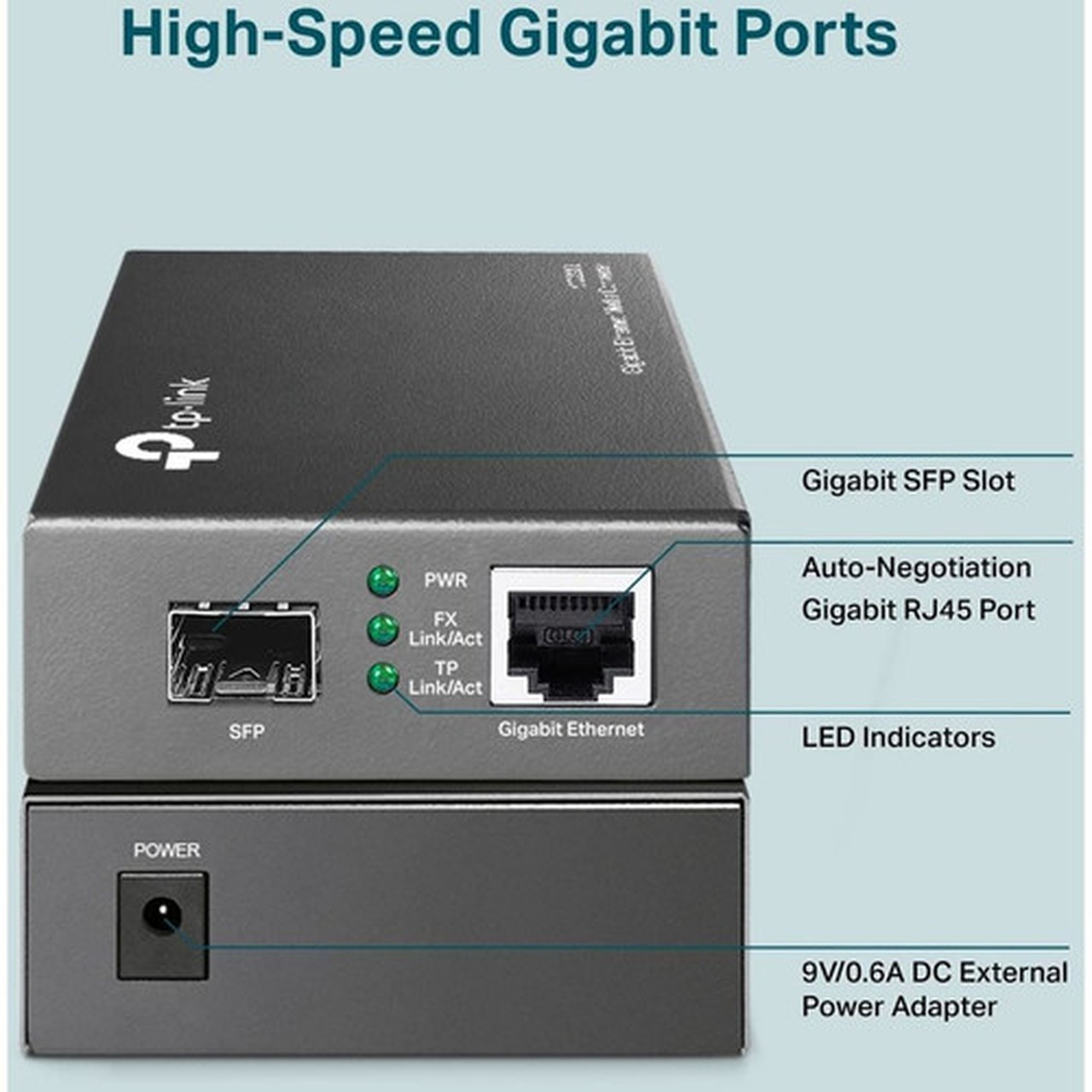
The MC220L features a single RJ-45 port for 10/100/1000 Base-T Ethernet connections and one SFP expansion slot for fiber optic modules. It operates on Gigabit Ethernet technology with 1000Base-T network support, ensuring high-speed data transfer between fiber and copper segments. The converter's auto-negotiation capability optimizes link settings dynamically, reducing configuration overhead and enhancing network reliability.
Power is supplied via an included adapter, with the device consuming only 1.70 W during operation. The compact external design measures 1.10" (27.94 mm) in height, 3.70" (93.98 mm) in width, and 2.90" (73.66 mm) in depth, making it suitable for desktop or rack-mount installations. Environmentally friendly construction aligns with sustainable IT practices.
Key Product Advantages
The MC220L excels in simplifying network integration by converting fiber to copper media without complex software or configuration. Its versatility supports a wide range of SFP modules, enabling tailored solutions for single-mode or multi-mode fiber applications.
Long-Range Transmission
When paired with appropriate SFP modules, the converter extends fiber distances up to 12.4 miles (20 km) for single-mode transmission and 1,800 feet (550 m) for multi-mode transmission, ideal for extending network reach across buildings or campuses.
Plug-and-Play Operation
No software installation or configuration is required; simply connect the RJ-45 and SFP modules for immediate functionality, reducing deployment time and technical expertise needed.
Compatibility and Flexibility
Works with 10/100/1000 Base-T Ethernet connections and supports various SFP modules, ensuring seamless integration with existing network equipment and future upgrades.
Deployment / Use Cases
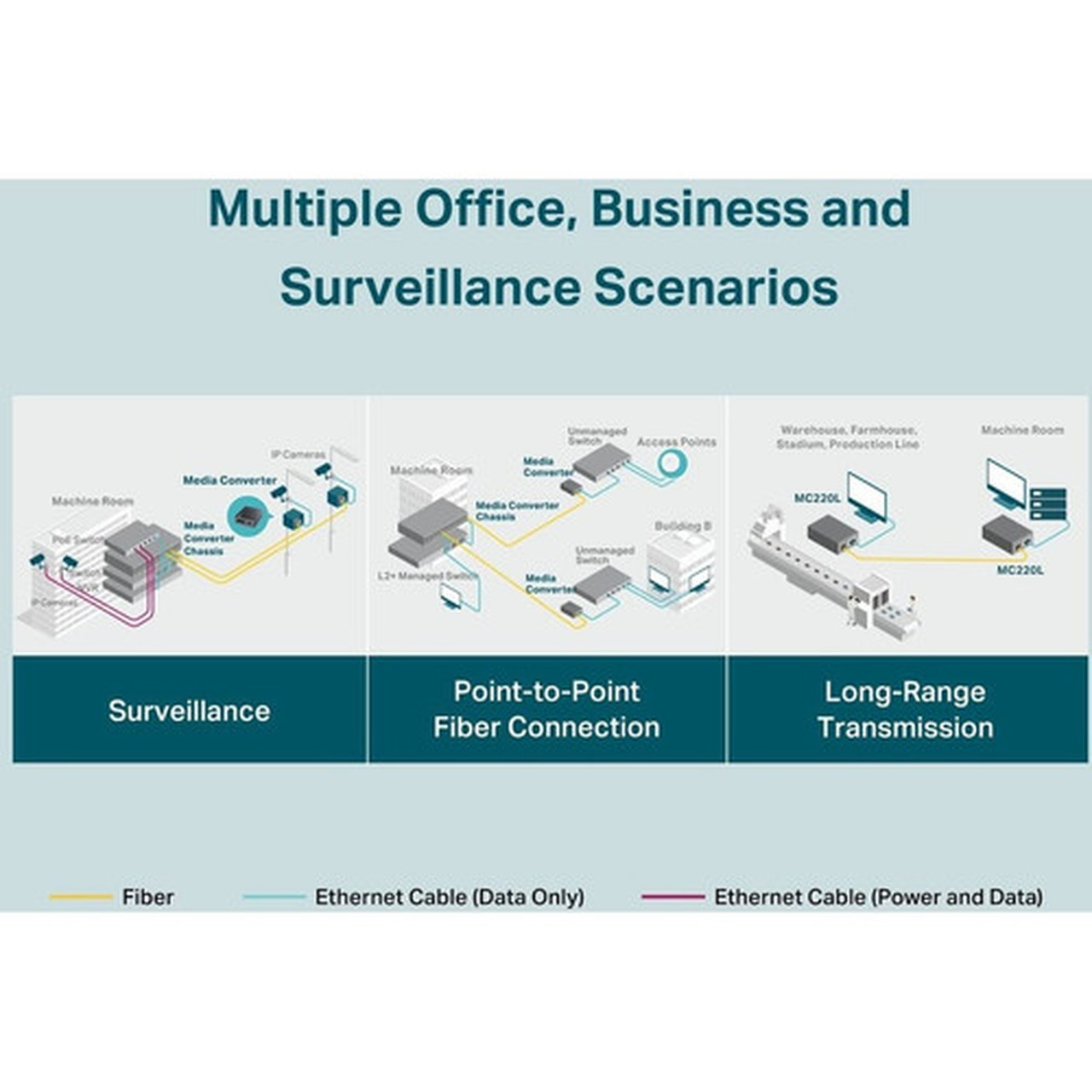
The MC220L is ideal for environments where fiber optic and copper Ethernet networks need to interoperate. Common use cases include extending network segments across long distances in campuses, industrial sites, or data centers where fiber is used for backbone connections but end-point devices rely on copper Ethernet.
In office buildings, it can connect fiber runs from server rooms to workstations with RJ-45 ports, enabling high-speed access without replacing entire cabling infrastructure. For surveillance systems, the converter links fiber-based cameras to copper network recorders, leveraging fiber's immunity to electromagnetic interference for reliable video transmission. Its compact size and external power make it suitable for temporary setups or remote locations where space and power efficiency are priorities.
Physical Profile
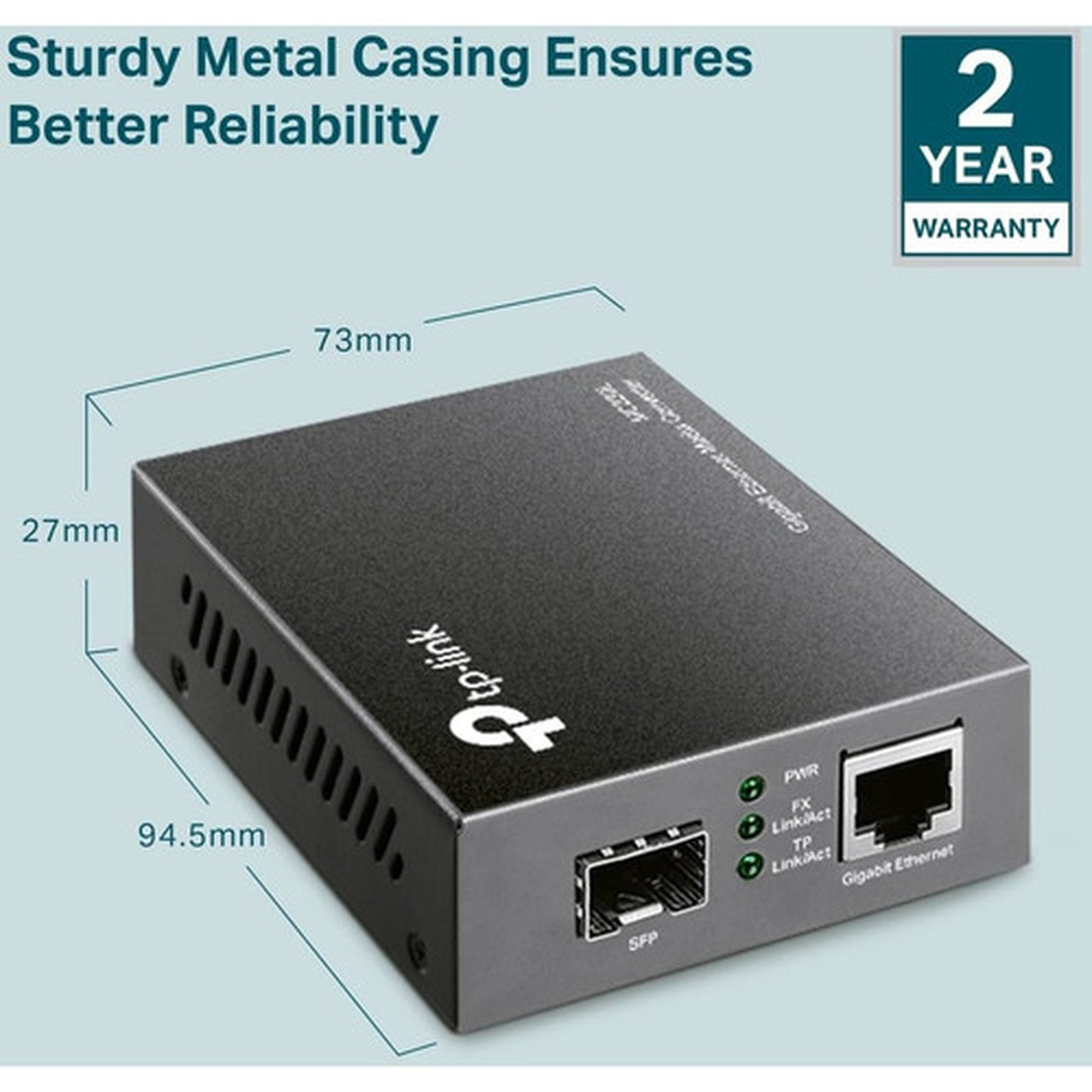
The MC220L has an external form factor with dimensions of 1.10" (27.94 mm) in height, 3.70" (93.98 mm) in width, and 2.90" (73.66 mm) in depth. Its small footprint allows for flexible placement on desktops, shelves, or in network cabinets. The design prioritizes durability and heat dissipation for stable operation in various environmental conditions.
- Width
- 3.70" (93.98 mm)
- Depth
- 2.90" (73.66 mm)
- Height
- 1.10" (27.94 mm)
What's in the Box
The package includes all necessary components for immediate setup and operation.
Highlights
- Converts 1000BASE-SX/LX fiber to 1000Base-T copper or vice versa
- Single RJ-45 port with auto-negotiation for 10/100/1000 Base-T Ethernet
- Hot-swappable SFP slot supports single-mode and multi-mode fiber modules
- Extends fiber distance up to 12.4 miles (20 km) for single-mode transmission
- Plug-and-play operation with no software installation required
- Low power consumption at 1.70 W for energy efficiency
- Compact external design for flexible deployment
- Environmentally friendly construction
Specifications
| Specifications | |
|---|---|
| Manufacturer | TP-LINK Technologies Co., Ltd |
| Manufacturer Part Number | MC220L |
| Brand Name | TP-Link |
| Product Model | MC220L |
| Product Name | MC220L Gigabit Ethernet Media Converter |
| Product Type | Transceiver/Media Converter |
| Interfaces/Ports | |
| Total Number of Ports | 1 |
| Network (RJ-45) | Yes |
| Number of Network (RJ-45) Ports | 1 |
| I/O Expansions | |
| Total Number of Expansion Slots | 1 |
| Expansion Slot Type | SFP |
| Number of SFP Slots | 1 |
| Network & Communication | |
| Ethernet Technology | Gigabit Ethernet |
| Network Technology | 1000Base-T |
| Power Description | |
| Power Source | Power Adapter |
| Power Consumption | 1.70 W |
| Physical Characteristics | |
| Form Factor | External |
| Height | 1.10" (27.94 mm) |
| Width | 3.70" (93.98 mm) |
| Depth | 2.90" (73.66 mm) |
| Miscellaneous | |
| Package Contents | MC220L Gigabit Ethernet Media Converter Power Adapter Installation Guide |
| Environmentally Friendly | Yes |
FAQ
What does the TP-Link MC220L Media Converter do?
The TP-Link MC220L Gigabit Ethernet Media Converter bridges fiber optic and copper Ethernet networks by converting 1000BASE-SX/LX fiber signals to 1000Base-T copper media or vice versa. It enables seamless integration of fiber infrastructure with standard RJ-45 equipment, supporting both single-mode and multi-mode fiber SFP modules for versatile network deployments.
What types of SFP modules are compatible with the MC220L?
The MC220L is compatible with both single-mode and multi-mode fiber SFP modules. This flexibility allows it to support various fiber types and distances, such as up to 12.4 miles (20 km) for single-mode transmission and 1,800 feet (550 m) for multi-mode transmission, depending on the specific SFP module used.
Does the MC220L require any software or configuration?
No, the MC220L operates as a plug-and-play device with no software installation or configuration needed. Its auto-negotiation RJ-45 port automatically adjusts to Half-Duplex/Full-Duplex transfer modes and supports auto-MDI/MDIX, simplifying setup and ensuring reliable connections without manual intervention.
What is the power consumption of the MC220L?
The MC220L consumes 1.70 W of power during operation, supplied via an included power adapter. This low power consumption contributes to energy efficiency, making it suitable for continuous use in network environments without significantly impacting energy costs.
| Qty | Price | Available |
|---|