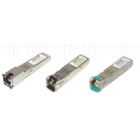





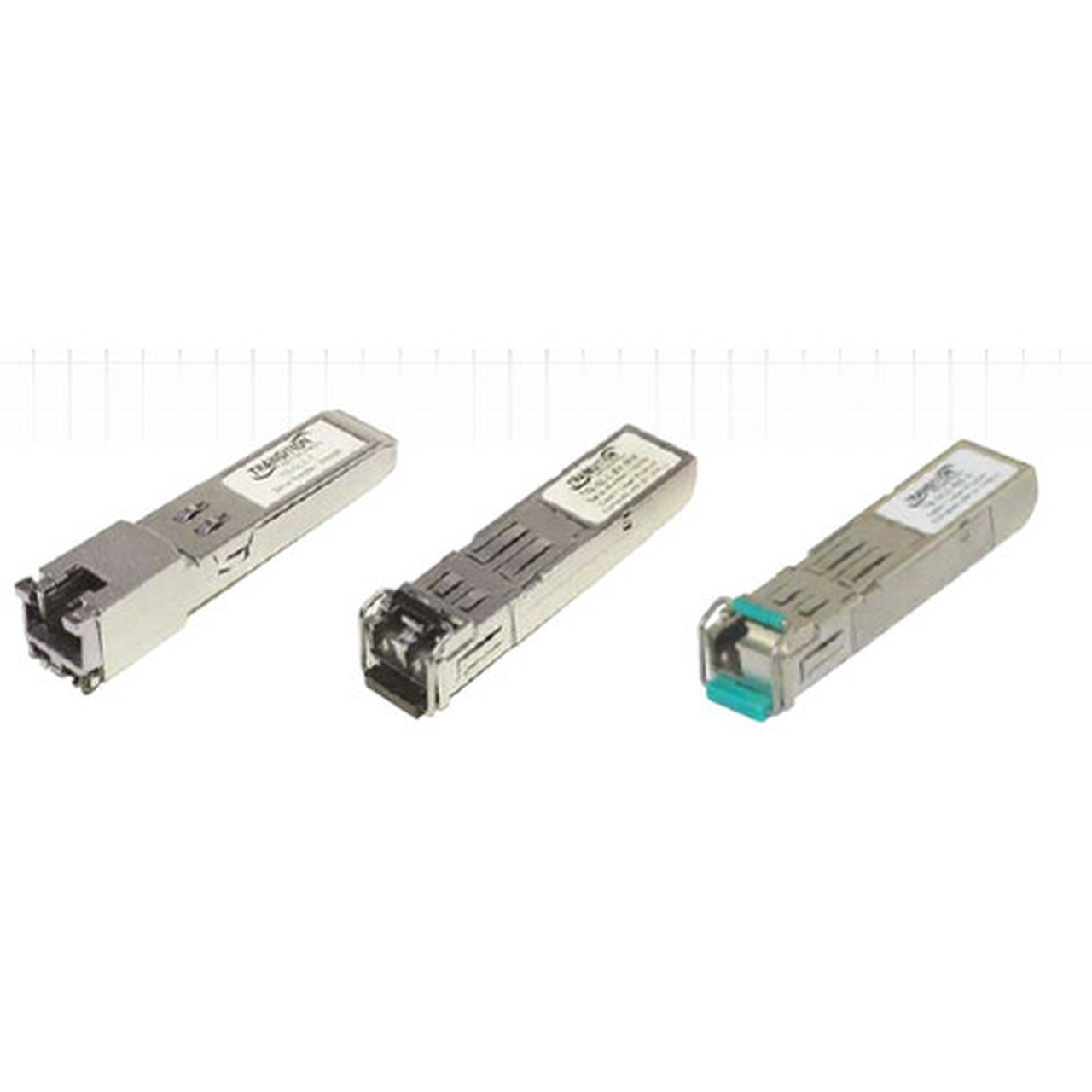

Transition Networks TN-GLC-FE-100FX-RGD SFP Module - 1 x LC 100Base-FX Fast Ethernet Multi-mode Fiber

Business volume discounts
Technical guidance
Preparation & staging
QC · ON · AB · BC
Product Features
Technical Overview
This SFP module operates on 100Base-FX Fast Ethernet technology, utilizing optical fiber media to achieve stable 100Mbps throughput. It is specifically configured for multi-mode fiber, which is optimized for short-distance data transmission within buildings or campuses.
The module's LC duplex connector interface ensures secure fiber optic connections, while its hot-swappable design allows for maintenance and upgrades without network downtime. Built to Multi-Sourcing Agreement (MSA) standards, it offers broad compatibility with Cisco Catalyst 2970, 3560, and 3750 series switches, among other MSA-compliant devices.
Key Product Advantages
This SFP module combines industrial-grade durability with enterprise networking performance, offering a cost-effective solution for fiber optic network expansion.
Reliable Fiber Connectivity
Leverages optical fiber to minimize electromagnetic interference and signal degradation over distances, ensuring consistent data integrity for critical network segments.
- Supports multi-mode fiber for short-range applications
- LC connector provides low insertion loss and high repeatability
Seamless Network Integration
Hot-swappable form factor and MSA compliance enable straightforward deployment into existing network infrastructure without requiring system shutdowns.
- Compatible with Cisco Catalyst 2970, 3560, 3750 series switches
- Standardized SFP footprint fits most MSA-compliant switch slots
Deployment / Use Cases
The TN-GLC-FE-100FX-RGD SFP module is ideal for extending Fast Ethernet networks over fiber optic cabling in environments where copper cabling is impractical or where noise immunity is required.
Common applications include connecting network switches within a building, linking industrial control systems, and supporting audio/video transmission over LANs. Its multi-mode fiber support makes it suitable for distances typically under 2 kilometers, such as intra-building backbone links or data center inter-racks.
Enterprise Network Backbone
Deploy in office buildings or campuses to connect switches across floors or wings, leveraging fiber's immunity to electrical interference for stable backbone links.
Industrial Networking
Use in manufacturing or utility settings where environmental factors favor fiber optic cabling for reliable data networking between control systems and endpoints.
Physical Profile
The module features a compact, industry-standard SFP form factor with dimensions of 0.33" (8.38 mm) height, 0.52" (13.21 mm) width, and 2.18" (55.37 mm) depth. Its small footprint allows high-density deployment in switch chassis, while the hot-swappable design supports tool-free installation and replacement during network maintenance.
- Width
- 0.52" (13.21 mm)
- Depth
- 2.18" (55.37 mm)
- Height
- 0.33" (8.38 mm)
Highlights
- 100Base-FX Fast Ethernet SFP module for 100Mbps data transfer over fiber
- Single LC connector interface for duplex multi-mode fiber optic connections
- Hot-swappable form factor enables live insertion and removal without downtime
- Supports multi-mode fiber media, ideal for short-distance network segments
- Compatible with Cisco Catalyst 2970, 3560, and 3750 series switches
- MSA (Multi-Sourcing Agreement) compliant for broad interoperability
- Optical fiber support reduces signal loss and electromagnetic interference
- Compact dimensions (0.33"H x 0.52"W x 2.18"D) fit standard SFP slots
Specifications
| Specifications | |
|---|---|
| Manufacturer | Lantronix, Inc |
| Manufacturer Part Number | TN-GLC-FE-100FX-RGD |
| Brand Name | Transition Networks |
| Product Model | TN-GLC-FE-100FX-RGD |
| Product Name | TN-GLC-FE-100FX-RGD SFP Module |
| Product Type | SFP |
| Technical Information | |
| Application/Usage | Data Networking,Optical Network |
| Interfaces/Ports | |
| Total Number of Ports | 1 |
| Connector Type | LC |
| Interfaces/Ports Details | 1 x LC 100Base-FX Network |
| Media & Performance | |
| Media Type Supported | Optical Fiber |
| Fiber Mode Supported | Multi-mode |
| Ethernet Technology | Fast Ethernet |
| Network Technology | 100Base-FX |
| Physical Characteristics | |
| Form Factor | Hot-swappable |
| Height | 0.33" (8.38 mm) |
| Width | 0.52" (13.21 mm) |
| Depth | 2.18" (55.37 mm) |
| Miscellaneous | |
| Compatibility | Multi-Sourcing Agreement Cisco Catalyst 2970, 3560 & 3750 series switches |
| Country of Origin | Taiwan |
FAQ
What is the data transfer speed of this SFP module?
This Transition Networks SFP module supports 100Base-FX Fast Ethernet technology, delivering data transfer rates up to 100 megabits per second (Mbps). It is designed for networks requiring reliable fiber optic connectivity at Fast Ethernet speeds, making it suitable for backbone links or connections where copper cabling is not feasible.
What type of fiber connector does this module use?
The module features a single LC duplex connector interface. LC connectors are widely used in fiber optic networking for their compact size and reliable performance, providing secure connections with low insertion loss. This connector type is compatible with standard LC fiber patch cables for easy integration into existing infrastructure.
Is this SFP module compatible with Cisco switches?
Yes, this module is Multi-Sourcing Agreement (MSA) compliant and specifically listed as compatible with Cisco Catalyst 2970, 3560, and 3750 series switches. MSA compliance ensures it meets industry standards for form factor and electrical interfaces, allowing it to work with a broad range of MSA-compliant network devices beyond the listed Cisco models.
What is the difference between single-mode and multi-mode fiber support?
This SFP module supports multi-mode fiber, which is optimized for shorter distance transmissions typically under 2 kilometers. Multi-mode fiber has a larger core diameter than single-mode, allowing multiple light modes to propagate. It is cost-effective for intra-building or campus applications, whereas single-mode fiber is used for longer distances exceeding 2 km.
| Qty | Price | Available |
|---|