









Shipping included*
Exclusions
Additional shipping fees may apply in rare circumstances for deliveries outside standard service areas. In most cases, this only potentially affects shipments to the Northwest Territories and Yukon, as well as certain heavy or oversized items.
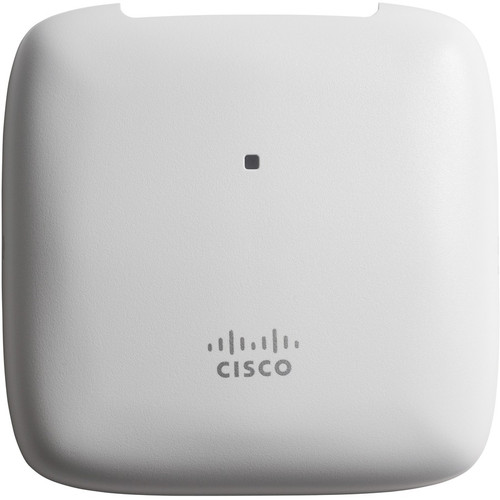
Cisco AIR-AP1840I-A-K9C Aironet AP1840I Dual-Band 802. 11ac Wireless Access Point - 1. 69 Gbit/s - 2x Gigabit Ethernet - PoE - Bluetooth 4. 2

Business volume discounts
Technical guidance
Preparation & staging
QC · ON · AB · BC
Product Features
Technical Overview
This access point operates on the 2.4 GHz and 5 GHz frequency bands, supporting the IEEE 802.11ac Wi-Fi standard for efficient data transmission. The dual-radio design allows simultaneous operation on both bands, optimizing network traffic and reducing congestion.
Advanced antenna systems with MIMO (Multiple Input, Multiple Output) and beamforming technologies focus wireless signals toward connected devices, improving throughput and stability even at longer ranges. Integrated Bluetooth 4.2 enables additional low-energy device connectivity and location services.
Relevant factors for this section include Wireless LAN Standard, Bluetooth Standard, Frequency Band, Ethernet Technology. When those points are considered together, they give buyers a clearer picture of how the product is equipped, how it fits into deployment, and what kind of day-to-day role it is meant to support.
A strong technical summary explains how the product's interfaces, hardware profile, and operating characteristics work together in real deployment. Buyers often need this context to confirm compatibility with existing devices, expected performance in daily use, and whether installation will be straightforward for IT staff or end users.
Key Product Advantages
The AP1840I combines high-capacity wireless performance with flexible deployment options, making it a versatile solution for expanding or upgrading wireless networks.
High-Speed Connectivity
With 802.11ac technology and dual-band support, this access point delivers fast, reliable Wi-Fi for bandwidth-intensive applications like video streaming, VoIP, and large file transfers.
- Aggregate throughput up to 1.69 Gbit/s
- Reduced latency for real-time applications
Simplified Installation and Power
Power over Ethernet (PoE) support allows the access point to receive both data and power over a single Ethernet cable, simplifying installation and reducing wiring complexity.
- PoE PD port for flexible power sourcing
- Compact design for easy ceiling or wall mounting
Enhanced Network Management
A dedicated management port provides direct access for configuration and monitoring, giving administrators efficient control over network setup, security policies, and performance tuning.
- Local management capabilities
- USB port for potential expansions or diagnostics
Deployment / Use Cases
The Cisco Aironet AP1840I is suited for indoor environments where reliable, high-speed wireless coverage is essential. Its dual-band operation and advanced radio features make it effective in handling multiple connected devices simultaneously.
Typical deployments include office buildings, educational campuses, retail stores, and healthcare facilities. The access point can be integrated into existing wired networks via its two Gigabit Ethernet ports, serving as a wireless extension for routers or switches.
Office and Enterprise Wi-Fi
Provide consistent wireless coverage across open-plan offices or meeting rooms, supporting employee devices, collaboration tools, and cloud applications without performance drops.
Education and Campus Networks
Deploy in classrooms or libraries to accommodate high densities of student devices, ensuring smooth access to online resources, video lectures, and interactive learning platforms.
Physical Profile
The access point features a low-profile design measuring 7 inches square and 1.5 inches in height, with a weight of just over 15 ounces. This compact footprint allows for unobtrusive installation on ceilings or walls, blending into commercial interiors. The unit's lightweight construction simplifies handling during setup, while its durable build ensures reliable operation in typical indoor conditions.
The physical profile is practical for deployment planning because the dimensions and weight are clearly defined: 1.50" (38.10 mm), 7" (177.80 mm), 7" (177.80 mm), 15.04 oz (426.38 g). This helps confirm rack, shelf, desk, or cabinet fit before installation.
- Width
- 7" (177.80 mm)
- Depth
- 7" (177.80 mm)
- Height
- 1.50" (38.10 mm)
- Weight
- 15.04 oz (426.38 g)
Highlights
- Dual-band 802.11ac wireless access point with speeds up to 1.69 Gbit/s
- Operates on both 2.4 GHz and 5 GHz frequency bands for flexible connectivity
- MIMO and beamforming technologies enhance signal strength and reliability
- Two Gigabit Ethernet ports for high-speed wired uplinks and network expansion
- Power over Ethernet (PoE) support simplifies installation and reduces cabling
- Integrated Bluetooth 4.2 for additional device connectivity and services
- Compact design ideal for ceiling or wall mounting in indoor environments
- Dedicated management port for efficient network configuration and control
- USB port available for potential accessories or diagnostic tools
- Lightweight build at 15.04 oz for easy handling and installation
Specifications
| Specifications | |
|---|---|
| Manufacturer | Cisco Systems, Inc |
| Manufacturer Part Number | AIR-AP1840I-A-K9C |
| Brand Name | Cisco |
| Product Line | Aironet |
| Product Series | 1840 |
| Product Model | AP1840I |
| Product Name | Aironet 1840 Access Point |
| Product Type | Wireless Access Point |
| Technical Information | |
| Wireless LAN Standard | IEEE 802.11ac |
| Bluetooth Standard | Bluetooth 4.2 |
| Frequency Band | 2.40 GHz,5 GHz |
| Wireless Transmission Speed | 1.69 Gbit/s |
| MIMO Technology | Yes |
| Beamforming Technology | Yes |
| Interfaces/Ports | |
| Ethernet Technology | Gigabit Ethernet |
| Number of Network (RJ-45) Ports | 2 |
| PoE PD Port | Yes |
| USB | Yes |
| Management Port | Yes |
| Physical Characteristics | |
| Height | 1.50" (38.10 mm) |
| Width | 7" (177.80 mm) |
| Depth | 7" (177.80 mm) |
| Weight (Approximate) | 15.04 oz (426.38 g) |
User Manual
FAQ
What Wi-Fi standard does the Cisco AP1840I support?
The Cisco AP1840I supports the IEEE 802.11ac Wi-Fi standard, which provides high-speed wireless connectivity with improved efficiency over previous standards. This enables faster data rates, better performance in crowded networks, and enhanced reliability for modern applications.
Does this access point support Power over Ethernet (PoE)?
Yes, the AP1840I includes a PoE PD (Power over Ethernet Powered Device) port. This allows the access point to receive both data and electrical power over a single Ethernet cable from a compatible PoE switch or injector, simplifying installation by eliminating the need for a separate power outlet near the mounting location.
How many Ethernet ports are available on this access point?
This access point features two Gigabit Ethernet (RJ-45) ports. These ports provide high-speed wired connections for network uplinks, allowing integration with existing switches or routers. The dual-port design offers flexibility for daisy-chaining or connecting additional wired devices.
What frequency bands does the AP1840I operate on?
The AP1840I is a dual-band access point that operates on both the 2.40 GHz and 5 GHz frequency bands. This dual-band capability allows it to support a wider range of client devices, reduce interference, and optimize network traffic by distributing connections across two separate radio frequencies.
Is this access point suitable for ceiling mounting?
Yes, the compact and lightweight design of the AP1840I makes it well-suited for ceiling mounting in indoor environments. Its low-profile form factor (7" x 7" x 1.5") allows for discreet installation, and the included specifications support typical mounting hardware for secure placement in offices, classrooms, or commercial spaces.
What management options are available for this access point?
The AP1840I includes a dedicated management port for direct local configuration and monitoring. This allows network administrators to efficiently control setup, security settings, and performance tuning. The access point can be integrated into broader network management systems for centralized oversight in larger deployments.
| Qty | Price | Available |
|---|