









Shipping included*
Exclusions
Additional shipping fees may apply in rare circumstances for deliveries outside standard service areas. In most cases, this only potentially affects shipments to the Northwest Territories and Yukon, as well as certain heavy or oversized items.
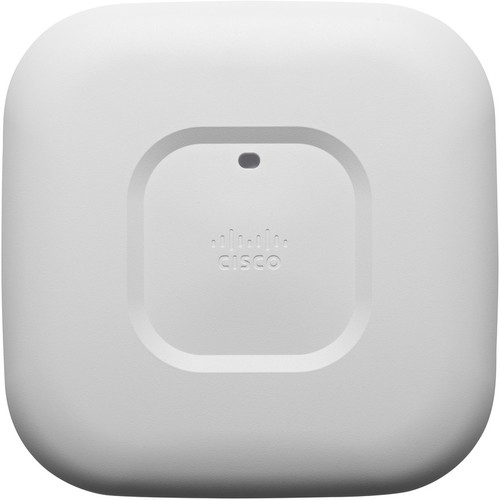
Cisco AIR-CAP2702EBK9-RF Aironet 2702E Wireless Access Point - IEEE 802.11ac Dual-Band 1.27 Gbit/s - Ceiling Mountable - 2x Gigabit Ethernet

Business volume discounts
Technical guidance
Preparation & staging
QC · ON · AB · BC
Product Features
Technical Overview
The 2702E operates on the IEEE 802.11ac wireless standard, which enables high-density client environments with improved throughput and efficiency over previous Wi-Fi generations. Its dual-radio architecture supports both 2.4 GHz and 5 GHz bands concurrently, allowing network administrators to balance legacy device compatibility with high-performance 5 GHz traffic.
Advanced radio features include MIMO (Multiple Input, Multiple Output) technology for increased data throughput and reduced interference, along with beamforming that directs Wi-Fi signals toward connected clients for stronger, more consistent coverage. The access point's Gigabit Ethernet backbone ensures wired network performance matches wireless capabilities, while the integrated management port facilitates configuration and monitoring.
Relevant factors for this section include Wireless LAN Standard, Frequency Band, Wireless Transmission Speed, Ethernet Technology. When those points are considered together, they give buyers a clearer picture of how the product is equipped, how it fits into deployment, and what kind of day-to-day role it is meant to support.
Key Product Advantages
The Cisco Aironet 2702E combines enterprise wireless performance with practical deployment features for IT teams managing business networks.
Dual-Band Flexibility
Simultaneous 2.4 GHz and 5 GHz operation allows network segmentation, supporting legacy devices on 2.4 GHz while dedicating 5 GHz to high-bandwidth applications like video streaming and VoIP.
- Backward compatibility with 802.11a/b/g/n clients
- Reduced congestion through band steering
Enhanced Radio Performance
MIMO and beamforming technologies work together to improve signal strength, reliability, and overall network capacity in environments with multiple connected devices.
- Increased throughput in high-density areas
- Better coverage at the edge of the wireless cell
Simplified Installation
Ceiling-mount design and PoE PD support enable clean, cable-free installation without requiring local power outlets near the access point.
- Reduced cabling complexity
- Flexible placement in drop ceilings
Deployment / Use Cases
The Cisco Aironet 2702E is suited for medium to large business environments where reliable, high-performance Wi-Fi is essential for daily operations. Its ceiling-mount form factor makes it ideal for offices, educational institutions, healthcare facilities, and retail spaces where aesthetics and coverage uniformity matter.
Common deployment scenarios include extending wireless networks across open floor plans, providing guest Wi-Fi in hospitality settings, and supporting mobile devices in classrooms or conference rooms. The dual-band capability allows IT administrators to create separate SSIDs for different user groups or applications, optimizing network performance and security.
Office and Enterprise Wi-Fi
Deploy multiple units across office floors to ensure seamless roaming and consistent connectivity for laptops, smartphones, and IoT devices used by employees and visitors.
Education and Campus Networks
Install in classrooms and libraries to support student devices, interactive displays, and online learning platforms with robust wireless coverage that handles high user density.
Physical Profile
The access point features a compact, square design measuring 8.69 inches in width and depth, with a height of 1.99 inches. This low-profile enclosure is specifically engineered for ceiling tile mounting, blending discreetly into commercial environments. The unit weighs approximately 2.20 pounds, making it easy to handle during installation. The included mounting hardware allows secure attachment to standard T-bar ceiling grids, while the PoE PD capability eliminates the need for separate power cabling at the installation point.
- Width
- 8.69" (220.73 mm)
- Depth
- 8.69" (220.73 mm)
- Height
- 1.99" (50.55 mm)
- Weight
- 2.20 lb (997.90 g)
Highlights
- IEEE 802.11ac dual-band wireless access point with 2.4 GHz and 5 GHz support
- Wireless transmission speeds up to 1.27 Gbit/s for high-performance networking
- MIMO and beamforming technologies enhance signal reliability and client performance
- Two Gigabit Ethernet ports provide flexible wired connectivity options
- Power over Ethernet (PoE) PD support simplifies installation without local power outlets
- Ceiling-mountable form factor designed for discreet commercial deployment
- Compact dimensions: 8.69" x 8.69" x 1.99" (220.73 mm x 220.73 mm x 50.55 mm)
- Lifetime limited warranty on this refurbished unit
Specifications
| Specifications | |
|---|---|
| Manufacturer | Cisco Systems, Inc |
| Manufacturer Part Number | AIR-CAP2702EBK9-RF |
| Brand Name | Cisco |
| Product Line | Aironet |
| Product Series | 2700 |
| Product Model | 2702E |
| Product Name | Aironet 2702E Wireless Access Point |
| Product Condition | Refurbished |
| Product Type | Wireless Access Point |
| Technical Information | |
| Wireless LAN Standard | IEEE 802.11ac |
| Frequency Band | 2.40 GHz,5 GHz |
| Wireless Transmission Speed | 1.27 Gbit/s |
| MIMO Technology | Yes |
| Beamforming Technology | Yes |
| Interfaces/Ports | |
| Ethernet Technology | Gigabit Ethernet |
| Number of Network (RJ-45) Ports | 2 |
| PoE (RJ-45) Port | No |
| PoE PD Port | Yes |
| VGA | No |
| HDMI | No |
| USB | No |
| Powerline | No |
| Management Port | Yes |
| Physical Characteristics | |
| Form Factor | Ceiling Mountable |
| Height | 1.99" (50.55 mm) |
| Width | 8.69" (220.73 mm) |
| Depth | 8.69" (220.73 mm) |
| Weight (Approximate) | 2.20 lb (997.90 g) |
| Warranty | |
| Limited Warranty | Lifetime |
User Manual
FAQ
What Wi-Fi standard does the Cisco Aironet 2702E support?
The Cisco Aironet 2702E operates on the IEEE 802.11ac wireless standard, which provides higher data rates, improved capacity, and better performance in environments with multiple connected devices compared to older standards like 802.11n. This standard supports dual-band operation on both 2.4 GHz and 5 GHz frequencies simultaneously.
Does this access point support Power over Ethernet (PoE)?
Yes, the Cisco Aironet 2702E includes a PoE PD (Powered Device) port, meaning it can receive power through an Ethernet cable from a compatible PoE switch or injector. This eliminates the need for a separate power outlet at the installation location, simplifying deployment in ceiling-mounted or hard-to-reach areas.
How many Ethernet ports does the 2702E have?
This access point features two Gigabit Ethernet RJ-45 ports. These ports support wired network connections at speeds up to 1 Gbit/s, with one typically used for uplink to the network switch and the other available for connecting additional wired devices or for redundancy purposes.
What mounting options are available for this access point?
The Cisco Aironet 2702E is designed specifically for ceiling mounting. Its form factor and included mounting hardware allow installation directly onto standard T-bar ceiling grids, making it ideal for commercial environments like offices, schools, and retail spaces where discreet placement is preferred.
What is the wireless speed capability of the 2702E?
The access point delivers aggregate wireless transmission speeds up to 1.27 Gbit/s across its dual-band radios. This throughput supports bandwidth-intensive applications like video conferencing, large file transfers, and multiple simultaneous client connections without performance degradation.
Does this access point include advanced radio technologies?
Yes, the Cisco Aironet 2702E incorporates both MIMO (Multiple Input, Multiple Output) and beamforming technologies. MIMO improves data throughput and reliability by using multiple antennas, while beamforming directs wireless signals toward connected clients for stronger, more consistent coverage throughout the deployment area.
| Qty | Price | Available |
|---|